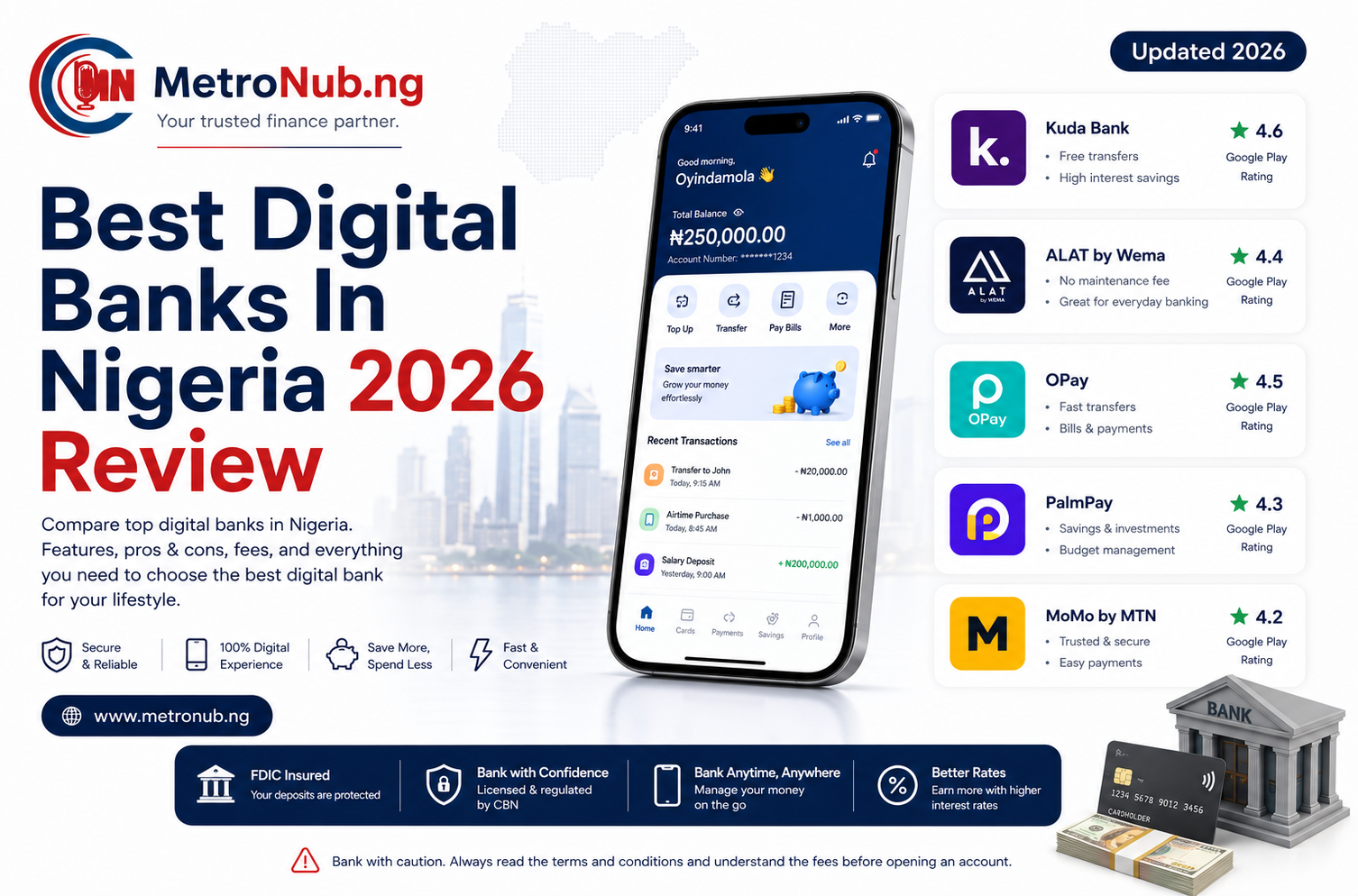
Best Digital Banks in Nigeria in 2026: Features, Benefits, Charges, and What to Know Before Choosing One.
By MetroNub Staff
Imagine sending money to someone in seconds without standing in long bank queues, paying unnecessary charges, or dealing with frustrating network delays. That is exactly why millions of Nigerians are now moving away from traditional banking methods and embracing the world of digital banking.
In recent years, digital banks in Nigeria have completely changed how people save money, transfer funds, pay bills, buy airtime, and manage their finances. What once required visiting a physical bank branch can now be done directly from a smartphone within minutes. From students and salary earners to freelancers and business owners, more Nigerians are now relying on mobile banking apps for their everyday financial activities.
The rise of digital banking has also created intense competition among financial technology companies and online banks. Today, there are several digital banking apps in Nigeria promising lower charges, free transfers, faster transactions, better savings options, virtual dollar cards, cashback rewards, and smoother banking experiences. However, while many of these platforms appear attractive, not every digital bank delivers the same level of reliability, security, or customer satisfaction.
This is why many Nigerians frequently search online for questions like “Which digital bank is the best in Nigeria?”, “Which banking app has the lowest transfer charges?”, and “Are digital banks safe for saving money?”. Choosing the wrong banking platform can lead to hidden charges, delayed transactions, poor customer support, and even security concerns. On the other hand, choosing the right digital bank can make managing money easier, faster, and more affordable.
One of the biggest reasons digital banks continue to grow rapidly in Nigeria is convenience. Most digital banking apps allow users to open an account within minutes using only their phone number, Bank Verification Number (BVN), and a few personal details. There is no need for complicated paperwork or spending hours inside crowded banking halls. Many platforms also provide modern features such as budgeting tools, automated savings, instant debit card management, spending analytics, and round-the-clock banking access.
Despite these advantages, many people still worry about important issues like account security, fraud protection, transaction failures, hidden fees, and whether these online banks are fully licensed and regulated in Nigeria. Since digital banking operates mainly online, understanding how these platforms work is extremely important before trusting any app with your money.
In this detailed 2026 review, we will carefully examine some of the best digital banks in Nigeria, their features, strengths, weaknesses, charges, customer experience, and the type of users they are most suitable for. Whether you are looking for a digital bank for savings, everyday spending, online business transactions, or low-cost transfers, this guide will help you understand everything you need to know in a simple, professional, and beginner-friendly way.
By the end of this article, you will have a clear understanding of which digital banking apps stand out in Nigeria today and how to choose the right option that matches your financial goals in 2026.
What Are Digital Banks in Nigeria?
Digital banks are financial institutions that provide banking services mainly through mobile apps, websites, and other online platforms without dependence on BVN. Heavily on physical bank branches. Instead of visiting a traditional banking hall to perform transactions, users can manage their money directly from their smartphones or computers at any time of the day.
In Nigeria, digital banking has become one of the fastest-growing parts of the financial industry. Millions of people now use digital banking apps to send money, receive payments, buy airtime, pay bills, save money, request loans, and even manage business transactions conveniently from anywhere. This modern approach to banking is changing how Nigerians interact with financial services.
Unlike traditional banks that often require paperwork, long queues, and multiple in-person visits, most digital banks in Nigeria allow users to open an account within minutes. In many cases, all that is needed is a smartphone, a phone number, a valid means of identification, and a Bank Verification Number (BVN). This easy registration process has made digital banking very attractive, especially to young Nigerians and people who prefer convenience.
Another major difference between digital banks and traditional banks is how they operate. Traditional banks spend large amounts of money maintaining physical branches, office spaces, and large staff structures. Digital banks, on the other hand, operate mostly online. Because of this, many digital banking apps can offer:
- Lower transfer charges
- Free transactions
- Faster account opening
- Higher savings interest rates
- Instant transaction notifications
- 24/7 access to banking services
- Modern budgeting and spending tools
Some digital banks in Nigeria operate as fully licensed banks, while others work through partnerships with licensed financial institutions. Over the years, several popular platforms such as Kuda, Opay, PalmPay, Moniepoint, Carbon, FairMoney, and ALAT have gained millions of users because of their easy-to-use mobile banking services.
One important thing beginners should understand is that digital banks are not completely replacing traditional banks yet. Instead, they are providing a faster, more flexible, and technology-driven alternative for people who want simpler banking experiences. Many Nigerians now combine both traditional and digital banking to enjoy the advantages of each system.
The increasing popularity of smartphones, internet access, and financial technology in Nigeria has also contributed heavily to the growth of digital banking. Today, people no longer want to waste hours inside crowded banking halls just to complete simple transactions. Most users now prefer banking solutions that are fast, convenient, affordable, and accessible directly from their mobile devices.
As digital banking continues to grow in 2026, understanding how these platforms work has become very important. Before choosing any online banking app, users should understand the services offered, transaction charges, security features, customer support quality, and overall reliability of the platform.
How Digital Banks Work
Digital banks work by providing banking services through mobile apps and online platforms instead of depending mainly on physical bank branches. This means users can perform most financial activities directly from their smartphones without visiting a banking hall.
When someone opens a digital bank account, the account is connected to a mobile app where the user can manage their money anytime. After registration and identity verification, the customer can start sending money, receiving payments, saving funds, paying bills, buying airtime, and using other banking services immediately.
Most digital banking apps in Nigeria are designed to make banking faster and easier for everyday users. Instead of filling out many forms or waiting in long queues, users can complete transactions within seconds from the comfort of their homes.
Here is a simple breakdown of how digital banks normally work:
- The user downloads the banking app.
- An account is created using a phone number, email address, and BVN.
- The bank verifies the user’s identity.
- The user funds the account through transfers, deposits, or card funding.
- The app then becomes the main place for managing transactions and banking activities.
Most digital banks also provide debit cards, virtual cards, savings options, loan services, and spending tools directly inside the app. Some apps even allow users to track expenses, set savings targets, and lock their cards for extra security.
One major reason digital banks are becoming very popular in Nigeria is speed. Traditional banking systems can sometimes be stressful because of crowded branches, delayed customer service, or network issues. Digital banks try to solve these problems by making banking simple and available 24/7.
Another important part of how digital banks work is automation. Many tasks that normally require bank staff are handled automatically by technology. For example:
- Transfers are processed instantly
- Transaction alerts are sent automatically
- Savings can happen automatically daily or weekly
- Bill payments can be completed within seconds
- Account statements can be downloaded instantly
Security is also a major part of digital banking. Most trusted digital banks use security systems like PINs, passwords, fingerprint login, face recognition, OTP verification, and transaction alerts to protect customer accounts from fraud and unauthorized access.
Although digital banks operate online, many of them are still regulated by financial authorities in Nigeria. This helps improve trust and gives users more confidence when using these platforms for daily transactions and savings.
As internet usage and smartphone ownership continue to grow in Nigeria, digital banking is becoming easier for more people to access. Today, many Nigerians prefer banking apps because they are faster, more convenient, and often cheaper than traditional banking methods.
Why Digital Banking Is Growing Fast in Nigeria
Digital banking is growing very fast in Nigeria because more people now want banking services that are simple, fast, and convenient. Instead of spending time in long bank queues or dealing with stressful banking processes, many Nigerians now prefer using mobile banking apps that allow them to manage money directly from their phones.
Over the last few years, smartphones and internet access have become more common across the country. This has made it easier for millions of people to open accounts, transfer money, pay bills, and save funds online without visiting a physical bank branch. As a result, digital banks have become part of everyday life for many Nigerians.
One of the biggest reasons for this rapid growth is convenience. With a digital bank account, users can perform transactions anytime and from anywhere. Whether someone wants to send money late at night, buy airtime, or pay electricity bills, everything can be done within minutes using a mobile app.
Another major reason people are switching to digital banks in Nigeria is lower banking charges. Many traditional banks are known for charging different fees on transfers, card maintenance, SMS alerts, and account management. Digital banks, however, often offer:
- Free transfers
- Lower transaction charges
- Free account opening
- Better savings rewards
- Affordable debit card services
Young Nigerians are also contributing heavily to the rise of digital banking. Students, freelancers, online business owners, content creators, and remote workers prefer banking apps because they fit easily into modern digital lifestyles. Most users want banking systems that are quick, mobile-friendly, and easy to understand.
The growth of online businesses and freelance work in Nigeria has also increased the demand for fast online banking solutions. Many people now receive payments online, shop online, run businesses through social media, and work remotely. Digital banks help support these activities by providing fast and flexible financial services.
Another important factor is speed. Traditional banking systems sometimes experience delays, crowded banking halls, and stressful customer service processes. Digital banks try to reduce these problems by making transactions faster and more user-friendly. Many transfers happen instantly, and users receive immediate transaction notifications directly on their phones.
Some digital banks also attract customers by offering extra features that traditional banks may not provide easily. These include:
- Automatic savings plans
- Budget tracking tools
- Virtual dollar cards
- Cashback rewards
- Expense analysis
- Quick loan options
The COVID-19 period also played a big role in increasing digital banking adoption in Nigeria. During that time, many people became more comfortable using online financial services because physical movement was limited. Since then, many users have continued using digital banking apps because of the convenience they offer.
Today, digital banking is no longer seen as a small trend in Nigeria. It has become a major part of the country’s financial system. As technology continues to improve in 2026, more Nigerians are expected to move toward online banking solutions that are faster, smarter, and easier to use.
Things to Consider Before Choosing a Digital Bank
Choosing a digital bank may look simple at first, but it is important to compare different options carefully before opening an account. Not every digital bank offers the same quality of service, and the best choice usually depends on what you personally need from the bank.
Some people want a banking app with very low transfer charges, while others care more about savings features, fast customer support, business tools, or security. Before choosing any digital bank in Nigeria, it is smart to understand the most important things that can affect your banking experience.
1. Transaction Charges
One of the first things many Nigerians check is the cost of transfers and other banking fees. Some digital banks offer free transfers every month, while others charge small fees after a certain limit. You should also check for:
- Transfer charges
- ATM withdrawal fees
- Card maintenance fees
- SMS or notification charges
- Hidden deductions
A bank with lower charges can help you save more money over time, especially if you make frequent transactions.
2. Security and Account Protection
Security is one of the most important parts of digital banking. Since everything happens online, users need strong protection against fraud and unauthorized access. Before choosing a banking app, check whether it offers:
- PIN and password protection
- Fingerprint or face login
- OTP verification
- Instant transaction alerts
- Card locking features
It is also important to confirm that the bank is properly licensed or works with licensed financial institutions in Nigeria.
3. Customer Support Quality
Good customer support can make a big difference when problems happen. Sometimes users experience failed transfers, delayed reversals, login issues, or debit card problems. In situations like these, fast customer service becomes very important.
Before choosing a digital bank, many users check reviews online to see how quickly the company responds to customer complaints and issues.
4. Mobile App Experience
Since digital banking mainly happens through mobile apps, the app should be easy to use and stable. A good banking app should:
- Load quickly
- Be simple to navigate
- Have fewer technical problems
- Process transactions smoothly
- Provide clear transaction records
A confusing or unstable app can make banking stressful instead of convenient.
5. Savings Features and Interest Rates
Some digital banks provide savings plans that help users save automatically daily, weekly, or monthly. Others also offer interest on savings balances. If your goal is to save money consistently, you should compare:
- Savings interest rates
- Automatic savings options
- Fixed savings plans
- Withdrawal rules
- Savings flexibility
6. Debit Cards and Virtual Cards
Many Nigerians now use digital banks for online payments and international transactions. Because of this, it is important to check whether the bank provides:
- Physical ATM cards
- Virtual cards
- International payment support
- Easy card management inside the app
Some digital banks are better suited for online shopping, subscriptions, and international payments than others.
7. Reliability and Transaction Speed
A good digital bank should process transactions quickly and consistently. Frequent app downtimes or delayed transfers can become frustrating, especially for business owners and people who rely heavily on online payments.
Many users prefer digital banks with stable systems and faster transfer processing because reliability is very important in daily banking.
8. Extra Features
Some digital banks offer extra tools that improve the user experience. These may include:
- Budget tracking
- Expense analysis
- Cashback rewards
- Loan services
- Investment features
- Business banking tools
Although these features may not be necessary for everyone, they can provide additional value depending on your financial needs.
Taking time to compare these important factors can help you choose a digital bank that matches your lifestyle, spending habits, and financial goals. The right banking app should make managing money easier, safer, and more convenient in everyday life.
Best Digital Banks in Nigeria in 2026
The digital banking industry in Nigeria has grown rapidly over the last few years, and many banking apps now compete to offer faster transactions, lower charges, better savings features, and smoother user experiences. In 2026, several digital banks have become very popular because of their convenience, reliability, and modern financial tools.
However, there is no single digital bank that is perfect for everybody. Some apps are better for free transfers, while others are stronger in savings, business banking, virtual cards, or customer support. The best option usually depends on how you plan to use the account.
Below are some of the most popular and widely used digital banks in Nigeria in 2026:
- Kuda Bank
- Opay
- PalmPay
- Moniepoint Personal Banking
- VBank
- Carbon
- FairMoney
- ALAT by Wema
- Sparkle
These digital banking platforms have gained millions of users across Nigeria because they provide mobile-friendly banking services that are simple and easy to use. Many of them allow users to:
- Open accounts within minutes
- Send and receive money instantly
- Pay bills easily
- Save money automatically
- Access debit or virtual cards
- Track spending directly inside the app
One major reason these digital banks continue to grow is because they reduce many of the problems people often face with traditional banking systems. Instead of visiting crowded bank branches, users can complete most financial activities directly from their smartphones at any time.
Another important advantage is affordability. Several digital banks are known for offering lower transaction fees and free transfers compared to many traditional banks. This makes them attractive to students, freelancers, salary earners, and small business owners who want to reduce banking costs.
Security has also improved across many digital banking platforms in Nigeria. Most trusted apps now include features like transaction alerts, fingerprint login, PIN protection, OTP verification, and card management tools to help protect users from fraud and unauthorized access.
At the same time, every digital bank has its own strengths and weaknesses. Some may have better mobile apps, while others may perform better in customer support or savings benefits. Certain apps may also experience occasional network delays or service downtimes depending on demand and technical issues.
This is why it is important to compare different digital banks carefully before choosing one. Understanding their features, charges, reliability, and overall user experience can help you select the banking app that best matches your personal or business financial needs.
In the next sections, we will review each of these digital banks individually, including their major features, benefits, disadvantages, and the type of users they are best suited for in 2026.
Kuda Bank Review
Kuda Bank is one of the most popular digital banks in Nigeria and is often called “the bank of the free” because of its low banking charges and free transfer options. Since its launch, Kuda has attracted millions of users, especially young Nigerians who want a simple and modern banking experience directly from their smartphones.
The app is designed to make banking easy for everyday users. Opening an account is usually fast, and users can start sending money, paying bills, buying airtime, and saving money within minutes after registration.
Major Features of Kuda Bank
- Free transfers every month
- Automatic savings options
- Instant transaction notifications
- Budgeting and spending analysis tools
- Virtual and physical debit cards
- Bill payments and airtime purchase
- Loan options for eligible users
- Card control features inside the app
Benefits of Using Kuda Bank
One of Kuda’s biggest advantages is its user-friendly mobile app. The interface is simple, clean, and easy for beginners to understand. Many users also like the instant transaction alerts because they help track spending more easily.
Kuda is also known for helping users manage money better through its savings and budgeting features. Users can create savings plans and monitor their expenses directly inside the app.
Another major benefit is lower banking charges. Compared to many traditional banks, Kuda helps users reduce costs on transfers and account maintenance.
Disadvantages of Kuda Bank
Despite its popularity, Kuda still has some weaknesses. Customer support complaints are common among some users, especially during failed transactions or account issues. Response times may sometimes be slow depending on the situation.
Some users also experience occasional app downtime or network delays during busy periods. Since Kuda mainly operates digitally, users who prefer physical bank branches may find this limiting.
Who Is Kuda Best Suited For?
Kuda Bank is best suited for:
- Students
- Salary earners
- Young professionals
- Freelancers
- People looking for lower banking charges
- Users who want simple savings and budgeting tools
Overall, Kuda remains one of the strongest digital banking options in Nigeria in 2026 because of its ease of use, low fees, and modern mobile banking experience.
Opay Review
Opay has grown from a simple payment platform into one of the biggest digital financial services providers in Nigeria. In 2026, the app is widely used for transfers, bill payments, airtime purchases, POS services, and everyday banking transactions. Its strong presence across many parts of Nigeria has made it one of the most recognized digital banking apps in the country.
One major reason for Opay’s popularity is speed and convenience. Many users rely on the app for quick transfers and daily payments because transactions are usually processed very fast. The app also works closely with a large network of agents and merchants, making it easier for users to access financial services almost everywhere.
Major Features of Opay
- Fast money transfers
- Free transfer opportunities for some users
- Bill payments and airtime purchases
- POS and agent banking services
- Debit card services
- Savings features
- Cashback and reward programs
- Business payment solutions
Benefits of Using Opay
One of Opay’s strongest advantages is accessibility. The platform is widely used across Nigeria, and many people already trust it for daily transactions. Transfers are often quick, and the app is designed to handle high transaction volumes smoothly.
Opay also provides an easy experience for users who frequently make payments, buy airtime, or pay utility bills. Its reward system and occasional cashback offers are additional benefits that many users enjoy.
Another important advantage is its large agent network. Users can deposit or withdraw money easily through nearby Opay agents without needing a traditional bank branch.
Disadvantages of Opay
Although Opay is very popular, some users complain about account restrictions that may happen during security checks or verification issues. Customer support experiences can also vary depending on the problem.
Some users have also reported delayed reversals during failed transactions, especially during periods of heavy network traffic. In addition, people who prefer traditional banking structures may still feel more comfortable using regular commercial banks.
Who Is Opay Best Suited For?
Opay is best suited for:
- Everyday mobile banking users
- Small business owners
- POS agents and merchants
- People who make frequent transfers
- Users who want quick and simple payments
- Individuals looking for easy cash deposits and withdrawals
In 2026, Opay remains one of the leading digital banking platforms in Nigeria because of its fast transactions, strong nationwide presence, and easy-to-use payment system.
PalmPay Review
PalmPay has become one of the fastest-growing digital banking and payment apps in Nigeria. The platform is widely known for its cashback rewards, smooth payment system, and beginner-friendly mobile app. In 2026, many Nigerians use PalmPay for transfers, airtime purchases, bill payments, and daily financial transactions.
One thing that makes PalmPay stand out is its focus on rewarding users for everyday transactions. The app often provides cashback bonuses, discounts, and promotional rewards that attract people who regularly use digital banking services.
Major Features of PalmPay
- Fast money transfers
- Cashback and reward system
- Bill payment services
- Airtime and data purchases
- Savings features
- Debit card services
- Merchant and business payment support
- Easy account funding options
Benefits of Using PalmPay
One of PalmPay’s biggest advantages is its reward program. Many users enjoy earning cashback on transfers, airtime purchases, and bill payments. This helps reduce small everyday banking costs over time.
The app is also simple to use, making it attractive to beginners and users who are not very familiar with complicated banking systems. Transactions are usually processed quickly, and the interface is clean and easy to navigate.
Another benefit is accessibility. PalmPay has built a strong network of agents and merchants across Nigeria, allowing users to deposit or withdraw money conveniently in many locations.
Disadvantages of PalmPay
Like many digital banking apps, PalmPay users sometimes experience network delays or failed transaction issues during busy periods. Some users have also complained about delays in customer support responses when account problems occur.
In some situations, promotional rewards and cashback offers may also change over time, meaning users may not always enjoy the same level of bonuses consistently.
Who Is PalmPay Best Suited For?
PalmPay is best suited for:
- Users who like cashback rewards
- Students and young mobile banking users
- People who make regular bill payments
- Users looking for simple everyday banking
- Small business owners and merchants
- People who frequently buy airtime and data
Overall, PalmPay remains one of the top digital banking apps in Nigeria in 2026 because of its reward system, fast transactions, and easy everyday banking experience.
Moniepoint Personal Banking Review
Moniepoint became widely known in Nigeria through its POS and business banking services, but its personal banking platform has also grown rapidly in recent years. In 2026, many Nigerians now use Moniepoint for transfers, savings, bill payments, and daily financial transactions because of its speed and reliability.
The platform has built a strong reputation for stable transactions, especially among business owners and users who need dependable banking services for regular payments. Its mobile app is designed to make banking simple while still offering useful financial tools for personal and business use.
Major Features of Moniepoint Personal Banking
- Fast transfers and payments
- Savings features
- Debit card services
- Bill payments and airtime purchase
- Business banking support
- Transaction history and account tracking
- POS and merchant services integration
- Secure login and account protection tools
Benefits of Using Moniepoint
One of Moniepoint’s strongest advantages is transaction reliability. Many users trust the platform because transfers are often completed quickly with fewer downtime complaints compared to some other apps.
The app is also useful for people who run businesses or handle frequent payments. Since Moniepoint already has a strong presence in merchant and POS banking, many users find it convenient for managing both personal and business transactions in one ecosystem.
Another benefit is the platform’s growing reputation for stability. Users who depend heavily on daily transfers often prefer banking apps that experience fewer interruptions.
Disadvantages of Moniepoint
Although Moniepoint performs well in transaction processing, some users feel the app interface is not as modern or feature-rich as certain competitors. Customer support experiences may also vary depending on the issue being reported.
In addition, some advanced features available on other digital banking apps may be more limited on Moniepoint’s personal banking platform.
Who Is Moniepoint Best Suited For?
Moniepoint is best suited for:
- Small business owners
- POS agents and merchants
- Users who need reliable transfers
- People handling frequent transactions
- Entrepreneurs and payment-focused users
- Individuals who want stable digital banking services
In 2026, Moniepoint continues to stand out as one of Nigeria’s most reliable digital banking platforms, especially for users who value fast and dependable transactions.
VBank Review
VBank is a digital banking platform created to provide simple and fully online banking services for Nigerians. Although it may not be as widely discussed as some larger fintech apps, VBank has continued to build a loyal user base because of its smooth banking experience and focus on everyday financial convenience.
The app allows users to perform regular banking activities such as transfers, bill payments, airtime purchases, and savings directly from their smartphones. Its clean design and simple navigation make it attractive to users who prefer easy and less complicated banking apps.
Major Features of VBank
- Instant money transfers
- Bill payment services
- Airtime and data purchases
- Savings options
- Debit card services
- Transaction tracking and alerts
- Easy account opening process
- Secure account management tools
Benefits of Using VBank
One of VBank’s biggest strengths is simplicity. The app is easy to understand, even for beginners who are new to digital banking. Users can complete transactions quickly without dealing with a complicated interface.
Another advantage is the app’s smooth user experience. Many users appreciate the straightforward banking process and fast navigation inside the platform.
VBank also focuses on making mobile banking accessible and convenient for users who want basic digital banking services without unnecessary complexity.
Disadvantages of VBank
Compared to larger digital banking apps in Nigeria, VBank has a smaller customer base and less market visibility. Because of this, some users may feel more comfortable using platforms with stronger public recognition.
The app may also offer fewer extra features compared to some competitors that provide advanced budgeting tools, cashback systems, or broader financial services.
Who Is VBank Best Suited For?
VBank is best suited for:
- Beginners in digital banking
- Users who prefer simple banking apps
- People looking for easy daily transactions
- Individuals who want straightforward mobile banking
- Users who value simplicity over complex features
In 2026, VBank remains a good option for Nigerians who want a clean, simple, and easy-to-use digital banking experience for everyday financial activities.
Carbon Bank Review
Carbon started as a digital lending platform but later expanded into full digital banking services in Nigeria. In 2026, the app is known for combining everyday banking with quick loan services, making it popular among users who want both financial management and access to short-term credit in one platform.
The app allows users to send money, pay bills, save funds, and access loans directly from their smartphones. Carbon is especially popular among young professionals, freelancers, and salary earners who prefer fast online financial services without visiting traditional bank branches.
Major Features of Carbon
- Quick loan services
- Money transfers
- Bill payments and airtime purchase
- Savings options
- Debit card services
- Credit score tracking
- Investment and financial tools
- Transaction monitoring and alerts
Benefits of Using Carbon
One of Carbon’s biggest strengths is easy access to loans. Eligible users can apply for loans directly inside the app without heavy paperwork or long approval processes. This makes it useful during emergencies or short-term financial needs.
The app also combines banking and lending in one place, helping users manage transfers, savings, and borrowing from a single platform.
Another advantage is the app’s modern design and smooth navigation. Many users find the interface simple and convenient for everyday use.
Disadvantages of Carbon
Although Carbon’s loan system is convenient, interest rates may feel high for some users depending on the loan amount and repayment period.
Some users also complain about loan repayment reminders and account restrictions that may happen when repayments are delayed. In addition, loan approval is not guaranteed for every user because eligibility depends on financial history and account activity.
Who Is Carbon Best Suited For?
Carbon is best suited for:
- Salary earners
- Freelancers
- Young professionals
- Users who may need quick loans occasionally
- People who want banking and credit services together
- Individuals comfortable with fully digital financial services
In 2026, Carbon remains one of Nigeria’s most recognized digital financial platforms because of its combination of banking, savings, and quick loan services.
FairMoney Review
FairMoney is one of the leading digital financial platforms in Nigeria, widely known for its loan services and mobile banking solutions. Over the years, the platform has expanded beyond lending and now offers transfers, bill payments, savings, debit cards, and other everyday banking services through its mobile app.
In 2026, many Nigerians use FairMoney because of its fast loan application process and easy-to-use banking system. The app is designed to help users manage daily transactions while also providing access to short-term financial support when needed.
Major Features of FairMoney
- Instant loan applications
- Money transfers
- Bill payments and airtime purchase
- Savings features
- Debit card services
- Transaction notifications
- Easy account management
- Mobile-friendly banking experience
- Device and asset financing options
Benefits of Using FairMoney
One of FairMoney’s biggest advantages is its quick loan processing system. Many users like the fact that they can apply for loans directly from the app without visiting any office or filling out long paperwork.
The app is also simple to navigate, making it beginner-friendly for users who want easy digital banking services. Transfers and bill payments are usually fast, which helps improve the overall user experience.
Another benefit is convenience. Users can manage banking activities and loan services from one app, reducing the need for multiple financial platforms.
FairMoney has also expanded into asset and device financing. Some users in Nigeria have been able to purchase smartphones and other items from partner stores and pay gradually with interest over time. During this process, users may be required to provide information such as:
- NIN or BVN
- Home address details
- Occupation information
- Personal identification details
This information is usually used for identity verification, risk assessment, and repayment tracking. Reports about FairMoney’s expansion into smartphonel and asset financing have also appeared in recent financial news. 0
Disadvantages of FairMoney
Like many digital lending platforms, FairMoney’s loan interest rates may not be comfortable for every user. People who borrow frequently without proper repayment planning may end up paying more over time.
Some users have also reported customer support delays during account or transaction issues. In addition, loan eligibility depends on user activity and financial records, meaning not every applicant will qualify immediately.
Because FairMoney handles loans and financing services, users should also understand the repayment terms carefully before accepting any offer. Missing repayments may affect borrowing eligibility and could lead to repeated repayment reminders.
Who Is FairMoney Best Suited For?
FairMoney is best suited for:
- Users who may need emergency loans
- Salary earners
- Freelancers and self-employed workers
- People looking for device financing options
- Users comfortable with loan-based financial services
- Individuals who want quick access to short-term credit
In 2026, FairMoney continues to remain popular in Nigeria because of its fast loan services, expanding financial products, and convenient digital banking features.
ALAT by Wema Review
ALAT is the digital banking platform created by Wema Bank and is often regarded as one of the first fully digital banking apps in Nigeria. Unlike many newer fintech platforms, ALAT combines traditional banking support with modern digital banking services, giving users both online convenience and access to physical banking support when needed.
In 2026, ALAT remains popular among Nigerians who want a balance between digital banking and the reliability of an established commercial bank. The app allows users to transfer money, save funds, pay bills, manage cards, and access other banking services directly from their smartphones.
Major Features of ALAT
- Instant account opening
- Money transfers
- Savings and fixed deposit plans
- Virtual and physical debit cards
- Bill payments and airtime purchase
- Budgeting and financial management tools
- Loan and credit services
- Access to Wema Bank support network
Benefits of Using ALAT
One major advantage of ALAT is trust and stability. Since it is backed by Wema Bank, many users feel more comfortable using the platform for savings and long-term banking activities.
The app also offers a good mix of digital banking convenience and traditional banking support. Users can enjoy online banking while still having access to physical branch assistance when necessary.
Another strong point is its savings system. ALAT provides different savings and financial planning options that help users manage money more effectively.
Disadvantages of ALAT
Compared to some fintech-focused digital banks, ALAT may not always offer as many free transfers or cashback rewards. Some users also feel the app interface is less modern compared to newer banking apps.
Like other banking platforms, occasional network delays or transaction issues may still happen during busy periods.
Who Is ALAT Best Suited For?
ALAT is best suited for:
- Users who want both digital and traditional banking support
- Salary earners
- Professionals and working-class users
- People focused on savings and financial planning
- Users who prefer banking with an established institution
In 2026, ALAT continues to stand out as a strong digital banking option in Nigeria because of its balance between modern online banking and traditional financial reliability.
Sparkle Bank Review
Sparkle is a modern digital banking platform in Nigeria designed mainly for individuals, freelancers, and small business owners who want smarter financial management tools. The app focuses not only on basic banking services but also on helping users manage their money and businesses more efficiently.
Founded by a former bank executive, Sparkle entered the Nigerian digital banking space with a strong focus on technology, simplicity, and financial lifestyle management. In 2026, the platform continues to attract users who prefer clean app design and modern banking experiences.
Major Features of Sparkle
- Money transfers
- Bill payments and airtime purchase
- Savings features
- Debit card services
- Expense tracking and financial insights
- Business support tools
- Transaction notifications
- Budget management features
Benefits of Using Sparkle
One of Sparkle’s biggest strengths is its financial management system. The app helps users track spending patterns and better understand how they manage money. This makes it useful for people who want more control over their finances.
The platform also supports freelancers and small business owners by providing tools that help organize transactions and business activities more easily.
Another advantage is the app’s modern and clean interface. Many users enjoy the simple design and smooth navigation experience.
Disadvantages of Sparkle
Sparkle is not as widely used as some larger digital banking platforms in Nigeria, so it may have a smaller support network and lower public awareness.
Some users may also prefer banking apps with more aggressive rewards, larger transfer limits, or broader financial services.
Who Is Sparkle Best Suited For?
Sparkle is best suited for:
- Freelancers
- Small business owners
- Young professionals
- Users interested in budgeting tools
- People who like modern banking apps
- Users who want better spending management
In 2026, Sparkle remains a good digital banking option for Nigerians looking for a smart and modern financial management experience beyond regular banking services.
Which Digital Bank Has the Lowest Charges?
One of the biggest reasons many Nigerians switch to digital banks is to reduce banking costs. Traditional banks are often known for multiple deductions, including transfer charges, card maintenance fees, SMS charges, and other hidden costs. Digital banks try to solve this problem by offering cheaper and more transparent banking services.
However, not all digital banks have the same pricing system. Some offer free transfers for a limited number of transactions each month, while others focus more on cashback rewards or low service fees.
In 2026, some of the digital banks commonly known for lower charges in Nigeria include:
- Kuda Bank
- Opay
- PalmPay
- Moniepoint
Kuda Bank
Kuda remains one of the most popular choices for users looking for lower banking charges. The platform is known for offering free transfers every month to eligible users, helping customers reduce everyday transaction costs.
Many users also like the fact that Kuda has fewer maintenance charges compared to many traditional banks.
Opay
Opay is widely used for fast and affordable transfers. Depending on the user’s activity and promotions available at the time, many transactions can be completed at low cost.
Its strong payment system and large user base have also helped it become a common option for people making daily transfers and bill payments.
PalmPay
PalmPay attracts many users through cashback rewards and occasional discounts on transactions. Even when transfer fees apply, some users recover part of the cost through rewards and bonuses inside the app.
This makes PalmPay attractive to users who frequently buy airtime, pay bills, or perform regular small transactions.
Moniepoint
Moniepoint has built a strong reputation for stable and affordable transactions, especially among business owners and users who handle regular payments daily.
Many merchants and entrepreneurs prefer the platform because of its reliable transaction system and reasonable service costs.
Important Things to Remember About Banking Charges
Even though digital banks generally charge less than traditional banks, users should still pay attention to certain details before choosing a platform.
- Free transfers may have monthly limits
- Charges can change over time
- ATM withdrawal fees may still apply
- Some services may attract hidden deductions
- Promotional offers are not always permanent
Instead of choosing a bank based only on free transfers, it is also important to consider reliability, customer support, app stability, and security. A banking app with very low charges but poor transaction performance may still create problems for users.
For many Nigerians in 2026, the best digital bank is usually the one that provides a balance between low fees, fast transactions, security, and smooth everyday banking experience.
Best Digital Banks for Saving Money
Many Nigerians now use digital banks not only for transfers and bill payments but also for saving money more effectively. One reason digital banking has become popular is because several apps now provide automatic savings features, spending control tools, and better interest options compared to regular savings accounts.
Saving money through digital banks is often easier because users can create savings plans directly from their smartphones without visiting a bank branch. Some apps even allow users to save daily, weekly, or monthly automatically.
In 2026, some digital banks stand out more than others when it comes to savings features and financial planning.
Kuda Bank
Kuda is one of the most popular digital banks for savings in Nigeria. The app provides different savings options that allow users to set targets and automate savings easily.
Many users like Kuda because it combines savings tools with spending analysis, helping people understand where their money goes every month.
ALAT by Wema
ALAT is also a strong option for users who are serious about savings and financial planning. The app provides structured savings plans and fixed deposit features for users who want more discipline in managing money.
Its connection to Wema Bank also gives many users additional confidence when saving larger amounts.
PalmPay
PalmPay is becoming more attractive to users who want simple savings features alongside rewards and cashback benefits. The app is mostly useful for users who perform regular small transactions and want to gradually build savings over time.
Carbon
Carbon combines savings with other financial tools inside one app. Users can save money while also managing transfers, payments, and credit services from the same platform.
This makes it convenient for users who prefer keeping most financial activities within one banking app.
Things to Consider Before Saving With a Digital Bank
Before choosing a digital bank for savings, users should compare several important factors carefully.
- Interest rates on savings
- Withdrawal conditions
- Security and account protection
- Ease of accessing saved funds
- App reliability and stability
- Reputation of the banking platform
It is also important to avoid keeping money only because of attractive advertisements or reward programs. Users should focus more on trust, security, and consistent service quality.
For many Nigerians in 2026, digital banking has made saving money simpler and more flexible. Instead of waiting until the end of the month to save what is left, many people now automate savings directly from their phones and build better financial habits gradually.
Best Digital Banks for Students in Nigeria
Students are among the biggest users of digital banking apps in Nigeria today. Most students prefer banking platforms that are simple, affordable, fast, and easy to use on mobile phones. Since many students regularly buy airtime, pay bills, receive money from family, and make online payments, digital banks have become very useful for daily financial activities.
In 2026, several digital banks stand out as good options for students because of their lower charges, user-friendly apps, and convenient services.
Kuda Bank
Kuda remains one of the most popular digital banks among students in Nigeria. The app is easy to use, and many students like the free transfer opportunities and budgeting features.
Its spending analysis tools can also help students manage their money better and avoid unnecessary expenses.
Opay
Opay is another strong option for students because of its fast transfers and easy payment system. Many students use the app daily for airtime purchases, bill payments, and quick transfers to friends and family.
The large network of Opay agents across Nigeria also makes deposits and withdrawals more convenient.
PalmPay
PalmPay is popular among students mainly because of its cashback rewards and promotional bonuses. Students who frequently buy airtime or perform small transactions often enjoy the extra rewards available on the platform.
The app is also beginner-friendly and easy to navigate.
VBank
VBank is suitable for students who prefer a simple and straightforward banking experience without too many complex features. The app focuses mainly on easy daily banking activities.
What Students Should Look for in a Digital Bank
Before choosing a banking app, students should pay attention to features that can make everyday financial activities easier and cheaper.
- Low transfer charges
- Easy account opening
- Fast transactions
- Reliable mobile app performance
- Strong security features
- Simple and clean app design
- Good customer support
Students should also be careful about loan offers and unnecessary borrowing. Some digital banking apps provide quick loans, but borrowing money without proper repayment plans can create financial pressure later.
Overall, the best digital bank for students in 2026 is usually one that provides affordable banking services, smooth mobile experience, and simple money management tools without unnecessary stress.
Best Digital Banks for Freelancers and Online Businesses
Freelancers, online business owners, and remote workers often need banking platforms that support fast transactions, smooth online payments, and reliable money management. In Nigeria, many people who work online now prefer digital banks because they provide faster and more flexible financial services compared to traditional banking systems.
In 2026, digital banking has become an important part of online business operations. From receiving payments and paying suppliers to managing daily expenses, freelancers and entrepreneurs now depend heavily on mobile banking apps for business activities.
Moniepoint
Moniepoint is one of the strongest options for business owners and people handling regular transactions. The platform is known for reliable transfers and stable payment systems, which are very important for businesses that depend on daily cash flow.
Its strong merchant and POS ecosystem also makes it useful for entrepreneurs managing both personal and business finances.
Sparkle
Sparkle is designed with freelancers and small business owners in mind. The app provides spending insights and financial management tools that help users monitor transactions more effectively.
Freelancers who want better control over income and expenses may find Sparkle useful because of its business-focused features.
Opay
Opay is widely used by small business owners because of its fast payment system and easy transfers. Many online sellers and mobile business operators rely on the platform for everyday transactions.
Its large agent network also makes cash deposits and withdrawals easier for business users across Nigeria.
Kuda Bank
Kuda is also suitable for freelancers and remote workers who want low banking charges and simple money management tools. The app’s budgeting and savings features can help users monitor business spending more carefully.
What Freelancers and Business Owners Should Consider
Freelancers and entrepreneurs usually handle more transactions than regular users, so choosing the right banking platform is very important.
- Fast and stable transfers
- Reliable app performance
- Good transaction records
- Low business transaction costs
- Strong customer support
- Security and fraud protection
- Easy payment management
People working online should also check whether the banking app supports virtual cards or international payment services, especially if they receive payments from foreign clients or pay for online tools and subscriptions.
In 2026, the best digital bank for freelancers and online businesses is usually the one that combines speed, reliability, affordable charges, and smooth financial management tools in one platform.
Are Digital Banks Safe in Nigeria?
One of the most common questions many Nigerians ask before opening a digital bank account is whether their money will truly be safe. Since digital banks mainly operate online, some people worry about fraud, hacking, failed transactions, and account security.
The good news is that many trusted digital banks in Nigeria now use strong security systems to protect customer accounts and transactions. Most popular digital banking apps also work under financial regulations and partner with licensed financial institutions in Nigeria.
In 2026, security has become one of the biggest priorities for digital banking companies because users expect safe and reliable financial services.
Security Features Used by Digital Banks
Most digital banks use different security tools to help protect users from unauthorized access and fraud.
- PIN and password protection
- Fingerprint login
- Face recognition login
- OTP verification codes
- Instant transaction alerts
- Card locking and freezing features
- Device verification systems
These security measures help reduce the risk of someone accessing a user’s account without permission.
Why Some Users Still Lose Money
Although digital banks provide security systems, many fraud cases happen because users accidentally expose their account information to scammers.
Common mistakes include:
- Sharing OTP codes
- Giving out ATM card details
- Clicking fake links
- Using weak passwords
- Allowing strangers to access their phones
Scammers often pretend to be customer support agents or bank representatives to trick users into revealing sensitive information.
Failed Transactions and Temporary Restrictions
Sometimes users may experience delayed transfers, failed transactions, or temporary account restrictions. These issues do not always mean the bank is unsafe. In many cases, they happen because of network problems, security checks, or verification issues.
However, good customer support becomes very important when resolving such problems quickly.
How to Stay Safe While Using Digital Banks
Users can improve account safety by following simple security habits.
- Never share your PIN or OTP
- Use strong passwords
- Enable fingerprint or face login
- Avoid suspicious links and messages
- Keep your phone secure
- Monitor transaction alerts regularly
- Update banking apps frequently
It is also safer to download banking apps only from trusted app stores instead of unknown websites or third-party links.
So, Are Digital Banks Really Safe?
For most users, trusted digital banks in Nigeria are generally safe when used properly. Many platforms now invest heavily in security technology and fraud prevention systems.
However, users also have an important responsibility to protect their account information and avoid common online scams. In digital banking, security works best when both the platform and the user practice safe habits together.
Common Problems Users Face With Digital Banks
Although digital banks have made banking easier and faster in Nigeria, users still experience certain challenges from time to time. Most of these problems are related to technology, network systems, customer support, or account verification processes.
Understanding these common issues can help users know what to expect and how to handle problems more carefully when using digital banking apps.
1. Failed or Delayed Transactions
One of the most common complaints among users is failed transfers or delayed transactions. Sometimes money may leave an account without reaching the receiver immediately.
In many cases, the issue is caused by network problems, system maintenance, or high transaction traffic. While some reversals happen quickly, others may take hours or even days depending on the platform involved.
2. Poor Customer Support
Customer support remains a major challenge for some digital banks in Nigeria. During account problems or failed transactions, users may struggle to get fast responses from support teams.
Some users complain about delayed replies through email, live chat, or social media support channels, especially during busy periods.
3. Account Restrictions
Digital banks sometimes place temporary restrictions on accounts for security reasons. This may happen when suspicious activity is detected or when verification documents are incomplete.
Although these restrictions are often meant to protect users, they can become frustrating if the resolution process takes too long.
4. App Downtime and Network Issues
Because digital banks depend heavily on internet systems, app downtime can affect transactions and account access. Users may sometimes experience:
- Apps refusing to open
- Slow transaction processing
- Login problems
- Temporary service interruptions
These problems are more noticeable during periods of high user activity or technical maintenance.
5. Fraud and Scam Attempts
As digital banking continues to grow, scammers are also becoming more active. Some fraudsters pretend to be customer support agents and try to steal users’ passwords, OTPs, or card details.
Users who are not careful may accidentally share sensitive information and lose money to online scams.
6. Verification Problems
Some users experience delays during account verification, especially when there are issues with BVN, NIN, phone numbers, or uploaded documents.
Without proper verification, certain banking features or transaction limits may remain restricted.
7. Loan Repayment Pressure
For digital banks that provide loans, some users complain about repayment pressure, reminders, or penalties after missing payment deadlines.
Borrowing without proper repayment planning can create financial stress, especially when interest continues to increase over time.
How Users Can Reduce These Problems
While some issues may not be completely avoidable, users can reduce problems by choosing trusted platforms and following safe banking habits.
- Use reliable internet connections
- Keep account information secure
- Verify account details properly
- Avoid sharing sensitive information
- Read loan terms carefully before borrowing
- Monitor transaction alerts regularly
Despite these challenges, digital banking still remains very useful for millions of Nigerians because of its convenience, speed, and accessibility. Most users continue to rely on digital banks daily for transfers, payments, savings, and business transactions.
How to Protect Your Digital Bank Account From Fraud
As digital banking becomes more popular in Nigeria, online fraud and scam attempts are also increasing. Many fraudsters now target mobile banking users through fake messages, phone calls, suspicious links, and social media tricks.
Although digital banks provide security systems to protect users, account safety also depends heavily on how careful the user is. Understanding simple security habits can help reduce the risk of losing money or exposing personal information.
1. Never Share Your PIN or OTP
Your PIN, password, and OTP codes should always remain private. No real bank staff or customer support agent should ask for these details.
Many scammers pretend to be bank representatives and try to trick users into revealing sensitive information. Once they gain access to these details, they may attempt to withdraw money or take control of the account.
2. Avoid Suspicious Links and Messages
Fraudsters often send fake SMS messages, emails, or social media links pretending to come from banks. These links may lead to fake websites designed to steal login details.
Users should avoid clicking unknown links or downloading suspicious files from untrusted sources.
3. Use Strong Passwords
Weak passwords make accounts easier to access. A strong password should be difficult for other people to guess.
Avoid using:
- Simple number combinations
- Your date of birth
- Your phone number
- Easy words like “password”
Using a stronger password adds another layer of protection to your banking account.
4. Enable Fingerprint or Face Login
Most digital banking apps now provide fingerprint and face recognition login options. These features help improve account security and reduce the chances of unauthorized access.
Biometric login systems are usually safer than relying only on passwords.
5. Keep Your Phone Secure
Since digital banking happens mainly on mobile devices, protecting your phone is very important.
- Use a screen lock
- Avoid leaving your phone unlocked
- Do not install suspicious apps
- Update your phone regularly
If your phone is stolen and not protected properly, fraudsters may try to access your banking apps.
6. Monitor Transaction Alerts Regularly
Transaction notifications help users detect suspicious activity quickly. If you notice any transaction you did not authorize, contact customer support immediately.
Checking account activity regularly can help stop fraud before it becomes worse.
7. Use Only Official Banking Apps
Always download banking apps from trusted app stores like Google Play Store or Apple App Store. Avoid downloading modified or unofficial versions from random websites.
Fake apps may contain malware designed to steal account information.
8. Be Careful With Public Wi-Fi
Using public internet connections for banking activities can increase security risks. Fraudsters sometimes monitor unsafe networks to steal sensitive information.
It is safer to use secure private internet connections when accessing banking apps.
Final Security Advice
Digital banking is generally safe when users follow proper security habits. Most fraud cases happen because scammers successfully trick users into revealing sensitive details.
In 2026, protecting your digital bank account requires awareness, caution, and responsible banking behavior. Staying alert online can help keep your money and personal information safe.
Advantages of Using Digital Banks
Digital banks have changed how many Nigerians manage money by making banking faster, easier, and more accessible. Instead of depending fully on physical bank branches, users can now complete most financial activities directly from their smartphones.
In 2026, millions of people use digital banking apps daily because of the convenience and flexibility they provide. From students and salary earners to freelancers and business owners, digital banking has become part of everyday financial life in Nigeria.
1. Convenience and Easy Access
One of the biggest advantages of digital banking is convenience. Users can send money, pay bills, buy airtime, and manage savings anytime without visiting a bank branch.
This saves time and reduces the stress of standing in long banking queues.
2. Faster Transactions
Most digital banks process transfers and payments quickly. Transactions that once required paperwork or physical visits can now happen within seconds through mobile apps.
This speed is especially helpful for people handling urgent payments or business transactions.
3. Lower Banking Charges
Many digital banks offer cheaper services compared to traditional banks. Users often enjoy:
- Lower transfer fees
- Free transfers
- Reduced maintenance charges
- Affordable card services
For people who perform regular transactions, these savings can become very valuable over time.
4. Simple Account Opening
Opening a digital bank account is usually fast and easy. Most platforms only require basic information such as:
- Phone number
- BVN
- NIN or identification details
- Personal information
Many users can complete registration within minutes directly from their phones.
5. Better Money Management Tools
Several digital banks now provide budgeting tools, savings plans, spending analysis, and financial tracking features inside their apps.
These tools help users understand spending habits and improve money management.
6. 24/7 Banking Services
Unlike traditional bank branches that operate within fixed hours, digital banking apps are available almost all the time. Users can perform transactions during the day or late at night without waiting for a bank to open.
7. Easy Bill Payments
Digital banks make it easier to pay electricity bills, internet subscriptions, cable TV, airtime, and other services directly from mobile phones.
This reduces the need for physical payment centers and manual processes.
8. Modern Financial Features
Some digital banking apps also provide extra services such as:
- Virtual cards
- Cashback rewards
- Automatic savings
- Quick loan access
- Business payment tools
These features help improve the overall banking experience for users.
Final Thoughts on the Benefits
The biggest strength of digital banking is simplicity. Users can manage many financial activities from one app without depending heavily on physical bank branches.
As technology continues to improve in Nigeria, digital banks are expected to become even more important for personal finance, business transactions, and everyday money management.
Disadvantages of Digital Banking
Although digital banks provide many benefits, they also have certain disadvantages that users should understand before depending on them fully. While mobile banking apps make financial activities faster and easier, they are still affected by technology, internet access, and online security risks.
In 2026, many Nigerians enjoy the convenience of digital banking, but users still experience some common challenges that can affect their banking experience.
1. Dependence on Internet and Smartphones
Digital banking depends heavily on smartphones and internet connections. Without stable internet access, users may struggle to complete transactions or even open their banking apps.
People living in areas with poor network coverage may experience more difficulties using digital banking services consistently.
2. App Downtime and Technical Problems
Like other technology-based platforms, digital banks can sometimes experience system failures, app crashes, or temporary downtime.
During these periods, users may face:
- Failed transfers
- Delayed transactions
- Login problems
- Temporary service interruptions
These technical issues can become stressful, especially during urgent financial situations.
3. Limited Physical Support
Most digital banks do not have many physical branches where customers can walk in for assistance. When serious account issues happen, some users may feel frustrated because everything must be resolved online or through customer support channels.
People who prefer face-to-face banking support may find this uncomfortable.
4. Online Fraud and Scams
Digital banking users are common targets for scammers and online fraud attempts. Fraudsters often use fake messages, phishing links, and social engineering tricks to steal account information.
Users who are not careful with their security details may become victims of financial fraud.
5. Customer Support Delays
Some digital banking platforms still struggle with fast customer service responses. During failed transactions or account restrictions, users may wait longer than expected before receiving help.
Poor customer support can reduce trust and create frustration for customers.
6. Account Restrictions and Verification Issues
Digital banks sometimes place temporary restrictions on accounts for security reasons or incomplete verification.
Although these checks help protect users, the process can become stressful if account access is delayed for long periods.
7. Loan and Debt Pressure
Some digital banks offer easy access to quick loans, which can become risky for users who borrow carelessly.
Without proper repayment planning, users may face:
- High interest payments
- Frequent repayment reminders
- Financial pressure
- Reduced credit reputation
8. Reduced Human Interaction
Traditional banks often provide direct human interaction for financial advice and customer support. Digital banking focuses more on automation and self-service systems.
Some users may still prefer personal communication when handling sensitive financial matters.
Final Thoughts on the Disadvantages
Digital banking offers speed and convenience, but it is not completely perfect. Users should understand both the advantages and the risks before relying heavily on any banking platform.
Choosing trusted digital banks, practicing safe online habits, and keeping backup financial options can help reduce many of these challenges in everyday banking.
Traditional Banks vs Digital Banks in Nigeria
Banking in Nigeria has changed a lot over the years. While traditional banks have existed for decades, digital banks are now becoming more popular because of their speed, convenience, and mobile-friendly services.
Both traditional and digital banks provide financial services, but they operate in very different ways. Understanding the differences can help users choose the option that fits their lifestyle and financial needs better.
Physical Branches
Traditional banks operate through physical branches where customers can visit for account opening, customer service, deposits, and other banking activities.
Digital banks, on the other hand, mainly operate online through mobile apps and websites. Most services are handled directly from smartphones without needing physical visits.
Convenience and Speed
Digital banks are generally faster and more convenient for everyday transactions. Users can send money, pay bills, and manage savings anytime from their phones.
Traditional banks may sometimes involve longer processes, waiting lines, or paperwork for certain services.
Banking Charges
Many digital banks are known for lower transaction fees and fewer maintenance charges. Some even offer free transfers for a limited number of transactions.
Traditional banks may charge more for:
- Transfers
- Card maintenance
- SMS alerts
- Account management services
Customer Support Experience
Traditional banks usually provide face-to-face customer support through physical branches. Some users prefer this because problems can sometimes be resolved more directly.
Digital banks mostly depend on online support channels such as live chat, email, and phone support. While this is convenient, response times may vary depending on the platform.
Technology and Modern Features
Digital banks often provide more modern financial tools and mobile-focused services. These may include:
- Budget tracking
- Automatic savings
- Virtual cards
- Instant notifications
- Expense analysis
- Quick loan systems
Traditional banks also provide digital services today, but many fintech-focused platforms move faster when introducing new features.
Security and Trust
Many Nigerians still trust traditional banks more because of their long history and physical presence. Having physical branches can make users feel more secure about their money.
However, trusted digital banks also use strong security systems and financial regulations to protect users and transactions.
Internet Dependence
Digital banks depend heavily on smartphones and internet access. Without good internet connection, users may struggle to access services.
Traditional banks can still provide some services physically even when online systems experience problems.
Which One Is Better?
There is no single answer because the best option depends on the user’s needs.
- People who value convenience and lower charges may prefer digital banks.
- People who want physical branch support may prefer traditional banks.
- Business owners may use both for different financial needs.
- Some users combine traditional and digital banking for flexibility.
In 2026, many Nigerians now use both systems together. Traditional banks continue to provide stability and wider financial structures, while digital banks offer faster and more modern everyday banking experiences.
How to Open a Digital Bank Account in Nigeria
Opening a digital bank account in Nigeria is now easier than ever. Unlike traditional banking systems that may require long queues and paperwork, most digital banks allow users to create accounts directly from their smartphones within a few minutes.
In 2026, many Nigerians prefer digital account opening because the process is faster, more convenient, and beginner-friendly. Most banking apps are designed to guide users step by step during registration.
Step 1: Download the Banking App
The first step is to download the official app of the digital bank you want to use. It is safer to install apps only from trusted sources like:
- Google Play Store
- Apple App Store
Avoid downloading banking apps from unknown websites or suspicious links to reduce security risks.
Step 2: Create an Account
After installing the app, users are usually asked to provide basic personal information such as:
- Full name
- Phone number
- Email address
- Date of birth
- Residential address
The app then creates a new account profile for the user.
Step 3: Verify Your Identity
Most digital banks in Nigeria require identity verification before users can fully access banking services.
Common verification requirements include:
- BVN (Bank Verification Number)
- NIN (National Identification Number)
- Passport photograph
- Valid identification card
Verification helps improve account security and reduces fraud.
Step 4: Set Up Security Details
Users are usually required to create security details such as:
- Password
- Transaction PIN
- Fingerprint login
- Face recognition login
These security tools help protect accounts from unauthorized access.
Step 5: Fund the Account
After account setup is complete, users can add money to the account through:
- Bank transfers
- ATM deposits
- Debit card funding
- POS agent deposits
Once the account is funded, users can begin making transfers, paying bills, buying airtime, and using other banking features.
Things to Know Before Opening a Digital Bank Account
Before choosing any digital bank, users should compare:
- Transfer charges
- Security features
- Customer support quality
- App reliability
- Savings features
- User reviews and reputation
It is also important to read the bank’s terms and conditions carefully, especially for loan services and transaction limits.
Final Thoughts
Digital banking has made account opening faster and more accessible for millions of Nigerians. With only a smartphone and internet connection, users can now access financial services from almost anywhere.
In 2026, opening a digital bank account is no longer difficult. The most important thing is choosing a trusted platform that matches your financial needs and using safe banking habits to protect your account.
Frequently Asked Questions About Digital Banks
Are digital banks legal in Nigeria?
Yes, many digital banks operating in Nigeria are legal and work under financial regulations. Some are fully licensed banks, while others operate through partnerships with licensed financial institutions.
Can I trust digital banks with my money?
Trusted digital banks generally use strong security systems to protect customer accounts and transactions. However, users should also practice safe banking habits such as protecting passwords, PINs, and OTP codes.
Which digital bank has the lowest charges in Nigeria?
Banks like Kuda, Opay, PalmPay, and Moniepoint are commonly known for lower banking charges and affordable transfer services. However, fees may change over time depending on the platform and type of transaction.
Can I receive salary payments through a digital bank?
Yes, many digital banks in Nigeria allow users to receive salaries and other regular payments directly into their accounts.
Do digital banks provide ATM cards?
Yes, several digital banks provide physical debit cards and virtual cards for online transactions and ATM withdrawals.
What happens if a transfer fails?
Failed transfers are usually reversed automatically after some time, depending on the bank and network conditions. If the issue continues, users may need to contact customer support for assistance.
Can digital banks give loans?
Yes, some digital banks and fintech platforms provide quick loan services directly through their apps. Loan approval usually depends on account activity, repayment history, and eligibility requirements.
Do I need a BVN to open a digital bank account?
Most digital banks in Nigeria require a BVN for identity verification and account security purposes.
Can I use digital banks without visiting any branch?
Yes, most digital banks are designed to operate fully online, allowing users to open accounts and manage transactions directly from their phones without visiting physical branches.
Are digital banks better than traditional banks?
Both have their advantages. Digital banks are often faster and more convenient for everyday transactions, while traditional banks may provide stronger physical support and wider financial services.
Can digital banks be used for business transactions?
Yes, many freelancers, entrepreneurs, and small business owners use digital banks for transfers, payments, and business-related financial activities.
What should I check before choosing a digital bank?
Users should compare charges, security features, app reliability, customer support quality, savings options, and overall reputation before choosing a banking platform.
Final Thoughts on the Best Digital Banks in Nigeria in 2026
Digital banking has become a major part of everyday life in Nigeria. What started as a simple alternative to traditional banking has now grown into a fast-moving financial system that millions of Nigerians use daily for transfers, savings, bill payments, loans, and business transactions.
In 2026, digital banks continue to attract users because of their speed, convenience, lower charges, and mobile-friendly services. Instead of spending time in crowded banking halls, many people now prefer handling financial activities directly from their smartphones anytime and anywhere.
However, choosing the best digital bank depends largely on personal needs. Some users may prefer platforms with lower transfer charges, while others may focus more on savings tools, business support, fast loans, cashback rewards, or transaction reliability.
For example:
- Kuda is popular for low charges and budgeting tools.
- Opay stands out for fast daily transactions and accessibility.
- PalmPay attracts users through cashback rewards.
- Moniepoint is known for reliable transactions and business support.
- ALAT combines digital banking with traditional banking stability.
- Sparkle focuses more on financial management and freelancers.
- Carbon and FairMoney are widely used for quick loan services.
Even though digital banking offers many benefits, users should still remain careful about security, fraud prevention, and responsible borrowing. Choosing trusted platforms and practicing safe online habits can help reduce many common banking problems.
One important thing to remember is that no banking platform is completely perfect. Network issues, failed transactions, or customer support delays can still happen occasionally. Because of this, many Nigerians now combine both digital and traditional banking for more flexibility and convenience.
As financial technology continues to grow in Nigeria, digital banks are expected to become even more advanced in the coming years. Features like smarter budgeting tools, improved security systems, faster payments, and better financial management services will likely continue shaping the future of banking.
For beginners and everyday users, the best approach is to choose a digital bank that matches personal financial habits, offers reliable services, provides good security, and makes money management easier in daily life.
In the end, digital banking is no longer just a trend in Nigeria. It has become an important part of how people save, spend, transfer, and manage money in the modern financial world.
The information provided on MetroNub is for educational and informational purposes only and should not be considered financial, investment, or legal advice. Financial decisions involve risks, and readers are advised to conduct their own research or consult with a qualified financial advisor before making any financial commitments.
More Finance
Treasury Bills in Nigeria: How They Work & How to Invest
Why the Naira Keeps Falling and What It Means for You
Nigeria Bank Recapitalisation 2026: Economic Growth, Stronger Banks, and the Future of Nigeria’s Financial System
How to Protect Your Money During Inflation in Nigeria
How to Invest in US Stocks from Nigeria: The Complete Beginner-to-Advanced Guide
Best Investment Platforms in Nigeria (Safe & Verified)
How to Start Investing in Nigeria as a Beginner: The Complete Step-by-Step Guide
How to Turn ₦100,000 Into a Profitable Business
Why Loan Apps in Nigeria Send Messages to Contacts and How to Protect Yourself.
How to Open a Bank Account in Nigeria: Complete 2026 Beginner’s Guide
Trending
Top 12 Commercial Banks in Nigeria (2026) – Rankings, Charges & Full Cost Breakdown
Instant Loan Apps Without BVN in Nigeria (Is It Safe?).
Is Cryptocurrency Still Worth It in Nigeria?
How to Turn ₦100,000 Into a Profitable Business
Best Savings Accounts in Nigeria (High Interest Rates and Top Banks Guide)
How to Get a Loan in Nigeria Without Collateral
Nigeria Bank Recapitalisation 2026: Economic Growth, Stronger Banks, and the Future of Nigeria’s Financial System
Top 10 Legit Loan Apps That Don’t Harass Customers 2026.
How to Protect Your Money During Inflation in Nigeria