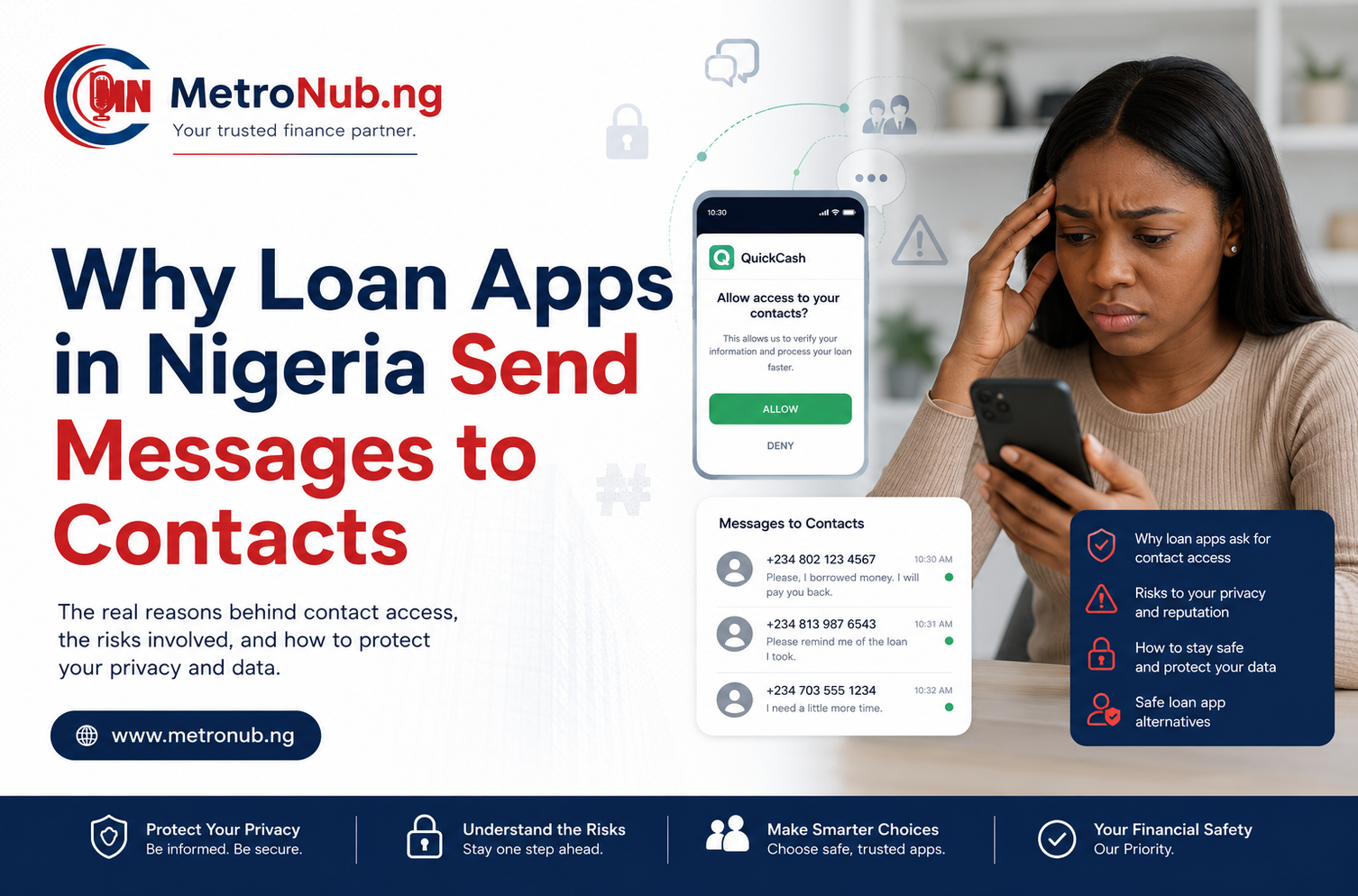
Why Loan Apps in Nigeria Send Messages to Contacts and How to Protect Yourself.

Last updated on May 14, 2026, 2:11 a.m.
By MetroNub Staff
 image

Over the past few years, loan apps in Nigeria have completely changed the way many people borrow money. Instead of visiting traditional banks, filling out paperwork, or waiting several days for approval, Nigerians can now apply for loans directly from their smartphones within minutes. This easy access to quick loans has made digital lending platforms increasingly popular among students, salaried individuals, small business owners, freelancers, and individuals facing urgent financial challenges.

Today, many Nigerians rely on loan apps to solve short-term financial problems such as paying school fees, settling hospital bills, funding small businesses, handling transportation expenses, paying rent, or covering unexpected emergencies. Most of these apps advertise fast approval, instant disbursement, and minimal requirements, making them attractive to people who need urgent financial assistance without the stress of traditional banking procedures.

However, despite the convenience and speed these loan apps provide, many borrowers have raised serious concerns about privacy and harassment. One of the biggest complaints in Nigeria today is that some loan apps send messages to people in a borrower’s contact list whenever repayment is delayed. In some situations, these messages are sent to family members, friends, coworkers, customers, and even employers. This has caused embarrassment, emotional stress, damaged relationships, and fear among many borrowers.

As a result, thousands of Nigerians now ask questions such as “Why do loan apps send messages to contacts?”, “How do loan apps gain access to my phone contacts?”, “Is it legal for loan apps to shame borrowers in Nigeria?”, and “How can I stop loan apps from contacting my friends and family?”. These questions have become more common because many people do not fully understand the permissions they grant when installing loan applications on their mobile devices.

The reality is that most loan apps request access to certain personal information before approving loans. This may include access to contacts, phone storage, messages, call logs, location data, and other sensitive information stored on a user’s device. While some licensed digital lenders use this information responsibly for identity verification and risk assessment, some illegal or unregulated loan apps misuse personal data and engage in unethical debt recovery practices.

Another reason this issue has become widespread in Nigerthatecause many borrowers often rush through the registration process without carefully reading the app’s terms and conditions. In most cases, users quickly click the “Allow” button whenever the app requests permission to access contacts or phone data. Unfortunately, this action can give some loan companies the ability to retrieve and store personal information from the borrower’s device.

It is also important to understand that not all loan apps operate the same way. Some registered and regulated digital leads are here to follow proper financial guidelines, respect customer privacy, and use professional recovery methods. On the other hand, some fake or unlicensed loan apps use intimidation, threats, harassment, and public embarrassment to pressure borrowers into repayment. This is one of the major reasons Nigerians must learn how to identify trusted loan platforms before borrowing money online.

In this complete guide, you will learn everything you need to know about why loan apps in Nigeria send messages to contacts. We will explain how these apps gain access to contact lists, why some lenders contact borrowers’ friends and family members, whether such actions are legal under Nigerian law, and the practical steps you can take to protect your privacy and personal information.

You will also discover the dangers of fake loan apps, how to identify safe and licensed lending platforms, smart ways to avoid repayment problems, and safer alternatives for borrowing money in Nigeria. Whether you have already used a loan app before or you are planning to borrow money online for the first time, this guide will help you make smarter, safer, and more informed financial decisions.

What Are Loan Apps in Nigeria?

Loan apps in Nigeria are digital financial platforms that allow people to borrow money directly from their smartphones without visiting a physical bank or meeting a loan officer. These apps are designed to provide quick and easchoicess who need urgent financial assistance. Instead of going through the long procedures commonly associated with traditional banks, borrowers can simply download a loan application, register their details, and apply for a loan within minutes.

Over the years, loan apps have become increasingly popular across Nigeria because they offer a faster and more convenient way to access money during emergencies. Many Nigerians now depend on these digital lending platforms for different financial needs such as paying school fees, handling medical bills, supporting small businesses, paying rent, covering transportation costs, or solving temporary cash shortages before salary payments arrive.

One major reason why loan apps are growing rapidly in Nigeria is that many traditional banks have strict loan requirements. Banks often request collateral, salary records, guarantors, business documents, or a strong credit history before approving loans. For many Nigerians, especially students, freelancers, small business owners, and low-income earners, meeting a these requirements can be difficult. Loan apps try to solve this problem by offering easier access to borrowing with fewer requirements.

Most loan apps only require users to provide basic personal information such as their full name, phone number, bank account details, Bank Verification Number (BVN), and sometimes access to certain phone permissions. After registration, the app uses automated systems to review the borrower’s information and determine whether the loan should be approved.

Unlike traditional banking systems where loan approval may take days or even weeks, many loan apps process applications within a few minutes. Once approved, the money is usually transferred directly into the borrower’s bank account almost immediately. This speed and convenience are among the biggest reasons why digital lending has become very common in Nigeria.

There are different types of loan apps operating in Nigeria today. Some are fully licensed and regulated financial institutions, while others operate illegally without proper approval from financial authorities. Licensed loan apps usually follow proper lending practices and respect customer privacy. Illegal loan apps, however, are often associated with harassment, hidden charges, privacy violations, and unethical debt recovery methods.

Some loan apps focus on salary earners, while others target students, traders, business owners, or self-employed individuals. The loan amounts also vary depending on the platform. Some apps offer small loans starting from a few thousand naira, while others provide larger amounts to qualified borrowers with good repayment history.

Another important thing to understand is that most loan apps in Nigeria use technology and data analysis to assess borrowers. Instead of relying only on traditional paperwork, many apps evaluate users based on phone activity, transaction history, repayment behavior, and personal data provided during registration. This is one of the reasons why some apps request access to contacts, messages, storage, and other information on a user’s phone.

While loan apps can be helpful during emergencies, borrowers must understand that these loans are not “free money.company's loan comes with repayment conditions, interest rates, deadlines, and terms that must be followed carefully. Failure to repay on time may lead to penalties, increased debt, reduced credit reputation, and in some cases, harassment from unregulated lenders.

It is also important for borrowers to understand that not every app available online is safe. Some fake loan apps are created mainly to exploit users by collecting personal information or using aggressive recovery tactics. This is why Nigerians are strongly advised to research any loan app carefully before downloading or applying for a loan.

Today, the Nigerian digital lending industry continues to grow rapidly because of increasing smartphone usage and internet access. However, as the industry grows, concerns about privacy, data protection, and unethical debt collection practices have also become more common. Understanding how loan apps operate is therefore the first step toward protecting yourself and making smarter financial decisions.

How Loan Apps Use Contact Lists

After gaining access to a borrower’s phone contacts, many people often wonder what happens next and how these loan apps actually use the information collected from their devices. Understanding how loan apps use contact lists is very important because many borrowers are unaware of the level of access they may have granted during registration.

When a user installs a loan app and clicks “Allow” for contact permissions, the application may gain access to names, phone numbers, and sometimes additional details stored in the phone’s contact book. Depending on the app and its privacy practices, this information can be uploaded, processed, or stored on the company’s servers.

Some licensed loan apps claim they use contact information mainly for identity verification and fraud prevention. Since digital lenders usually provide loans without physical meetings or traditional collateral, they rely heavily on digital data to confirm that a borrower is genuine. In some cases, lenders may analyze contact patterns to detect suspicious activities or fake identities.

Another way loan apps use contact lists is for credit risk assessment. Some digital lenders believe that borrowers with active and consistent phone activity may appear more trustworthy than users with very limited or suspicious contact records. This type of automated analysis is part of the technology-driven systems many financial apps now use to evaluate loan applications.

However, the biggest controversy surrounding contact access in Nigeria comes from the way some loan apps use contact information for debt collection and repayment pressure. When borrowers fail to repay loans on time, certain apps begin sending messages or making calls to people listed in the borrower’s phone contacts. These contacts may include family members, friends, coworkers, employers, customers, church members, or business associates.

In many reported cases, some loan apps send bulk SMS messages claiming that the borrower is refusing to pay debts or has committed financial fraud. These messages are often designed to embarrass the borrower publicly and create social pressure that may force faster repayment. This practice has become one of the biggest reasons many Nigerians fear using unregulated loan apps.

Some illegal lenders even go beyond simple reminders and begin using threatening or insulting language in messages sent to contacts. This can damage personal relationships, affect professional reputations, and create emotional stress for borrowers. In extreme situations, borrowers may experience anxiety, depression, or public embarrassment because of the aggressive tactics used by certain digital lenders.

Another important thing to understand is that some loan apps may not only access contacts once. Depending on the permissions granted and the app’s settings, the platform may continue syncing or updating contact information from the device while the app remains installed. This means newly added contacts may also become accessible to the lender over time.

Some apps also use contact lists for marketing purposes. In certain situations, borrowers may start receiving promotional messages, loan offers, or advertisements after registering on a platform. Although legitimate lenders may use marketing responsibly, some questionable apps misuse customer data for spam or unauthorized promotions.

It is important to know that not all loan apps engage in unethical behavior. Many licensed digital lenders in Nigeria operate professionally and follow proper privacy guidelines. These companies usually provide clear explanations about how user data is collected, stored, and processed. Trusted lenders are also more likely to follow government regulations and avoid harassment-based debt recovery methods.

Unfortunately, many borrowers fail to distinguish between regulated lenders and illegal loan apps. Because of the urgent need for quick money, some users download any app they see online without checking whether the platform is approved by financial authorities. This increases the risk of personal data misuse and privacy violations.

Another serious concern is that some fake loan apps may continue storing personal information even after the loan has been repaid. This is why experts often advise borrowers to be cautious about the apps they install and to avoid granting unnecessary permissions whenever possible.

To reduce privacy risks, borrowers should always review app permissions carefully before registration. If a loan app requests excessive access to contacts, messages, or unrelated phone data without a clear explanation, it may be a warning sign. Users should also read reviews, check licensing information, and research the lender before applying for any loan online.

As digital lending continues to grow in Nigeria, understanding how loan apps use contact lists has become extremely important. Borrowers who understand these practices are more likely to protect their privacy, avoid illegal lenders, and make safer financial decisions when borrowing money online.

Why Some Loan Apps Send Debt Messages to Contacts

One of the biggest reasons many Nigerians fear borrowing money from certain digital lenders is because of the embarrassing messages some loan apps send to borrowers’ contacts. Over the years, there have been many complaints about loan apps contacting family members, friends, coworkers, and borrowers' payment. understand repaymentaised serious concerns about privacy abuse, digital harassment, and unethical debt recovery methods in Nigeria.

Many loan apps send debt messages to contacts mainly as a way of applying social pressure on borrowers. Since most digital lenders do not request physical collateral before approving loans, some companies use psychological tactics to force repayment. They believe that borrowers may repay faster if they fear embarrassment or public exposure among people they know.

In many situations, these lenders intentionally send messages to close relatives, friends, or colleagues to make the borrower uncomfortable. Some messages may claim that the borrower is refusing to pay debts, while others may accuse the person of fraud or dishonesty. In some extreme cases, certain loan apps use threatening language designed to damage the borrower’s reputation and create panic.

For many borrowers, the emotional impact of these messages can be very serious. Some people experience stress, anxiety, shame, fear, and damaged relationships because private financial matters become exposed to others. This is one reason why the issue of loan app harassment has become a major topic in Nigeria’s financial and technology sectors.

Another reason some loan apps contact borrowers’ friends and family members is because they believe public embarrassment in that repayment success. Illegal lenders often assume that once people close to the borrower become aware of the debt, the borrower will feel pressured to quickly settle the loan to avoid further humiliation.

Unfortunately, some unregulated loan apps operate more like intimidation platforms than professional financial institutions. Instead of following ethical debt recovery methods, they depend heavily on fear and harassment. This is especially common among fake or unlicensed lenders that are not properly regulated by financial authorities.

In some cases, borrowers may start receiving repeated phone calls, threatening text messages, or WhatsApp messages shortly after missing a repayment deadline. If the borrower still fails to repay, the loan company may then begin contacting individuals from the borrower’s contact list. Some apps even send bulk messages to multiple contacts at the same time.

It is important to understand that many of these aggressive practices are mostly associated with illegal loan apps or lenders operating outside proper financial regulations. Licensed and regulated lenders are generally expected to follow professional debt recovery standards and respect customer privacy.

Some digital lenders defend their actions by claiming that borrowers agreed to these terms during registration. Because many users quickly click “Accept” or “Allow” without reading the app’s privacy policy, some loan companies argue that they have already received permission to access contacts and use certain recovery methods. However, consumer protection experts continue to argue that harassment and public shaming should never be accepted as proper debt collection practices.

Another reason why this problem has become widespread in Nigeria is that lending is growing faster than financial awareness. Many people urgently seeking loans do not take the time to research the lender or understand the risks involved before submitting personal information. This makes it easier for unethical loan operators to exploit borrowers.

Government agencies and consumer protection organizations in Nigeria have repeatedly warned loan apps against abusive debt recovery practices. Regulatory bodies have also taken action against some digital lenders accused of violating users’ privacy rights and harassing borrowers. Despite these efforts, some illegal platforms continue these activities under different names or through newly created apps.

Borrowers should also understand that not every delayed payment automatically leads to contact harassment. Some professional loan companies first send reminders directly to the borrower.

Is It Legal for Loan Apps to Contact Your Friends and Family?

One of the biggest questions many Nigerians ask after experiencing harassment from digital lenders is whether it is actually legal for loan apps to contact their friends, family members, coworkers, or business associates. This question has become more important as reports of privacy abuse and public shaming by some loan apps continue to increase across the country.

The simple answer is that while some loan apps may legally collect certain personal information during registration, there are serious limits to how that information should be used. Nigerian laws and data protection regulations are designed to protect people from privacy violations, harassment, and the misuse of personal data.

When users install loan apps, they are often asked to grant permissions that may include access to contacts, messages, storage, and other information on their phones. Many digital lenders rely on these permissions to verify identities and assess loan applications. However, granting access to contacts does not automatically give a lender the unrestricted right to publicly shame, threaten, or harass borrowers.

In Nigeria, concerns about abusive debt recovery practices have attracted the attention of government agencies and consumer protection authorities. Over the years, several complaints have been filed against loan apps accused of sending defamatory messages, threatening borrowers, and exposing private financial information to third parties.

One major issue is that some loan apps send messages to people who are not directly involved in the loan agreement. These may include relatives, friends, coworkers, customers, church members, or employers. In many situations, these individuals never agreed to participate in the loan transaction, yet they become part of the recovery process because their contact information was stored on the borrower’s phone.

Financial and legal experts have repeatedly argued that publicly exposing borrowers or sending threatening debt messages to unrelated individuals may violate data privacy laws and consumer protection regulations. Some loan apps have even been accused of damaging borrowers’ reputations through false or misleading claims.

Another important factor is that many borrowers do not fully understand the terms they accept during registration. Most users quickly click “Allow” or “Accept” without carefully reading privacy agreements or understanding how their data may be used. Some unethical lenders take advantage of this lack of awareness to justify aggressive recovery practices.

In response to growing complaints, Nigerian authorities have taken steps to regulate digital lending activities more closely. Regulatory agencies have investigated several loan apps accused of violating customer privacy and engaging in harassment. Some illegal lenders have reportedly been removed from app stores or sanctioned for unethical behavior.

Despite these actions, the problem still exists because many fake or unlicensed loan apps continue operating under different names. Some platforms disappear after receiving complaints and later return with new branding or different applications. This makes it difficult for many borrowers to identify which lenders are trustworthy.

It is also important to understand that professional debt recovery should follow ethical and lawful procedures. Legitimate financial institutions usually communicate directly with borrowers through official channels such as phone calls, emails, SMS reminders, or account notifications. Public humiliation and intimidation are generally considered unprofessional and abusive practices.

Some borrowers mistakenly believe that because they accepted the app’s permissions, the lender can do anything with their personal information. However, privacy experts continue to emphasize that consent does not always justify abusive behavior. Companies are still expected to respect user rights and comply with Nigerian laws regarding data protection and fair treatment.

Borrowers who experience harassment or privacy abuse from loan apps may choose to report such platforms to the appropriate authorities. Keeping screenshots, text messages, call records, and other evidence can also help support complaints against abusive lenders.

To protect yourself, it is always safer to use licensed and regulated loan apps with positive reputations and transparent privacy policies. Before downloading any financial application, borrowers should research the lender carefully, read user reviews, and avoid apps known for harassment or unethical debt collection methods.

Understanding your rights as a borrower is extremely important in today’s digital lending environment. While loan apps can provide quick financial assistance, borrowers should never feel powerless or believe harassment is normal. Responsible borrowing and careful selection of trusted lenders can help reduce the risk of privacy violations and unnecessary stress.

The Difference Between Licensed and Illegal Loan Apps

As digital lending continues to grow rapidly in Nigeria, one of the most important things borrowers must understand is the difference between licensed loan apps and illegal loan apps. Many people download loan applications simply because they promise fast cash, without checking whether the platform is properly registered or approved by financial authorities. Unfortunately, this mistake has exposed many Nigerians to privacy abuse, harassment, hidden charges, and financial scams.

A licensed loan app is a digital lending platform that operates legally under approved financial regulations. These lenders are usually registered with the appropriate authorities and are expected to follow professional standards when dealing with customers. Licensed lenders are generally more transparent about their interest rates, repayment conditions, privacy policies, and debt recovery methods.

Illegal loan apps, on the other hand, are platforms that operate without proper approval or fail to follow financial regulations and consumer protection guidelines. Many of these apps focus mainly on making quick profits while ignoring customer rights and ethical business practices. Some illegal lenders use intimidation, harassment, public shaming, and threats as part of their debt recovery process.

One major difference between licensed and illegal loan apps is how they handle customer privacy and personal data. Trusted and regulated lenders usually explain clearly how user information will be collected, stored, and used. They are also more likely to follow data protection laws and avoid exposing borrowers’ personal information.

Illegal loan apps often behave differently. Some collect excessive phone permissions, including access to contacts, messages, call logs, and storage files, without proper explanation. In many cases, these apps later misuse the information collected from borrowers for harassment or intimidation purposes.

Another major difference is the way repayments are handled. Licensed lenders usually provide clear loan agreements that explain repayment schedules, interest rates, penalties, and customer obligations. Borrowers are informed about what they are expected to pay before accepting the loan.

With illegal loan apps, repayment terms are often unclear or misleading. Some borrowers complain that hidden charges suddenly appear after loan approval, making repayment more difficult than expected. Others report extremely high interest rates and unfair penalties for late payments.

Customer service is another area where the difference becomes obvious. Professional loan companies often have proper customer support channels where users can ask questions, resolve disputes, or seek repayment assistance. Illegal lenders, however, may focus more on aggressive collection tactics than genuine customer support.

Another warning sign of illegal loan apps is the use of threatening messages and harassment. Many fake lenders contact borrowers’ friends, family members, or coworkers shortly after repayment delays. Some even send defamatory messages accusing borrowers of fraud or criminal activity. These tactics are commonly associated with unregulated lenders that ignore ethical recovery standards.

Licensed lenders are generally more careful because they operate under regulations and may face penalties for violating customer rights. Although regulated companies may still remind borrowers about overdue payments, they are expected to follow professional and lawful recovery procedures.

One reason many Nigerians fall victim to illegal loan apps is because of urgency and lack of financial awareness. When people urgently need money, they may download any app they find online without checking reviews, licenses, or company background. Unfortunately, some fake apps are designed mainly to exploit financially vulnerable individuals.

Borrowers should also understand that illegal loan apps may disappear suddenly after collecting personal data or receiving multiple complaints. Some operators simply create new apps under different names and continue their activities. This makes it very important for users to research carefully before applying for loans online.

There are several warning signs borrowers should watch for before using any loan app. These include:

  • Excessive phone permission requests
  • Hidden fees or unclear repayment terms
  • Very aggressive marketing promises
  • Threatening customer service behavior
  • No clear company information or office address
  • Poor customer reviews online
  • Public complaints about harassment
  • Pressure to repay unrealistically fast

On the other hand, signs of a safer and more reliable lender may include:

  • Transparent loan conditions
  • Professional customer support
  • Clear privacy policies
  • Reasonable repayment plans
  • Positive customer feedback
  • Professional communication methods
  • Proper registration and licensing information

Understanding the difference between licensed and illegal loan apps is extremely important because it helps borrowers protect their finances, privacy, and mental well-being. While digital lending can be useful during emergencies, choosing the wrong loan app can lead to stress, harassment, financial problems, and exposure of personal information.

Before borrowing money online, Nigerians should always take time to research the lender, read reviews carefully, understand the loan terms, and avoid apps that appear suspicious or overly aggressive. A few minutes of careful research can help prevent serious financial and privacy problems in the future.

Risks of Using Fake Loan Apps in Nigeria

The rapid growth of digital lending in Nigeria has made it easier for many people to access quick loans, but it has also created opportunities for fake and illegal loan apps to target unsuspecting borrowers. Many Nigerians download loan applications without properly verifying whether the platform is trustworthy or licensed. Unfortunately, this mistake has exposed thousands of people to financial exploitation, privacy abuse, emotional stress, and even fraud.

One of the biggest dangers of fake loan apps is the misuse of personal information. Most digital lenders request access to sensitive data such as contacts, phone numbers, Bank Verification Numbers (BVN), messages, photos, storage files, and location information. While licensed lenders may use this information responsibly for verification and loan processing, fake loan apps often misuse customer data for unethical purposes.

Many borrowers only realize the danger after the app starts sending embarrassing messages to family members, friends, coworkers, or business associates. Some illegal lenders use contact lists to threaten borrowers, damage reputations, or apply psychological pressure during debt recovery. This has become one of the most common complaints against unregulated digital lenders in Nigeria.

Another serious risk is harassment and intimidation. Fake loan apps are widely known for using aggressive recovery methods whenever repayment is delayed. Borrowers may receive repeated phone calls, threatening SMS messages, WhatsApp messages, or public accusations designed to create fear and embarrassment.

In some situations, borrowers are falsely accused of fraud or criminal activity even when they only missed repayment deadlines. These tactics are often used to pressure users into paying immediately, regardless of their financial situation. Such experiences can lead to emotional stress, anxiety, depression, and damaged relationships.

Another major problem associated with fake loan apps is hidden charges and excessive interest rates. Some borrowers apply for loans expecting one repayment amount, only to discover additional fees and penalties later. Certain illegal lenders intentionally hide important repayment details until after the loan has been disbursed.

Some fake loan apps also provide extremely short repayment periods that make it difficult for borrowers to repay comfortably. In many cases, users are given only a few days to settle loans with high interest charges. Once repayment becomes difficult, penalties may continue increasing rapidly.

Privacy invasion is another serious issue. Some illegal loan apps collect more information than necessary and may continue accessing user data even after loans have been repaid. Because many borrowers quickly grant app permissions without understanding the risks, fake lenders can sometimes retrieve and store large amounts of personal information from devices.

There is also the risk of identity theft and financial fraud. Some fake loan apps are not genuine lenders at all. Instead, they are created mainly to collect sensitive financial information from users. Fraudsters may use stolen personal data for scams, unauthorized transactions, or illegal activities.

Another danger is that fake loan apps may disappear suddenly after collecting user information or payments. Some borrowers have reported situations where lenders became unreachable after receiving repayments or complaints. Since illegal operators often change app names or create new platforms frequently, recovering lost funds or taking legal action can become difficult.

Many fake loan apps also operate without proper customer support. Borrowers facing repayment issues or technical problems may find it impossible to contact the company for assistance. Instead of offering solutions, some illegal lenders immediately resort to threats and harassment.

In addition, fake loan apps can negatively affect a borrower’s financial stability. Because of high interest rates and short repayment periods, some users become trapped in a cycle of borrowing from one loan app to repay another. This situation, often called a debt cycle, can create long-term financial problems and increase stress levels.

Students, unemployed individuals, and low-income earners are often among the biggest targets of illegal lenders because they may urgently need quick cash and may not carefully verify the legitimacy of the app before borrowing.

To reduce these risks, Nigerians should always research any loan app before downloading it. Borrowers should check reviews, verify whether the lender is licensed, read privacy policies carefully, and avoid apps with strong histories of harassment complaints.

It is also important to avoid granting unnecessary phone permissions whenever possible. If a loan app requests excessive access to contacts, messages, photos, or unrelated personal data without clear explanation, it may be a warning sign that the platform is unsafe.

Financial experts also advise borrowers to only take loans they can realistically repay on time. Responsible borrowing reduces the risk of harassment, financial pressure, and dependence on multiple digital lenders.

Understanding the risks of fake loan apps is very important because it helps borrowers make smarter financial decisions and avoid becoming victims of exploitation. While digital lending can provide temporary financial support, using the wrong platform can lead to serious privacy, emotional, and financial consequences.

How to Know if a Loan App Is Safe

With the increasing number of digital lending platforms in Nigeria, many borrowers now find it difficult to know which apps are trustworthy and which ones may expose them to harassment, privacy abuse, or financial scams. Since many fake loan apps appear professional on the surface, it is extremely important for borrowers to understand how to identify a safe and reliable loan app before submitting personal information or applying for a loan.

One of the first things to check before using any loan app is whether the lender appears transparent about its operations. Trusted loan companies usually provide clear information about their business, including company name, customer support details, repayment terms, interest rates, and privacy policies. If an app hides important information or provides very little company background, it may be a warning sign.

Another important step is checking whether the loan app follows proper privacy and data protection practices. A safe loan app should clearly explain how your information will be collected, stored, and used. Professional lenders usually avoid requesting unnecessary phone permissions that are unrelated to loan processing.

If a loan app immediately requests access to contacts, messages, photos, call logs, and storage without proper explanation, borrowers should become cautious. Excessive permission requests are often associated with illegal lenders that may misuse personal data for harassment or intimidation.

Reading customer reviews is another effective way to evaluate the safety of a loan app. Many borrowers share their experiences online after using digital lending platforms. Reviews can help reveal whether a lender behaves professionally or engages in abusive practices such as threatening calls, hidden charges, or public shaming.

However, borrowers should also be careful when reading reviews because some fake apps may post artificial positive comments to appear trustworthy. It is usually better to focus on detailed reviews that explain real customer experiences rather than short or suspicious comments.

A safe loan app should also provide clear repayment terms. Before accepting any loan, borrowers should fully understand:

  • The total amount to be repaid
  • The interest rate
  • The repayment deadline
  • Late payment penalties
  • Additional service charges
  • Loan extension conditions

If repayment details are unclear or seem intentionally confusing, borrowers should avoid the platform. Many illegal loan apps hide charges until after the loan has already been disbursed.

Another sign of a trustworthy lender is professional customer service. Safe loan apps usually provide proper communication channels where users can ask questions or resolve issues calmly. If customer support agents immediately become aggressive, threatening, or disrespectful, it may indicate that the platform is unsafe.

Borrowers should also pay attention to the app’s behavior during registration. Some fake lenders create unnecessary urgency by pressuring users to complete applications quickly without reviewing terms carefully. Professional financial companies usually encourage transparency and informed decision-making rather than emotional pressure.

Another important factor is the app’s reputation regarding debt recovery practices. Safe loan apps typically contact borrowers directly through official reminders if repayments become overdue. On the other hand, illegal lenders are more likely to send embarrassing messages to contacts, use intimidation, or publicly shame borrowers.

It is also wise to avoid loan apps that promise unrealistic offers such as:

  • Very large loans with no verification
  • Extremely low interest rates that seem too good to be true
  • Guaranteed approval for everyone
  • Instant loans without any checks
  • Huge loan amounts for first-time users

Scammers often use these promises to attract desperate borrowers who urgently need money.

Borrowers should also carefully review app permissions before installation. A loan app generally does not need unlimited access to every part of a user’s phone. If the requested permissions seem excessive or unrelated to lending services, it may be safer to avoid the application entirely.

Another smart step is to search online for reports of harassment or complaints linked to the lender. If many users repeatedly complain about threats, privacy violations, hidden fees, or contact harassment, that is usually a strong warning sign.

Financial experts also recommend borrowing only from platforms with a history of professional behavior and positive customer experiences. Taking a few extra minutes to research a lender can help prevent serious financial and emotional problems later.

Most importantly, borrowers should never allow financial desperation to push them into using suspicious loan apps. Quick access to money may seem attractive during emergencies, but choosing the wrong lender can lead to privacy abuse, harassment, debt pressure, and long-term stress.

Understanding how to identify a safe loan app is an important part of protecting your personal information, finances, and peace of mind. Responsible borrowing starts not only with repayment planning, but also with choosing the right lending platform from the beginning.

What to Do if a Loan App Is Threatening You

Many Nigerians who use digital lending platforms become frightened when they start receiving threatening calls, embarrassing messages, or harassment from loan apps after missing repayment deadlines. In some situations, these lenders may contact family members, friends, coworkers, or employers in an attempt to pressure borrowers into paying quickly. While this experience can be stressful and emotionally draining, it is important to understand that borrowers still have rights and should not panic.

The first thing to do if a loan app is threatening you is to remain calm and avoid making emotional decisions. Many illegal lenders intentionally use fear, pressure, and intimidation to force borrowers into immediate repayment. Panicking may lead people into borrowing from multiple loan apps, making poor financial choices, or falling deeper into debt problems.

Another important step is to carefully review your loan details and repayment agreement. Some borrowers become confused because of hidden charges, unclear repayment dates, or sudden penalties added by the lender. Before reacting, confirm:

  • The original loan amount
  • The agreed repayment date
  • The actual outstanding balance
  • Any added penalties or charges
  • The lender’s repayment terms

Understanding your exact financial obligation can help you respond more confidently and avoid unnecessary fear.

If the loan app is sending threatening messages or contacting people in your phone book, it is very important to keep evidence of everything happening. Borrowers should save screenshots of text messages, WhatsApp chats, emails, call logs, or any public accusations made by the lender. This information may become useful if you later decide to report the company or seek professional assistance.

Another smart step is to stop engaging emotionally with abusive agents. Some debt recovery representatives intentionally use insulting language or threats to provoke fear and panic. Instead of arguing aggressively, borrowers should communicate calmly and professionally whenever possible.

If repayment delay is caused by temporary financial difficulties, borrowers may try to negotiate respectfully with the lender. Some professional loan companies may agree to repayment extensions, partial payments, or revised repayment plans if the borrower communicates honestly about the situation.

However, borrowers should also understand that not every lender behaves professionally. Some illegal loan apps continue harassment even after receiving explanations or partial payments. In such cases, protecting your privacy and mental well-being becomes extremely important.

One common mistake many borrowers make is taking another expensive loan to repay the current debt immediately. This often creates a dangerous debt cycle where borrowers continue moving from one loan app to another without solving the original financial problem. Instead of rushing into more borrowing, it is usually better to assess your financial situation carefully and look for safer repayment solutions.

If a loan app starts contacting unrelated people, spreading false information, or using defamatory statements, borrowers may consider reporting the platform to the appropriate authorities or consumer protection organizations. Keeping proper evidence can strengthen such complaints.

It is also wise to warn close family members or trusted friends if harassment has already started. Informing people early may reduce confusion if they later receive embarrassing messages from the lender. Many illegal loan apps rely heavily on surprise and social pressure, so preparing trusted contacts ahead of time can sometimes reduce the emotional impact.

Borrowers should also avoid sharing additional sensitive information with suspicious lenders. Some illegal apps may attempt to collect even more personal details during disputes or repayment conversations. Protecting your financial information, passwords, and private documents is extremely important.

Another useful step is reviewing the permissions granted to the app on your phone. In some situations, users may choose to limit certain permissions or uninstall suspicious applications after resolving repayment matters. However, borrowers should understand that deleting the app alone may not erase data already collected by the lender.

Emotional and mental health are also important during situations involving harassment. Constant threats, repeated calls, and public embarrassment can create serious stress and anxiety. Borrowers should remember that financial problems can happen to anyone and that intimidation should not define their self-worth or personal value.

One of the best long-term solutions is improving financial planning and borrowing habits. Many people fall into loan app problems because they borrow without fully understanding repayment conditions or because they rely too heavily on short-term loans for regular expenses.

Before taking any future loan, borrowers should always research the lender carefully, understand the repayment terms, and avoid apps with histories of harassment complaints. Responsible borrowing and proper financial planning can significantly reduce the chances of future problems.

Most importantly, borrowers should understand that while repaying debts is important, harassment, intimidation, and public shaming are not professional debt recovery methods. Knowing your rights, staying calm, keeping evidence, and making informed financial decisions can help you handle threatening loan apps more wisely and safely.

How to Protect Your Privacy Before Taking a Loan

Before applying for any online loan, one of the smartest things borrowers can do is learn how to protect their privacy and personal information. Many Nigerians focus mainly on getting quick cash and forget that loan apps often collect sensitive data from users’ phones. Unfortunately, this lack of awareness has exposed many people to harassment, data misuse, identity theft, and privacy violations.

Protecting your privacy starts with understanding that every permission you grant to a loan app gives the platform access to certain information stored on your device. This may include contacts, messages, photos, call logs, storage files, and location data. Some apps request more information than necessary, and many users unknowingly approve these requests without carefully reviewing them.

One of the first steps borrowers should take is to carefully research the loan app before downloading it. Never assume that every app available online is trustworthy. Some fake loan apps are created mainly to collect personal data or exploit financially desperate individuals.

Before using any lending platform, borrowers should check:

  • Customer reviews and ratings
  • The company’s reputation
  • Privacy policies
  • Loan repayment conditions
  • Reports of harassment or complaints
  • Whether the app appears transparent and professional

If many users complain about threats, embarrassing messages, hidden charges, or misuse of contacts, it may be safer to avoid the platform completely.

Another important privacy protection step is reviewing app permissions very carefully during installation. Many loan apps request access to contacts, messages, photos, microphone, location, or phone storage even when some of these permissions may not be necessary for loan processing.

Borrowers should always ask themselves an important question: “Why does this app need access to this information?”. If the permission request seems unrelated to lending services, it may be a warning sign that the app intends to collect excessive personal data.

Many cybersecurity experts advise users to avoid granting unnecessary permissions whenever possible. For example, a loan app usually does not need access to private photos, unrelated files, or personal messages to calculate loan eligibility.

Another smart strategy is to carefully read the app’s terms and conditions before registration. Although many people skip this step because the documents appear long or complicated, privacy policies often explain how user data may be collected, stored, shared, or processed.

Unfortunately, many borrowers quickly click “Accept” without understanding the agreement they are entering into. Some illegal lenders later use these accepted permissions as justification for accessing contacts or sending debt reminders to other people.

It is also wise to avoid using suspicious or unfamiliar loan apps that promise unrealistic offers such as:

  • Huge loans without verification
  • Guaranteed approval for everyone
  • Extremely low interest rates
  • Instant loans with no checks
  • Very large amounts for first-time users

These promises are often used to attract desperate borrowers quickly without allowing enough time for proper research.

Another important privacy tip is to limit the amount of personal information shared online whenever possible. Borrowers should avoid uploading unnecessary documents or sensitive information unless they are certain the lender is trustworthy and properly regulated.

Using strong phone security can also help protect personal data. Borrowers should regularly update their devices, use secure passwords, and avoid downloading apps from suspicious sources outside trusted app stores.

It is also important to understand that deleting a loan app after installation may not automatically remove personal information already collected by the company. Once data has been uploaded or stored on external servers, the lender may still retain access to previously collected information.

Another helpful step is maintaining good financial planning before borrowing money online. People who borrow only when necessary and fully understand repayment conditions are less likely to face repayment pressure or harassment situations later.

Borrowers should also compare different lenders carefully instead of rushing into the first available option. Trusted financial platforms usually focus on professional customer service, transparent repayment terms, and responsible lending practices rather than intimidation or excessive data collection.

Family members and young smartphone users should also be educated about the risks associated with illegal loan apps. Many people fall victim simply because they do not understand how much personal information some apps can access once permissions are granted.

In today’s digital world, protecting personal information has become just as important as protecting money itself. Financial emergencies may create urgency, but borrowers should never sacrifice their privacy and security for quick access to cash.

By researching lenders carefully, reviewing permissions, understanding loan agreements, and borrowing responsibly, Nigerians can reduce the risk of privacy abuse and make safer financial decisions when using digital lending platforms.

Ways to Repay Loans on Time and Avoid Harassment

One of the best ways to avoid problems with loan apps is by developing a proper repayment plan before borrowing money. Many Nigerians experience stress, embarrassment, and harassment not simply because they borrowed money, but because they later struggle to meet repayment deadlines. Understanding how to manage loans responsibly can help borrowers protect their finances, maintain peace of mind, and avoid unnecessary pressure from digital lenders.

Before taking any loan, borrowers should first ask themselves an important question: “Can I realistically repay this loan on time?”. Many people make the mistake of borrowing based only on immediate financial needs without properly considering how repayment will happen later. This often leads to panic when the due date arrives.

One smart strategy is to borrow only the amount truly needed. Some borrowers request larger amounts simply because they qualify for them, even when smaller loans would have solved the original problem. Larger loans usually come with higher repayment pressure, interest charges, and financial risk.

Another important habit is understanding the full repayment conditions before accepting any loan offer. Borrowers should carefully review:

  • The repayment deadline
  • The total repayment amount
  • The interest rate
  • Late payment penalties
  • Additional service charges
  • Loan extension conditions

Knowing these details clearly helps borrowers prepare financially and avoid unexpected surprises later.

Creating a simple repayment plan can also make loan management easier. Borrowers should calculate how much money they expect to earn before the repayment date and set aside part of that income gradually instead of waiting until the final day.

For salary earners, one effective method is to immediately separate repayment money once salary enters the account. This reduces the temptation to spend the funds on unnecessary expenses before the loan deadline arrives.

Business owners and freelancers should also try to organize their income carefully and avoid mixing business funds with personal spending. Many repayment problems happen because borrowers fail to plan cash flow properly.

Another helpful strategy is reducing unnecessary spending while the loan remains unpaid. Temporary sacrifices such as limiting impulse purchases, reducing entertainment expenses, or postponing non-essential spending can make repayment easier and reduce financial pressure.

Borrowers should also avoid depending on multiple loan apps at the same time. One of the biggest financial mistakes many Nigerians make is borrowing from one app to repay another. This creates a dangerous debt cycle that becomes more difficult to escape over time.

Instead of solving financial problems, repeated borrowing often increases stress, repayment pressure, and interest costs. Financial experts generally advise borrowers to focus on clearing existing debts before taking new loans.

Another important tip is maintaining honest communication with the lender if repayment challenges arise. Some professional loan companies may allow repayment adjustments, partial payments, or deadline extensions when borrowers communicate early and respectfully about their situation.

Ignoring calls, hiding completely, or avoiding communication may sometimes worsen the situation, especially with aggressive lenders. Although borrowers should never tolerate harassment, responsible communication can still help reduce tension in certain situations.

Emergency savings can also help reduce dependence on loan apps. Even small savings built gradually over time can become useful during unexpected financial situations such as medical bills, transportation problems, or temporary income shortages.

Financial education is another powerful tool for avoiding loan problems. Borrowers who understand budgeting, debt management, and responsible spending are generally less likely to fall into repayment difficulties.

Another smart practice is carefully comparing lenders before borrowing. Some loan apps offer more reasonable repayment periods and fairer conditions than others. Borrowers should avoid lenders known for harassment, hidden charges, or unrealistic repayment expectations.

People should also avoid borrowing money for unnecessary lifestyle pressure or social competition. Taking loans mainly to impress others, maintain appearances, or fund non-essential luxury spending can quickly create financial instability.

In some situations, finding alternative solutions may be better than rushing into digital loans. Borrowers may consider support from trusted family members, savings groups, side income opportunities, or financial planning adjustments before relying heavily on high-interest loan apps.

It is also important to remember that responsible borrowing builds better financial habits over time. Successfully managing loans and repayments can improve financial discipline, reduce stress, and help borrowers maintain better control over their finances.

Ultimately, the safest way to avoid loan app harassment is to borrow carefully, understand repayment conditions fully, plan finances properly, and avoid taking loans beyond your repayment ability. Financial emergencies may happen to anyone, but smart borrowing decisions can help prevent temporary challenges from becoming long-term financial problems.

Best Alternatives to Risky Loan Apps in Nigeria

Although loan apps can provide quick access to money during emergencies, many Nigerians are now becoming more careful because of the growing number of fake lenders, privacy violations, hidden charges, and harassment complaints linked to some digital lending platforms. Fortunately, loan apps are not the only option available for people who need financial support. Understanding safer and more reliable alternatives can help borrowers avoid unnecessary stress and make better financial decisions.

One of the safest alternatives to risky loan apps is building a strong personal savings habit. While saving money may seem difficult for many people, even small amounts saved consistently over time can become very useful during emergencies. Having emergency savings reduces the need to depend heavily on high-interest digital loans whenever unexpected expenses arise.

Another useful alternative is borrowing from trusted family members or close friends. Although this option may not always be available, loans from people who genuinely care about you are often more flexible and less stressful than dealing with aggressive digital lenders. However, borrowers should still treat personal loans seriously and repay responsibly to maintain trust and healthy relationships.

Cooperative societies are also popular financial alternatives in Nigeria. Many workers, traders, students, and community groups participate in cooperative savings systems where members contribute regularly and can access loans when needed. Cooperative loans are often more affordable and may come with lower interest rates and friendlier repayment conditions compared to some digital loan apps.

Another safer option is using services from licensed microfinance banks or regulated financial institutions. Unlike many illegal loan apps, professional financial organizations usually follow proper lending procedures and customer protection guidelines. Although their approval processes may take slightly longer, borrowers often benefit from better transparency and reduced risk of harassment.

Some employers also provide salary advances or staff support programs for workers facing temporary financial difficulties. Instead of rushing into risky loan apps, employees may consider checking whether their workplace offers financial assistance or emergency support options.

For business owners and freelancers, improving financial planning can also reduce dependence on emergency borrowing. Keeping proper business records, managing expenses carefully, and maintaining cash reserves can help reduce financial pressure during slow periods.

Another effective alternative is finding additional income opportunities instead of relying heavily on borrowing. Many Nigerians now engage in side businesses, freelance work, online services, or small-scale trading to generate extra income and improve financial stability.

Financial discipline is also very important. In many situations, people take unnecessary loans because of impulse spending, social pressure, or poor budgeting habits. Learning how to manage money wisely can reduce the need for emergency borrowing and help people avoid falling into debt cycles.

Budgeting is one of the most powerful tools for financial stability. By tracking income and expenses carefully, individuals can identify areas where money is being wasted and redirect those funds toward savings or essential needs.

Some Nigerians also participate in informal savings systems such as ajo, thrift contributions, or rotating savings groups. These systems allow members to contribute money regularly and receive lump-sum payouts at scheduled periods. Although these arrangements should still be approached carefully, they often provide a more community-based financial support system than risky loan apps.

Another important alternative is improving financial education. Many people fall into loan app problems simply because they do not fully understand interest rates, debt management, or repayment planning. Learning basic financial skills can help borrowers make smarter decisions and reduce dependence on quick loans.

Borrowers should also understand that not every financial emergency requires immediate borrowing. In some cases, careful planning, temporary spending adjustments, or negotiation with service providers may reduce the urgency of needing a loan.

For example, someone facing rent pressure may negotiate payment flexibility with a landlord, while business owners may adjust inventory purchases temporarily during difficult periods. Exploring practical solutions before borrowing can sometimes prevent unnecessary debt.

Another important lesson is that quick money is not always safe money. Many fake loan apps attract users with promises of instant approval and fast disbursement, but the long-term consequences may include harassment, excessive interest charges, privacy abuse, and emotional stress.

Choosing safer financial alternatives may require more patience and discipline, but it often provides greater peace of mind and long-term financial stability.

Ultimately, the best financial solution is not always the fastest loan available. Building savings, improving financial planning, exploring safer lending options, and increasing income opportunities can help Nigerians reduce dependence on risky loan apps and make healthier financial decisions for the future.

Final Thoughts on Loan Apps and Privacy in Nigeria

The rise of loan apps in Nigeria has changed the way many people access financial assistance. Today, borrowers can receive loans within minutes directly from their smartphones without visiting a physical bank. For many Nigerians facing urgent financial needs, digital lending platforms have provided convenience, speed, and easier access to short-term borrowing.

However, despite these benefits, the rapid growth of online lending has also created serious concerns about privacy, harassment, unethical debt recovery practices, and financial exploitation. Many borrowers have experienced situations where loan apps contacted their friends, family members, coworkers, or business associates after repayment delays. These experiences have increased public concern about how personal information is collected and used by some digital lenders.

One of the biggest lessons borrowers should learn is that not every loan app is trustworthy. While some licensed lenders operate professionally and respect customer privacy, many illegal or unregulated platforms use intimidation, threats, hidden charges, and public embarrassment as debt recovery tactics.

This is why financial awareness has become extremely important in today’s digital lending environment. Before downloading any loan app, borrowers should take time to research the platform carefully, review customer experiences, understand repayment conditions, and examine the permissions being requested during installation.

Many privacy problems begin when users grant access to sensitive personal information without fully understanding the risks involved. Contacts, messages, phone storage, and other private data can become vulnerable if shared with untrusted applications. Protecting personal information should therefore be treated as seriously as protecting money itself.

Borrowers should also understand the importance of responsible borrowing. Taking loans without proper repayment plans often increases financial pressure and may lead to dependence on multiple lenders. In many situations, borrowing beyond one’s repayment ability creates stress, emotional burden, and long-term financial instability.

Another important lesson is that financial emergencies should not push people into making rushed decisions. Although quick loans may appear attractive during difficult times, borrowers should still remain careful and avoid platforms with histories of harassment or unethical practices.

Building healthy financial habits such as budgeting, saving consistently, reducing unnecessary spending, and planning ahead can greatly reduce the need for emergency borrowing. Even small financial improvements made gradually over time can provide stronger long-term stability.

It is also important for Nigerians to continue increasing awareness about digital privacy and financial safety. Many people fall victim to fake loan apps simply because they do not fully understand how these platforms operate or how personal data may be misused.

Parents, students, workers, business owners, and smartphone users generally should be educated about the dangers of sharing sensitive information carelessly online. As technology continues to grow, digital awareness will become even more important for protecting personal and financial security.

Government agencies and consumer protection organizations also have an important role to play in regulating digital lending activities and protecting borrowers from abusive practices. Stronger enforcement against illegal loan apps can help reduce harassment and improve trust within Nigeria’s digital financial industry.

At the same time, borrowers must take personal responsibility for their financial decisions. Researching lenders carefully, understanding loan agreements, borrowing responsibly, and protecting personal information are all important steps toward safer digital borrowing experiences.

Ultimately, loan apps themselves are not entirely bad. When used responsibly and through trusted platforms, digital loans can provide temporary financial support during emergencies or urgent situations. The real challenge lies in distinguishing between professional lenders and dangerous platforms that exploit users through intimidation and privacy abuse.

As digital lending continues to expand in Nigeria, borrowers who combine financial discipline, careful research, and privacy awareness will be in a much stronger position to avoid scams, protect their personal information, and make smarter financial decisions.

Understanding how loan apps operate, why some lenders contact borrowers’ friends and family members, and how to protect yourself from harassment is an important step toward safer and more informed financial living in today’s digital world.

MetroNub whatsapp Channel

More Finance

How to Open a Bank Account in Nigeria: Complete 2026 Beginner’s Guide

How to Increase Your Loan Limit on Apps in Nigeria

How to Get a Loan in Nigeria Without Collateral

Is Cryptocurrency Still Worth It in Nigeria?

Instant Loan Apps Without BVN in Nigeria (Is It Safe?).

How Small Businesses Can Legally Reduce Tax in Nigeria(2026 and 2027 Guide)

Loan Interest Rates in Nigeria Explained (Simple Guide for 2026)

Best Savings Accounts in Nigeria (High Interest Rates and Top Banks Guide)

Top 12 Commercial Banks in Nigeria (2026) – Rankings, Charges & Full Cost Breakdown

More Finance →

Trending

How Small Businesses Can Legally Reduce Tax in Nigeria(2026 and 2027 Guide)

How to Get a Loan in Nigeria Without Collateral

Instant Loan Apps Without BVN in Nigeria (Is It Safe?).

How to Increase Your Loan Limit on Apps in Nigeria

Is Cryptocurrency Still Worth It in Nigeria?

Loan Interest Rates in Nigeria Explained (Simple Guide for 2026)

How to Open a Bank Account in Nigeria: Complete 2026 Beginner’s Guide

Best Loan Apps in Nigeria (2026 Updated List)

Top 12 Commercial Banks in Nigeria (2026) – Rankings, Charges & Full Cost Breakdown

Best Savings Accounts in Nigeria (High Interest Rates and Top Banks Guide)

More like this →