The Impact of FinTech on Real Estate Investing: How Tech Changes Property
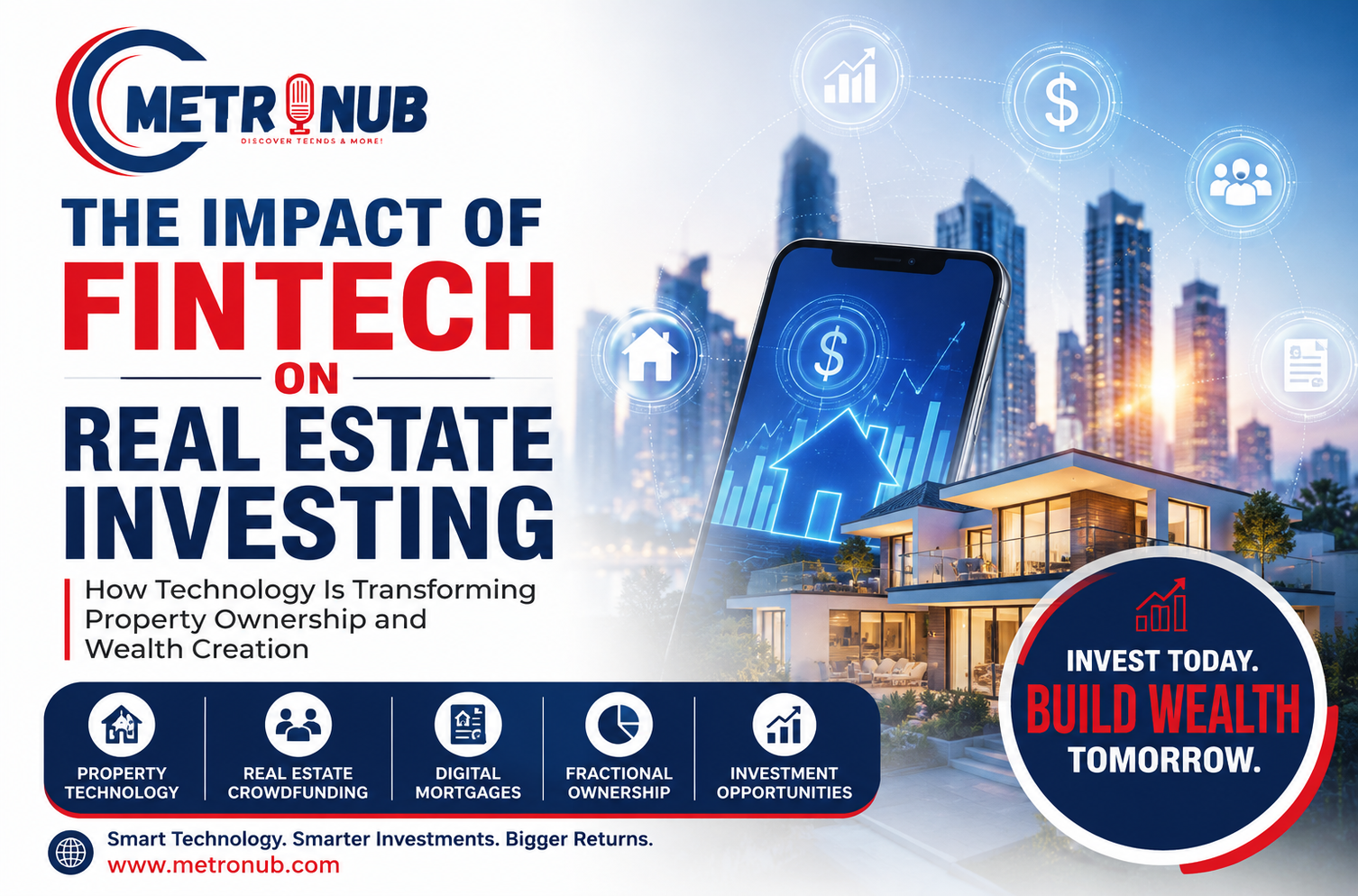
Imagine two different investors with the exact same dream: building long-term wealth through brick-and-mortar property.
A Tale of Two Investors
The first investor, Arthur, started his journey in 2006. To buy a modest commercial building, Arthur spent six months visiting local banks, wearing out his shoe leather, reviewing paper listings at a brokerage firm, and filing stacks of physical documents. He needed a pristine credit history, a mountain of liquid cash for a 20% down payment, and a rolodex of local appraisers, lawyers, and inspectors. If Arthur wanted to diversify his portfolio outside his hometown, he had to hop on a plane. For decades, this was the unavoidable price of admission into the world of property investing. Real estate was a game reserved exclusively for the wealthy, the well-connected, and the patient.
Now, look at Maya. It is today, and Maya is a 26-year-old professional sitting in a coffee shop. While waiting for her latte, she opens an app on her smartphone. With a few taps, she browses a vetted portfolio of multifamily apartment complexes across the country, views detailed AI-driven cash flow projections, takes a 3D virtual walk-through of a property three states away, and invests $500. By the time her drink arrives, Maya is officially a real estate investor, entitled to her fractional share of rental income and long-term capital appreciation.
This stark contrast beautifully illustrates the impact of FinTech on real estate investing . We are living through a massive paradigm shift. The convergence of financial technology (FinTech) and property technology (PropTech) is dismantling the historical gatekeepers of the world's largest asset class.
| Feature | Traditional Real Estate (Arthur) | FinTech Real Estate (Maya) |
|---|---|---|
| Minimum Capital | High ($50,000+) | Low ($10 - $500) |
| Transaction SpeedWeeks to Months | Minutes / Hours | |
| Geographic Scope | Local / Restrictive | Global / Borderless |
| Paperwork | Heavy / Physical Filing | Fully Digital / API-driven |
| Asset Liquidity | Very Low | Improving (Secondary Markets) |
This digital revolution is no longer a futuristic concept—it is our current reality. In this ultimate guide, we will unpack how this structural transformation works. We will explore the inner mechanics of property technology, the rise of real estate crowdfunding, the efficiency of digital mortgages, and the bleeding edge of fractional ownership. Whether you are a seasoned property mogul, a first-time homebuyer, or an ambitious wealth builder looking to diversify, understanding this shift is absolutely essential for navigating the future of wealth building through real estate.
PART 1: Understanding FinTech and Real Estate
To fully appreciate the scale of this technological transformation, we must first look under the hood at the core technologies driving it and analyze exactly why the property sector was so deeply ripe for disruption.
What Is FinTech?
FinTech, short for financial technology, refers to any software, mobile application, cloud architecture, or decentralized framework that automates, optimizes, or improves traditional financial services. It is the core engine that brought us mobile banking, peer-to-peer payment apps, algorithmic stock trading, and digital asset wallets. FinTech strips away unnecessary brick-and-mortar intermediaries, slashes operational transaction costs, and makes sophisticated financial management tools accessible via consumer devices.
What Is PropTech?
PropTech, or property technology, is a specialized, fast-growing cousin of FinTech. It encompasses the collective wave of tech innovations designed specifically to optimize how we buy, sell, rent, manage, design, and construct physical real estate assets. While FinTech focuses directly on the digital movement of money, PropTech focuses on optimizing the property asset itself. When these two fields seamlessly merge, they create a friction-free ecosystem where physical property transactions occur at fluid, digital speeds.
How Technology Is Changing Property Markets
Historically, property markets operated completely on localized, asymmetric information. If you lived in Chicago, finding, analyzing, and vetting a highly profitable rental property in Phoenix required immense manual effort, local connections, or expensive broker fees. Today, digital property marketplaces effortlessly aggregate billions of data points—including historical price trends, localized neighborhood school ratings, criminal statistics, and projected municipal economic growth—into interactive, user-friendly dashboards. FinTech in real estate matches global buyers and sellers instantaneously, calculates complex risk profiles in real time, and allows capital to flow across borders with unprecedented ease.
Why Real Estate Needed Innovation
Real estate is the world’s oldest and most reliable wealth builder, yet it remained stubbornly stuck in the past for centuries. It suffered from three systemic, agonizing flaws:
- Illiquidity: Selling a physical property traditionally took months or even quarters, making it virtually impossible to convert the asset into usable liquid cash during a financial emergency.
- High Capital Barriers: Safely purchasing property required tens of thousands of dollars upfront in down payments alone, systematically shutting out younger generations and lower-income families.
- Extreme Operational Friction: The industry relied on a dizzying, expensive web of brokers, escrow agents, localized title companies, and manual loan officers, each charging an individual fee and adding days to the closing timeline.
By introducing cloud automation, advanced predictive data analytics, and decentralised ledger models, technology addresses these exact pain points, fundamentally transforming real estate from an analogue, clunky asset into a highly optimised digital one.
PART 2: Property Technology (PropTech)
Property technology serves as the absolute infrastructure of modern real estate innovation. It bridges the gap between physical land and digital convenience, fundamentally altering how modern investors interact with physical properties.
What Is Property Technology?
At its core, PropTech is the application of information technology and platform economics to real estate markets. It completely replaces the traditional real estate broker’s paper binder with scalable cloud-based platforms, predictive analytics, and immersive user experiences.
Key Subtopics Within PropTech
Smart Property Platforms
Modern property management software allows landlords to fully automate everything from recurring monthly rent collection to emergency maintenance requests. Sensors securely connected via the Internet of Thingsgsgsgsgsgsgsgsgsgsgsgsgs (IoT) can now detect a hairline pipe leak or a failing HVAC unit days before the tenant even notices, sending an automated work order directly to a local, pre-vetted repair technician. This drastically lowers operational expenses and preserves property value.
AI-Driven Property Analysis
Artificial Intelligence can instantly digest billions of real estate data points—such as local zoning changes, future climate risks, historical tax assessments, and macroeconomic employment indicators—to accurately evaluate a property’s future yield. Instead of relying on a human appraiser's subjective, localizdecentralisedmart investors utilize AI-powered property analysis to rapidly identify undervalued assets and project precise, data-backed returns.
Digital Property Marketplaces
Platforms like Zillow, Redfin, and specialized commercial portals have totally democratized real estate property data. Buyers no longer require a licensed real estate agent just to view valid listings. These digital property marketplaces provide completely transparent pricing histories, automated estimated market values, and direct, friction-free communication lines with sellers.
Virtual Property Tours
High-definition 3D mapping and Reality (VR) let prospective buyers walk through properties thousands of miles away without leaving their living rooms. This has opened up cross-border real estate investment opportunities to casual, retail buyers who previously couldn't afford the immense time or travel expenses required to inspect out-of-state assets manually.
Blockchain Property Records
In traditional real estate, proving who legally owns a piece of land requires tracking deeds through paper-heavy, bureaucratic municipal county offices. This process is highly vulnerable to fraud, identity theft, clerical errors, and lost documentation. By shifting to blockchain property records, title ownership is recorded on an immutable, cryptographic ledger, making title insurance almost entirely obsolete and ensuring undisputed proof of ownership.
How PropTech Improves the Ecosystem
- Efficiency: Core processes that once took weeks—such as background checks on prospective tenants or ordering a title search—are now completed in minutes via automated software workflows.
- Transparency: Hidden fees and asymmetric information are disappearing. Buyers, sellers, and renters have access to the exact same centralized pools of market data, leveling the playing field.
- Accessibility: By removing geographical boundaries and simplifying the discovery process, PropTech allows anyone with an internet connection to actively participate in real estate technology ecosystems.
PART 3: Real Estate Crowdfunding
One of the most revolutionary products born from the FinTech revolution is real estate crowdfunding. It applies the collective online fundraising model of platform economics to commercial and residential property acquisition.
How Real Estate Crowdfunding Works
Instead of a single wealthy individual or an institutional investment bank financing an entire multi-million dollar shopping centre or apartment block, a sponsor lists the project on a specialized digital platformmm. Hundreds or thousands of individual investors then pool their money online to fund the project together.
Pooling Investor Funds
Crowdfunding platforms act as digital syndicators. They handle all the complex legal structuring, SEC compliance, and daily asset management, while users simply choose which individual deals or diversified real estate funds to back with their capital.
Crowdfunding Platforms
Prominent digital platforms have created highly intuitive user interfaces where investors can easily track their holdings, read quarterly project updates, and download essential tax documents with a single click.
Minimum Investment Requirements
Historically, entering a high-quality commercial real estate syndication required an accredited investor status and a minimum check of $50,000 or $100,000. Real estate crowdfunding platforms have completely shattered this elite barrier, often setting minimum investment requirements as low as $10 to $500.
Income Generation
Investors typically earn money in two distinct ways: regular monthly or quarterly dividend distributions generated from tenant rent payments, and a lump-sum payout from capital appreciation when the underlying property is eventually sold at the end of the investment term.
Benefits of Crowdfunding
- Lower Entry Barriers: It allows everyday wealth builders to participate in institutional-grade real estate opportunities without needing immense starting capital.
- Portfolio Diversification: Instead of putting all your life savings into a single rental property down payment, you can spread that same amount of money across twenty different projects in various asset classes (e.g., medical offices, e-commerce warehouses, residential developments) and geographic regions.
- Access to Premium Properties: Individual retail investors can own a slice of high-rise office towers, luxury hotels, or student housing complexes that were previously exclusive to institutional hedge funds and real estate investment trusts (REITs).
Risks of Crowdfunding
- Liquidity Concerns: Real estate is inherently a long-term asset. When you invest in a crowdfunded project, your capital is often locked up tightly for three to seven years. There is no public stock exchange to instantly sell your shares if you need emergency cash.
- Platform Risk: If the underlying crowdfunding platform faces financial distress, operational failure, or goes completely bankrupt, your capital could be tied up in complex legal proceedings for years, even if the real estate asset itself is healthy.
- Market Fluctuations: Real estate values can decline due to shifting economic landscapes, rising interest rates, or falling tenant demand, which directly impacts your distributions and principal value.
PART 4: Digital Mortgages
For most historical property buyers, the absolute scariest and most frustrating part of the lifecycle is securing a home loan. The traditional process is notorious for its endless paperwork, opaque criteria, and long delays. FinTech has stepped in to completely redefine this through digital mortgages.
What Are Digital Mortgages?
A digital mortgage leverages advanced cloud computing, secure API integrations, and artificial intelligence to fully automate the loan application, underwriting, risk scoring, and approval processes. It transitions the mortgage lifecycle from an adversarial paper chase into a streamlined, automated workflow.
Traditional Lending
- Collect physical documents
- Mail/Fax forms to broker
- Manual underwriting review
- Weeks of back-and-forth delays
- In-person paper closing
Digital Mortgage
- Link bank accounts via secure API
- Instant AI document verification
- Automated underwriting scoring
- Rapid digital pre-approval
- E-sign secure digital closing
Key Subtopics Within Digital Mortgages
Online Applications
Instead of scheduling an annoying in-person meeting with a bank loan officer, applicants complete intuitive online forms at their own convenience. These forms adapt dynamically based on user input, ensuring only relevant questions are asked.
AI-Powered Approvals
Digital mortgage platforms connect directly to an applicant’s financial ecosystem via secure APIs. With the user’s permission, the software instantly pulls tax returns from the IRS, verifies employment records, checks credit histories, and evaluates asset balances. AI algorithms then assess the risk profile in real time.
Faster Loan Processing
Traditional mortgages regularly take 45 to 60 days to close. Digital mortgage platforms can cut that processing time down to less than two weeks—and in some automated underwriting instances, pre-approvals can be generated within minutes.
Reduced Paperwork
Benefits of Digital Mortgages
- Convenience: Borrowers can apply from anywhere in the world, track their loan approval status in real time via a visual progress bar, and sign documents securely using electronic signature software.
- Lower Costs: By automating administrative and underwriting tasks, digital lenders significantly reduce operational overhead. These savings are often passed down to consumers in the form of lower origination fees and competitive interest rates.
- Faster Approvals: Speed is a massive advantage in competitive real estate markets. A buyer who can secure an approved mortgage in days is far more attractive to a seller than one who requires a two-month financing contingency.
Challenges of Digital Mortgages
- Security Concerns: Because digital mortgages require linking sensitive financial accounts and transmitting personally identifiable information (PII), they are premium targets for sophisticated phishing attacks and data breaches.
- Regulatory Issues: Lending is heavily regulated. Digital platforms must constantly update their code and compliance frameworks to match changing state, national, and international lending laws, as well as fair-lending fair housing guidelines.
- Technology Adoption: Not all parts of the real estate ecosystem move at the same speed. A digital lender might be fast, but if a local county register office still requires an ink signature on a paper deed, the transaction will hit a bottleneck.
PART 5: Fractional Ownership
While crowdfunding pools money to buy entire projects managed entirely by a third party, fractional ownership allows investors to buy direct, legally binding shares of specific physical properties. This innovative concept is reshaping property investment opportunities for digital-native generations.
What Is Fractional Property Ownership?
Fractional property ownership divides a high-value real estate asset into affordable, liquid digital shares. If a premium beachside villa costs $1 million, a fractional platform can split that asset into 1,000 digital shares worth $1,000 each. Every shareholder owns a proportional piece of the deed and receives a matching percentage of the rental profits and appreciation.
Key Subtopics Within Fractional Ownership
Shared Ownership Models
Fractional platforms usually set up a distinct legal structure, like a Limited Liability Company (LLC), for each individual property. The LLC buys the asset, and the individual investors buy equity shares of that specific LLC, shielding them from personal liabilities.
Tokenized Real Estate
The cutting edge of fractional ownership relies on blockchain technology. Through tokenization, a property’s equity is converted into digital cryptographic tokens on a secure blockchain ledger. These real estate tokens represent real, fractional property ownership and can be bought or sold seamlessly over decentralized networks, paving the way for a highly liquid secondary property market.
Digital Ownership Platforms
Websites and mobile apps serve as the daily interface for fractional owners. Through these secure portals, users can easily review real-time occupancy rates, see ongoing maintenance costs, monitor monthly distributions, and cast digital votes on major property management decisions (e.g., when to sell or renovate).
Benefits of Fractional Ownership
- Lower Capital Requirements: It allows individuals to build an extensive property portfolio without needing millions of dollars or taking on massive personal debt.
- Diversification: Investors can allocate $10,000 by buying fractional shares in ten different properties—such as a condo in Miami, a townhouse in London, and an industrial park in Frankfurt—drastically reducing their risk profile.
- Access to Premium Assets: High-yielding commercial spaces and prime vacation rentals, which typically outperform standard residential properties but require massive capital, become accessible to everyday wealth builders.
Risks of Fractional Ownership
- Ownership Complexity: When a single property has hundreds of co-owners, decision-making can become complicated. If the roof needs replacement, coordinating approvals and capital contributions across a fragmented owner base requires robust platform governance.
- Platform Dependency: Investors rely entirely on the platform to manage tenants, maintain the property, and distribute cash flows. If the management platform goes under or performs poorly, your investment yield could suffer.
- Liquidity Limitations: While tokenization aims to make real estate liquid, secondary marketplaces for trading fractional property shares are still in their infancy. Finding a buyer for your specific shares at a fair market price can still take time during market downturns.
PART 6: New Investment Opportunities Created by FinTech
The impact of FinTech on real estate investing goes far beyond updating old legacy systems; it is actively creating entirely new asset categories and access models that were previously unimaginable for regular everyday retail investors.
- Online Property Investing: This has turned real estate into a screen-based activity. An investor in Tokyo can safely acquire, manage, and collect rent from an industrial warehouse in Ohio without ever catching a flight or making an international phone call.
- Tokenized Real Estate: By turning physical assets into digital tokens on a blockchain, tokenized real estate introduces programmable features into property ownership. For instance, smart contracts can automate rent distributions to token holders every second, rather than making them wait for a monthly check.
- Real Estate Investment Platforms: Modern digital platforms function as customized, robo-advisors for real estate. Users specify their risk tolerance, investment timeline, and dividend preferences, and the platform automatically builds a diversified real estate portfolio on their behalf.
- Cross-Border Property Investments: In the past, moving money internationally to buy property involved navigating complex foreign exchange regulations, expensive bank wire fees, and unfamiliar legal frameworks. FinTech platforms abstract this complexity, handling currency conversion, compliance, and international tax reporting automatically behind the scenes.
- AI-Powered Investment Analysis: FinTech equips everyday investors with institutional-grade data. Software can run millions of simulations to stress-test a property's performance against rising inflation, shifting employment numbers, and changing local real estate trends, ensuring that investment decisions are guided by data rather than gut feeling.
PART 7: Benefits of FinTech for Real Estate Investors
When we step back and view these innovations as a whole, it is clear that FinTech delivers deep, systemic improvements across the entire real estate investing lifecycle:
- Accessibility: By lowering minimum capital requirements from tens of thousands of dollars to small double-digit amounts, FinTech has democratized the world’s most reliable wealth-building asset. It invites Millennials, Gen Z, and first-time buyers into property investment opportunities that were previously out of reach.
- Lower Costs: By removing or automating the work of traditional intermediaries—such as loan brokers, manual title searchers, and redundant administrative staff—FinTech significantly lowers transaction fees, origination costs, and management overhead. More of your money goes directly toward buying the asset.
- Better Transparency: FinTech replaces handshake deals and hidden pricing with public data dashboards, immutable blockchain registries, and open-source valuation metrics. Investors can review a property’s clear financial performance, history, and fee structures upfront.
- Faster Transactions: What used to take months now takes days or minutes. Whether it is securing a digital mortgage pre-approval, executing a fractional property trade, or checking tenant background data, automation removes the friction points that drag out traditional real estate transactions.
- Improved Investment Analysis: With access to deep data pools and predictive AI engines, investors no longer have to guess which geographic neighborhoods or property types will perform best. They can make highly informed, numbers-driven choices based on comprehensive real-time market data.
- Increased Financial Inclusion: Real estate equity has long been a primary driver of the wealth gap. By providing underserved populations with access to fractionally owned property investments and streamlined digital credit options, FinTech fosters a fairer financial ecosystem.
PART 8: Risks and Challenges
While the structural benefits are incredibly profound, a balanced, intelligent investor must rigorously analyze both sides of the coin. The rapid digitization of real estate introduces unique modern risks that require careful, proactive navigation.
- Cybersecurity Threats: As property transactions move completely online, they attract sophisticated digital criminals. Phishing schemes targeting wire transfers, ransomware attacks on property management databases, and identity theft within digital mortgage systems are real threats that demand top-tier encryption and security protocols.
- Fraud Risks: Digital platforms can make it easier for bad actors to create deceptive setups. Unvetted online marketplaces can display misleading property images, manipulate rental history metrics, or list fraudulent assets, emphasizing the absolute necessity of thorough due diligence.
- Regulatory Uncertainty: Because financial and property technologies evolve faster than legislative bodies can write laws, the sector faces constant regulatory changes. A fractional token platform or crowdfunding framework that is completely legal today could face strict new compliance rules or bans tomorrow, directly affecting investor returns.
- Technology Failures: Relying on software means that bugs, platform outages, and server crashes can disrupt your investments. If an automated property management platform suffers a prolonged technical failure, rent collections could be delayed and emergency maintenance requests might go unanswered.
- Data Privacy Concerns: To apply for digital mortgages or use advanced real estate platforms, users must hand over deeply personal data, including social security numbers, bank logins, and employment histories. If these platforms fail to secure their databases, it can lead to devastating data privacy leaks.
PART 9: The Future of FinTech and Real Estate Investing
What lies ahead? The next decade promises an even more radical, deep integration between financial technology and physical brick-and-mortar property.
Artificial Intelligence Economy
We will quickly move beyond basic predictive analytics into fully autonomous, algorithmic real estate investing. In the near future, advanced AI algorithms could independently scan global property markets, identify undervalued multifamily complexes, secure financing via digital lending networks, purchase fractional shares, and optimize rental pricing dynamically without any human intervention required.
Ubiquitous Blockchain & Smart Contracts
Smart contracts will turn traditional property transactions into self-executing software programs. When a buyer transfers funds to a specific digital wallet, the smart contract will automatically verify the payment, transfer the property deed on the blockchain ledger, update tax records, and notify the local municipality—all in a single second, completely bypassing escrow companies or title attorneys.
Hyper-Tokenization at Scale
As global regulatory frameworks mature, tokenization will become the standard format for real estate equity. Physical properties will have their own digital tickers, allowing real estate to be traded on global, 24/7 secondary token markets with the exact same liquidity and ease as public stocks or cryptocurrencies.
PART 10: How Investors Can Prepare for the Future
To maximize the benefits from this historic technological shift, you must be proactive, informed, and strategic. Here is your roadmap for navigating the tech-driven real estate landscape:
- Learn FinTech Fundamentals: Take time to truly understand how cloud platforms, API integrations, blockchain technology, and AI data models work. The more you know about the underlying tech, the better you can spot high-quality investment opportunities.
- Research Platforms Carefully: Do not invest your money on the first platform you see in an app store. Look for platforms with established track records, strong financial backing, clear regulatory compliance structures, transparent fee models, and positive user reviews.
- Diversify Investments: Use the low entry barriers to your advantage. Do not risk all your capital on a single crowdfunded apartment build or one tokenized vacation rental. Spread your investments across different property types, platforms, and geographic regions to minimize risk.
- Understand Risks and Liquidity: Always assume that money put into real estate crowdfunding or fractional platforms will be locked up for several years. Keep an emergency cash reserve in standard liquid bank accounts, and never invest money you might need on short notice.
- Monitor Local and Global Regulations: Keep an eye on evolving laws regarding crowdfunding, tokenization, and digital lending in your country. Staying ahead of regulatory shifts will help you pivot your portfolio safely before new policies take effect.
- Develop a Long-Term Strategy: Technology changes rapidly, but real estate remains a long-term asset class. Use digital tools to optimize your entries, track your data, and minimize your costs, but evaluate your investments based on timeless fundamentals: cash flow, asset location, and underlying economic demand.
Frequently Asked Questions (FAQ)
Conclusion: Embracing the Digital Shift
The impact of FinTech on real estate investing is nothing short of revolutionary. We are witnessing the ultimate democratization of the world’s most proven wealth-building asset. The structural walls that once kept everyday individuals completely out of premium property markets—the massive down payments, the strict geographic constraints, the exhausting physical paperwork, and the exclusive insider networks—are steadily being dismantled by digital technology.
However, it is crucial to remember that technology is not changing the fundamental, organic nature of real estate itself. A physical building still requires reliable tenants, physical upkeep, and sound local economic foundations to generate consistent profit. FinTech is simply changing the interface—making it faster, significantly cheaper, highly transparent, and accessible to anyone with an internet connection.
As you step forward into this digital property frontier, carry a mindset of balanced optimism. Embrace the incredible convenience of fractional ownership, the analytical power of AI valuation engines, and the deep diversification benefits of crowdfunding. But never neglect classic, time-tested financial discipline. Perform deep due diligence on every single platform, understand your personal liquidity limitations, diversify your assets, and keep a long-term economic horizon.
The future of property ownership is digital, decentralized, and open to all. The gatekeepers have left the building—and the door is now wide open for you to start building your real estate legacy right from the palm of your hand.