Cryptocurrency Investment Risks and Safety Tips Every Beginner Should Know
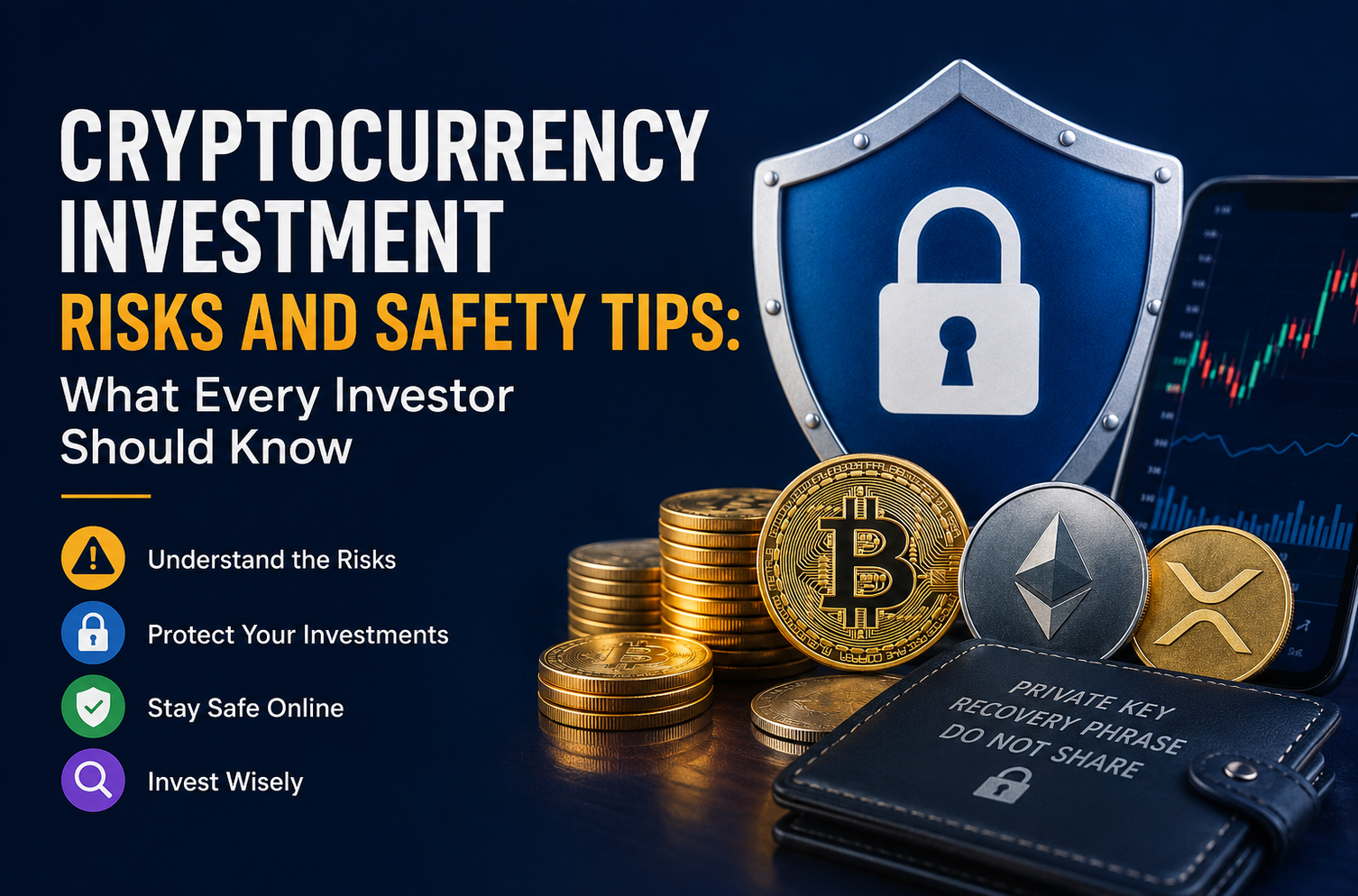
Cryptocurrency has opened up new possibilities for people who want to invest, build wealth, and take part in the growing digital economy. Over the past decade, digital assets like Bitcoin and Ethereum have attracted millions of investors across the world — including many Nigerians exploring alternatives to traditional savings and investment products.
Social media and news headlines tend to highlight the success stories: investors who made life-changing profits in a short time. But there is an equally important side of cryptocurrency investing that does not get nearly as much attention — the risks. The crypto market is characterised by extreme market volatility, frequent scams, and security vulnerabilities that can lead to devastating financial losses if you are not careful.
Many beginners enter the market without a solid understanding of how digital assets work or what dangers lie ahead. Some invest based on tips from friends, advice from online influencers, or — most dangerously — promises of guaranteed returns. These decisions, driven by excitement rather than research, often lead to costly and avoidable mistakes.
Understanding the risks does not mean you should avoid cryptocurrency altogether. It means learning how to identify potential dangers, protect your capital, and make investment decisions based on facts rather than fear or greed.
In this guide, we will walk you through the key risks of cryptocurrency investing, clear up common misconceptions, explain the regulatory environment in Nigeria, and share practical safety tips to help you invest more confidently and securely.
Key Facts Every Beginner Should Know
Before you put any money into cryptocurrency, there are a few fundamental facts worth understanding. These are not meant to discourage you — they are meant to help you approach the market with realistic expectations and a clear head.
Cryptocurrency Prices Are Highly Volatile
Unlike a fixed-income investment or a traditional savings account, cryptocurrency prices can swing dramatically within hours. A coin that gains 20% in a single day can just as easily give it all back — and more — the next.
Profits Are Never Guaranteed
No cryptocurrency investment can promise returns. If anyone is telling you otherwise — whether it is a platform, a friend, or a social media page — treat it as a serious red flag.
Research Is Non-Negotiable
Successful investors do their homework before committing capital. Buying a token simply because it is trending on Twitter or TikTok is speculation, not investing. Take the time to understand what a project actually does before putting your money into it.
Security Is Your Responsibility
Unlike traditional banks, most cryptocurrency transactions are irreversible. If you lose access to your wallet or fall victim to fraud, there is no customer service line that can reverse the transaction or refund your funds.
Scams Are Rampant in the Crypto Space
Fraudsters are drawn to cryptocurrency because transactions are fast, borderless, and difficult to trace. Fake investment platforms, phishing websites, impersonation scams, and Ponzi schemes are all common. Learning to recognise them is one of the most valuable things you can do as a beginner investor.
Diversification Reduces Risk
Concentrating all your discretionary capital in a single cryptocurrency significantly increases your exposure to loss. Many experienced investors spread their holdings across different asset classes to manage overall portfolio risk.
Emotions Can Be Expensive
Fear and greed are the two biggest drivers of poor investment decisions. Buying at the peak of a rally because everyone else is buying — or panic-selling at a loss when prices drop — are behaviours that consistently cost investors money.
None of this eliminates risk, but understanding these realities will help you approach cryptocurrency investing with the mindset needed for long-term, disciplined decision-making.
Benefits and Advantages of Cryptocurrency Investment
Despite the risks, cryptocurrency continues to attract investors around the world — and for good reason. When approached thoughtfully and as part of a broader financial strategy, crypto can offer some compelling advantages.
Potential for Significant Capital Appreciation
One of the most obvious draws of cryptocurrency is the potential for substantial capital appreciation. Several digital assets have delivered outsized returns over time, attracting both retail investors and large institutional players looking for growth beyond traditional markets.
Access to Global Markets Around the Clock
Unlike the Nigerian Stock Exchange or most traditional investment platforms, cryptocurrency markets operate 24 hours a day, seven days a week. You can buy, sell, or monitor your holdings at any time — from virtually anywhere in the world with an internet connection.
Low Barrier to Entry
You do not need a large sum of money to get started. Most cryptocurrency platforms allow users to begin investing with relatively small amounts, making this asset class accessible to young Nigerians and first-time investors who are still building their financial base.
Portfolio Diversification
Adding cryptocurrency to a broader investment portfolio that includes stocks, bonds, mutual funds, or real estate can provide exposure to a different asset class. When managed carefully, this diversification may help reduce overall portfolio risk and improve long-term returns.
Participation in Blockchain-Driven Innovation
The crypto industry is deeply tied to blockchain technology, which is being adopted across sectors including finance, healthcare, logistics, and digital identity. For investors who believe in the long-term potential of this technology, cryptocurrency offers a direct way to gain exposure to that growth.
Faster and Cheaper Cross-Border Transfers
Sending money internationally through traditional banking channels can be slow and expensive. Cryptocurrency enables faster cross-border transactions — often at a fraction of the cost — making it particularly useful for Nigerians in the diaspora or those with international financial ties.
Financial Inclusion for the Unbanked
For Nigerians without access to formal banking services, cryptocurrency provides an alternative way to store value, transfer funds, and participate in the financial system — all through a smartphone and an internet connection.
These advantages are real, but they do not tell the whole story. Every one of them comes with a corresponding risk, which is why a balanced perspective is essential before you invest a single naira.
Risks and Challenges of Cryptocurrency Investment
Cryptocurrency remains one of the highest-risk investment categories available to retail investors today. Understanding what you are up against before you invest is not pessimism — it is basic financial responsibility.
Extreme Market Volatility
Cryptocurrency prices are notoriously unpredictable. Digital assets can gain or lose substantial value within hours, making short-term price movements nearly impossible to forecast with confidence. This level of market volatility is unlike almost anything you will encounter in traditional financial markets.
Real Risk of Capital Loss
Unlike guaranteed savings products, cryptocurrency investments can — and do — go to zero. Several projects that once attracted significant investor capital have since collapsed entirely, leaving holders with nothing. Past performance, especially in crypto, is not a reliable indicator of future results.
Scams and Fraud
The crypto industry has become a prime hunting ground for fraudsters. Common schemes include fake investment platforms, phishing websites, impersonation scams, and projects that promise unrealistic returns before disappearing with investors' funds. Nigerian investors have unfortunately been frequent targets of these schemes.
Cybersecurity Threats
Cryptocurrency users are regularly targeted by hackers through methods including phishing emails, malware, SIM-swapping attacks, and compromised exchange accounts. Unlike a bank, there is no deposit insurance or fraud protection to fall back on if your funds are stolen.
Regulatory Uncertainty
Cryptocurrency regulations are still evolving in Nigeria and around the world. Policy changes — including restrictions on trading, new tax requirements, or licensing rules for exchanges — can affect the value and accessibility of your holdings with little warning.
Limited Consumer Protection
Traditional financial institutions offer a degree of regulatory protection for customers. Cryptocurrency platforms, particularly unregulated ones, generally do not. Mistaken or fraudulent transactions are typically irreversible, and recourse is limited.
Emotional and Behavioural Risk
Many investors buy at market peaks driven by FOMO (fear of missing out) and sell at the bottom driven by panic. This pattern — buying high and selling low — is one of the most consistent ways people lose money in the crypto market. Managing your own emotional responses is a skill that takes time and discipline to develop.
Project Failure Risk
The vast majority of cryptocurrency projects will not survive long term. Some fail due to poor management, weak underlying technology, lack of real-world adoption, or outright fraud. Investors who allocate capital to these projects without adequate due diligence risk losing their entire investment.
None of this means cryptocurrency cannot be a viable part of your investment strategy. But going in with a clear-eyed understanding of these challenges is what separates investors who manage risk wisely from those who learn the hard way.
Common Cryptocurrency Misconceptions
Misinformation spreads fast in the crypto space — and it has real financial consequences. Here are some of the most common myths that continue to mislead Nigerian investors, particularly beginners.
Cryptocurrency Is a Guaranteed Path to Wealth
This is perhaps the most dangerous misconception in the space. While some investors have made extraordinary gains, many more have suffered significant losses. Sustainable returns in cryptocurrency — as with any investment — require research, patience, proper risk management, and realistic expectations. There are no shortcuts.
All Cryptocurrencies Work Like Bitcoin
Bitcoin is just one of thousands of digital assets, and many operate very differently. Some are designed for smart contracts and decentralised applications (like Ethereum), others for privacy, gaming, or cross-border payments. Assuming all cryptocurrencies are equivalent is a mistake that can lead to poor investment choices.
Cryptocurrency Has No Intrinsic Value
Critics often dismiss digital assets as worthless because they are not physical. But value in financial markets — whether in gold, company shares, or currency — is ultimately driven by utility, scarcity, network adoption, and market confidence. Many cryptocurrencies derive real value from the technology and ecosystems they support.
You Need to Be a Tech Expert to Invest
You do not need to understand blockchain code to invest in cryptocurrency. What matters more is understanding the basics of how the market works, knowing how to evaluate a project, and being aware of the risks. The learning curve is manageable if you take it one step at a time.
Cryptocurrency Is Completely Anonymous
Most public blockchains are transparent by design — every transaction is recorded and can potentially be traced. While users benefit from a degree of pseudonymity, cryptocurrency is far from untraceable. Regulatory bodies and law enforcement agencies increasingly have tools to analyse blockchain activity.
Prices Always Recover Eventually
Some investors hold losing positions indefinitely under the assumption that prices will always bounce back. While major cryptocurrencies like Bitcoin and Ethereum have historically recovered from bear markets, thousands of smaller projects have not — and never will. There is no guarantee of recovery for any individual digital asset.
Crypto Is Mainly Used for Illegal Activity
This misconception dates back to the early days of Bitcoin. Today, cryptocurrency is used by individuals, businesses, fintech companies, and major financial institutions for a wide range of legitimate purposes — including payments, investments, remittances, and decentralised financial services.
Separating fact from fiction is one of the most important things you can do before investing. Decisions based on accurate information consistently produce better outcomes than decisions based on hype or assumptions.
Cryptocurrency Regulations in Nigeria
The regulatory environment for cryptocurrency in Nigeria has shifted considerably over the past few years. As digital assets gain mainstream traction, Nigerian regulators have been working to establish clearer frameworks for how crypto businesses and investors should operate.
One important point to understand from the outset: cryptocurrency is not legal tender in Nigeria. This means Bitcoin, Ethereum, and other digital assets are not officially recognised as a substitute for the Nigerian Naira in everyday transactions.
The Role of the Securities and Exchange Commission (SEC)
The Securities and Exchange Commission (SEC) has moved to bring certain digital assets and Virtual Asset Service Providers (VASPs) operating in Nigeria under its regulatory oversight. The aim is to improve investor protection, promote transparency, and reduce the prevalence of fraudulent schemes within the industry. Investors should look for platforms that are registered with or recognised by the SEC as part of their due diligence process.
Know Your Customer (KYC) Requirements
Regulated cryptocurrency exchanges in Nigeria are required to conduct KYC verification before allowing users to trade. These identity verification procedures — which typically involve submitting government-issued ID and proof of address — are designed to prevent money laundering, terrorist financing, and other financial crimes. If a platform does not require any form of identity verification, treat that as a warning sign.
Consumer Responsibility in a Developing Regulatory Environment
Even as regulations evolve, the responsibility for conducting thorough due diligence remains with the individual investor. Regulatory oversight reduces certain risks, but it does not eliminate them. Always research any platform or project independently before committing your funds.
Tax Considerations
Profits from cryptocurrency investments may carry tax implications depending on how the Federal Inland Revenue Service (FIRS) and other relevant authorities develop their guidance on digital assets. Investors should monitor regulatory updates in this area and consider seeking professional advice if they are generating meaningful returns from crypto trading or investing.
Why the Regulatory Framework Matters
A well-developed regulatory framework benefits everyone in the ecosystem — investors, legitimate businesses, and the broader economy. It creates accountability, reduces the space in which scammers can operate, and provides a basis for legal recourse when things go wrong. Staying informed about regulatory developments is not optional; it is a core part of responsible investing in Nigeria's evolving crypto market.
Regulations in this space can change quickly. Make it a habit to follow official communications from the SEC and other relevant Nigerian authorities to ensure your investments remain compliant.
How to Stay Safe When Investing in Crypto
Choosing the right cryptocurrency is only half the challenge — protecting what you invest is equally important. No investment is entirely risk-free, but following sound security practices can dramatically reduce your exposure to fraud, theft, and costly errors.
Use Only Reputable Cryptocurrency Platforms
Stick to well-established exchanges with a strong security track record and transparent operations. Before creating an account, research the platform's reputation, regulatory status, security infrastructure, and user reviews. Avoid platforms that are difficult to verify or have little online presence.
Enable Two-Factor Authentication (2FA)
Two-factor authentication adds a critical layer of security to your account. Even if a fraudster obtains your password, they will still need access to your second verification method — typically a time-sensitive code sent to your phone or generated by an authenticator app — before they can log in.
Use Strong, Unique Passwords
Never reuse passwords across multiple accounts, and avoid simple or predictable combinations. A strong password that mixes uppercase and lowercase letters, numbers, and special characters makes it significantly harder for attackers to gain unauthorised access through brute force or credential stuffing attacks.
Guard Your Wallet Credentials With Your Life
If you use a self-custody cryptocurrency wallet, your private keys and recovery phrase are the only way to access your funds. Never share them with anyone — not a support agent, not a friend, not a platform representative. Anyone who has these details effectively controls your wallet.
Always Do Your Own Research (DYOR)
Before investing in any cryptocurrency project, take time to understand what it does, who is behind it, how the technology works, and whether there is genuine adoption. Review the project's whitepaper, community activity, and development roadmap. Avoid making investment decisions based solely on social media hype or influencer endorsements.
Treat Guaranteed Returns as a Red Flag
Every legitimate investment carries some level of risk. Any platform or individual promising fixed, guaranteed profits with no downside is almost certainly operating a scam. This includes schemes that promise daily or weekly returns far above what regulated financial products offer.
Start With an Amount You Can Afford to Lose
Beginners should limit their initial exposure to an amount they would be comfortable losing entirely. This approach allows you to learn how the market works without putting essential funds — rent, school fees, emergency savings — at unnecessary risk.
Stay Informed About Market Developments
The cryptocurrency landscape evolves rapidly. Keeping up with market news, platform security updates, and regulatory announcements in Nigeria will help you respond to emerging risks and make better-informed investment decisions over time.
Security is not a one-time setup — it is an ongoing habit. Investors who treat it seriously are far less likely to become victims of the scams and threats that are common in this space.
Red Flags to Watch Out For
Many cryptocurrency scams follow recognisable patterns. Learning to spot the warning signs early — before you commit any money — is one of the most effective ways to protect yourself in this market.
Promises of Guaranteed Profits
No legitimate investment platform can guarantee returns. Cryptocurrency prices are driven by market forces that no individual or company can control. If someone is promising you fixed daily, weekly, or monthly profits, walk away immediately.
Artificial Urgency and Pressure Tactics
Fraudsters frequently create false time pressure — "this offer closes in 24 hours" or "only a few spots left" — to prevent you from doing proper research. A legitimate investment opportunity will still be there tomorrow. Any platform that pressures you to act immediately is not one you should trust.
Lack of Transparency
If a project cannot clearly explain its purpose, the identities of its founders, how it generates returns, or how it is regulated, those are serious warning signs. Legitimate projects welcome scrutiny; fraudulent ones avoid it.
Unverified Celebrity or Influencer Endorsements
Scammers frequently fabricate endorsements from well-known public figures, celebrities, or business leaders to lend their schemes credibility. Always verify any claimed endorsement through the public figure's official channels before acting on it.
Requests for Your Private Keys or Recovery Phrase
No legitimate company, exchange, or customer support representative will ever ask for your private keys or wallet recovery phrase. If anyone requests this information, it is a scam — full stop.
Unrealistic Return Promises
If an investment is promising to double or triple your money in days or weeks with minimal risk, it is almost certainly a Ponzi scheme or exit scam in disguise. High potential returns in legitimate investing always come alongside high risk — never without it.
Poor Website Quality and Missing Information
Many fraudulent platforms are hastily built, featuring spelling errors, broken links, missing legal documentation, and vague or plagiarised content. A poorly designed website with no verifiable company information is a strong indicator of a fraudulent operation.
Pyramid and Referral-Only Schemes
If a platform's primary value proposition is recruiting new members — rather than offering a genuine financial product or service — it is almost certainly a pyramid or Ponzi scheme. These structures collapse when new recruitment slows, leaving most participants with losses.
When in doubt, pause before investing. A short delay to conduct additional research has saved many investors from significant losses. If something feels wrong, trust that instinct and seek a second opinion from a trusted and knowledgeable source.
Frequently Asked Questions
Is cryptocurrency legal in Nigeria?
Yes. Nigerians are permitted to buy, sell, and hold cryptocurrencies. However, crypto is not recognised as legal tender, meaning it cannot be used as an official substitute for the Naira in everyday transactions. The regulatory landscape continues to evolve, and investors should stay updated on guidelines issued by the SEC and other relevant Nigerian authorities.
Can cryptocurrency be hacked?
The underlying blockchain networks are generally secure and extremely difficult to compromise. However, individual wallets, exchange accounts, and user devices are vulnerable if proper security practices are not followed. Enabling two-factor authentication, using strong passwords, and securing your private keys significantly reduce your risk of being hacked.
How do I identify a crypto scam?
Common warning signs include promises of guaranteed or fixed returns, high-pressure tactics urging you to invest quickly, lack of transparency about the team or business model, unverified celebrity endorsements, and requests for your private keys or recovery phrase. Always conduct thorough research before committing any funds to a new platform or project.
Should beginners invest all their money in crypto?
Absolutely not. Cryptocurrency is a high-risk asset class, and no responsible financial adviser would recommend concentrating your entire portfolio in it — especially as a beginner. Only invest discretionary capital you can afford to lose, keep essential funds in safer instruments, and consider diversifying across multiple asset classes to manage overall risk.
What is the safest way to store cryptocurrency?
For long-term holdings, many experienced investors use hardware wallets — physical devices that store private keys offline and are significantly harder to hack than software wallets or exchange accounts. Regardless of the storage method you choose, protecting your private keys and recovery phrase is non-negotiable. Anyone who has access to these can take full control of your funds.

Comments
Email addresses are never published.