How AI Is Changing Finance in Nigeria | 2026 Guide
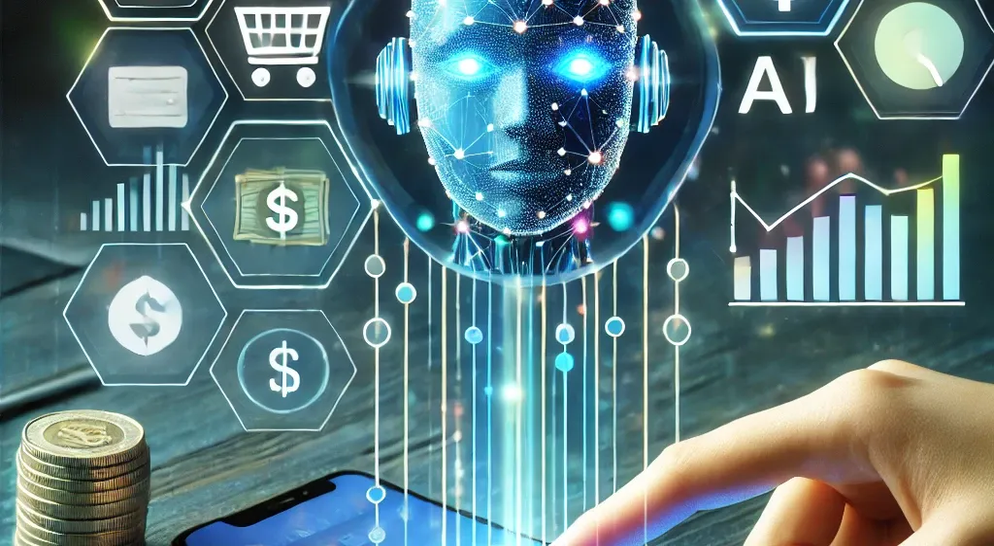
Artificial intelligence (AI)is no longer something that belongs only in science-fiction movies or the laboratories of major technology companies. It is becoming part of everyday financial life in Nigeria, often without customers even realising it.
When a banking app flags a suspicious transaction, a fintech platform assesses a loan application within minutes, or a chatbot answers a customer's question instantly without delay, artificial intelligence may be working behind the scenes.
As Nigeria's financial sector becomes increasingly digital, banks, fintech companies, insurance providers and other financial businesses are turning to Artificial Intelligence (AI) to solve practical problems in the societies and bring everlasting solutions to it. The technology is helping companies process large amounts of information, detect unusual activity, automate repetitive tasks and understand their customers more effectively.
But how is AI changing finance in Nigeria, and what does this mean for ordinary Nigerians?
From fraud detection and lending to customer service and financial inclusion, AI is beginning to reshape how money is managed, moved and protected across the country.
What Is Artificial Intelligence in Finance?
Artificial intelligence in finance refers to the use of computer systems that can analyse information, recognise patterns, make predictions and perform tasks that would normally require human intelligence.
Financial institutions deal with enormous amounts of information every day. Banks process transactions, review applications, monitor accounts and communicate with customers across multiple channels.
Doing all of this manually would be slow and expensive. AI allows financial companies to process huge amounts of information much faster and identify patterns that may be difficult for people to notice.
For example, an AI system can study normal activity on an account and identify transactions that appear unusual. A lending platform can analyse relevant financial information to help determine whether a customer is likely to repay a loan.
In simple terms, AI allows financial institutions to make better use of the information they already have.
Why AI Is Becoming Important in Nigeria
Nigeria's financial industry has changed significantly over the past decade. Mobile banking, digital payments, fintech applications and online financial services have made it possible for millions of people to manage money without visiting a traditional bank branch.
That digital transformation has created enormous opportunities, but it has also created new challenges.
Financial institutions now have to process huge numbers of transactions while dealing with fraud, cybercrime, credit risk, customer complaints and regulatory requirements. At the same time, customers expect financial services to be fast, convenient and available whenever they need them.
AI can help financial businesses deal with some of these challenges.
Instead of asking employees to manually handle every transaction or customer request, companies can automate certain processes and allow their staff to concentrate on more complicated work.
This is why artificial intelligence is becoming an important part of the future of banking and fintech in Nigeria.
How AI Is Changing Finance in Nigeria
1. AI Is Improving Fraud Detection
Fraud has always been a problem for financial institutions, but the growth of digital banking has created new opportunities for criminals.
Traditional fraud detection systems often rely on predefined rules. A transaction might be flagged because it is unusually large, happens in an unfamiliar location or does not match a customer's normal behaviour.
AI can take this process further.
Machine learning systems can study thousands or even millions of transactions and identify patterns associated with suspicious behaviour. Instead of looking at only one transaction, an AI system can consider the broader behaviour of an account.
For example, imagine a customer who normally makes small payments within Nigeria. Suddenly, the account begins making several large transfers to unfamiliar accounts. An AI system may recognise that this behaviour is unusual and alert the financial institution.
The benefit is speed. AI can analyse enormous amounts of transaction data in a very short period, allowing financial institutions to investigate potential problems sooner.
AI will not eliminate fraud, but it can give banks and fintech companies a much stronger tool for identifying suspicious activity.
2. AI Is Changing How Loans Are Approved
Access to affordable credit remains an important issue for individuals and businesses in Nigeria.
Traditional lending decisions often depend on factors such as credit history, income, employment information and collateral. This can make borrowing difficult for people and small businesses that have limited financial records.
AI could help change the way lenders evaluate potential borrowers.
Depending on the financial product and applicable regulations, AI systems can analyse relevant information and identify patterns that may help lenders understand a customer's ability to repay.
This could make some lending decisions faster and give financial institutions a broader picture of potential borrowers.
For small businesses, faster access to credit could be particularly valuable. A business owner who needs funds to purchase stock, pay suppliers or manage a temporary cash-flow problem may not have the luxury of waiting weeks for a decision.
However, AI-powered lending also needs careful oversight. An algorithm can make mistakes, and poorly designed systems can produce unfair results. Financial institutions need to make sure that automated credit decisions are accurate, explainable and regularly reviewed.
3. AI Is Making Customer Service Faster
Customer service is another area where Nigerians are likely to notice the impact of Artificial intelligence
Banks and fintech companies receive thousands of customer enquiries every day. Many of these questions are simple and repetitive.
AI-powered chatbots can answer common questions, provide basic information and guide customers through routine processes without requiring them to wait for a human representative.
This can be particularly useful outside normal working hours.
A customer who wants to understand a transaction or find information about a service may be able to get an immediate response instead of waiting until the next business day.
However, financial institutions should not use automation as an excuse to make human support difficult to access.
When someone has lost money, suspects fraud or is dealing with a complicated account problem, they may need to speak with a real person. The strongest customer-service systems will use AI for routine issues while keeping human employees available for situations that require judgment and empathy.
4. AI Is Making Know Your Customer and Customer Onboarding More Efficient
Financial institutions need to know who their customers are. This process is commonly known as Know Your Customer, or KYC.
KYC helps financial institutions verify identities, reduce fraud and comply with financial regulations. However, the process can become slow when documents and information have to be reviewed manually.
AI can assist with tasks such as document analysis, information matching and identity verification.
This can help legitimate customers complete onboarding more quickly while allowing financial institutions to identify potentially suspicious applications.
For Nigeria's rapidly expanding digital financial sector, efficient customer verification will become increasingly important.
5. AI Is Helping Financial Institutions Manage Risk
Every financial institution has to manage risk.
Banks need to consider whether customers will repay loans. Fintech companies need to monitor fraudulent activity. Insurance companies need to assess claims. Investment businesses need to evaluate changing market conditions.
AI can help by analysing large amounts of information and identifying patterns that could indicate future problems.
Predictive models can use historical and current information to estimate possible outcomes. Financial institutions can then use these insights to make better decisions and prepare for potential risks.
This is particularly useful in Nigeria, where businesses and consumers can be affected by changes in inflation, interest rates, exchange rates and wider economic conditions.
6. AI Could Improve Financial Inclusion
One of the most promising applications of AI in Nigerian finance is financial inclusion.
Many Nigerians still face barriers when trying to access affordable credit, insurance, investment products and other financial services.
AI could help financial institutions develop products that better serve people with limited traditional financial histories or irregular income.
Technology could also make financial education more accessible. An AI-powered financial application could explain basic financial concepts, help customers understand their spending habits or provide personalised information about saving and budgeting.
However, technology alone cannot solve financial exclusion.
People still need reliable internet access, affordable digital services, financial literacy, secure identification systems and trustworthy institutions. AI can support financial inclusion, but it needs to be part of a broader effort.
7. AI Is Creating New Opportunities for Nigerian Fintech Companies
Nigeria has developed a strong fintech ecosystem, and artificial intelligence could become an important part of its next phase of growth.
Fintech companies already operate largely through digital platforms. They process payments, provide loans, manage accounts and interact with customers online.
AI can help these companies analyse customer behaviour, identify suspicious transactions, automate repetitive tasks and improve their products.
It can also help fintech companies serve more customers without increasing their workforce at the same rate.
For growing financial technology businesses, that combination of automation and scalability can be extremely valuable.
AI and the Future of Mobile Banking in Nigeria
Mobile banking has changed the way Nigerians interact with financial institutions. Customers can transfer money, pay bills, check balances and access financial services directly from their phones.
The next stage could make these applications much more intelligent.
Instead of simply displaying transactions, a banking app could help customers understand their spending patterns, identify unusual activity, track financial goals and make better decisions about their money.
This could transform mobile banking from a simple transaction platform into something closer to a personal financial assistant.
However, customers should remain in control of their information and understand how financial applications use their data.
How AI Is Affecting Insurance and Investment Services
The impact of AI extends beyond banking and fintech.
Insurance companies can use artificial intelligence to analyse claims, detect suspicious activity, assess risk and automate administrative processes.
Investment companies can use AI to analyse financial information, monitor markets and support research.
For customers, this could eventually result in more personalised insurance and investment services.
However, AI should never be treated as a guarantee of financial success. Investment decisions still involve risk, and customers should not rely solely on automated recommendations when making important financial decisions.
The Challenges of AI in Nigerian Finance
Data Privacy
Financial institutions handle some of the most sensitive information people have, including account details, transaction histories, identification information and income records.
As financial companies use more AI systems, protecting this information becomes increasingly important.
Companies need strong controls around how customer data is collected, stored, processed and shared.
Algorithmic Bias
AI systems learn from data. If the data contains errors or biases, those problems can influence the decisions made by the system.
This becomes especially serious when AI is used to approve loans, assess risk or identify suspicious customers.
Financial institutions need to test their systems regularly and make sure automated decisions do not unfairly disadvantage particular groups.
Cybersecurity
AI can help financial institutions identify cyber threats, but it also creates new systems that need protection.
Financial companies must secure their AI models, applications, databases and customer information against attacks.
As more financial services become automated, a major security problem could potentially affect large numbers of customers.
Too Much Automation
There is a risk that financial companies could become too dependent on automation.
Not every problem should be solved by a chatbot or algorithm. Customers dealing with fraud, financial hardship or serious account problems may need to speak with a human being.
AI should make financial services more efficient without making them feel impersonal.
Will AI Replace Jobs in Nigeria's Financial Sector?
AI will change financial-sector jobs, but that does not necessarily mean it will replace everyone working in finance.
Some repetitive tasks are likely to become automated. Data entry, basic customer enquiries, document processing and certain administrative activities can increasingly be handled by software.
At the same time, financial institutions will need people with new skills.
There will be greater demand for professionals who understand data analysis, cybersecurity, artificial intelligence, financial technology, compliance and digital products.
Employees who know how to use AI effectively may also become more productive because they can spend less time on repetitive work and more time solving complex problems.
The future of finance may not be about AI replacing people. It may be about people who know how to work with AI becoming more valuable.
What AI Means for Nigerian Consumers
For ordinary Nigerians, the biggest changes may happen quietly.
A financial institution may identify suspicious activity before a customer notices it. A loan application may be assessed faster. A chatbot may answer a question instantly. A banking app may identify unusual spending.
These changes can make financial services more convenient, but customers still need to protect themselves.
- Never share your PIN, password or OTP with anyone.
- Use official banking and fintech applications.
- Check your account activity regularly.
- Report suspicious transactions immediately.
- Do not blindly trust AI-generated financial advice.
- Pay attention to how financial companies use your personal information.
How Nigerian Financial Institutions Can Adopt AI Responsibly
Successful AI adoption is not about using technology simply because it is popular. Financial institutions need to identify genuine problems and determine whether AI can provide a useful solution.
- Start with a clear problem. Identify areas where AI can produce a measurable improvement.
- Use reliable data. Poor-quality data can lead to poor decisions.
- Protect customer information. Privacy and security should be considered from the beginning.
- Keep human oversight. Important financial decisions should not always be left entirely to algorithms.
- Monitor AI systems. Models need to be reviewed as customer behaviour and economic conditions change.
- Train employees. Staff should understand both the benefits and limitations of AI.
The Future of AI and Finance in Nigeria
Artificial intelligence is still developing, and Nigerian financial institutions are only beginning to explore everything the technology can do.
In the coming years, AI is likely to become more common in fraud prevention, lending, customer service, compliance, risk management and financial planning.
Generative AI could also change how financial employees work. Professionals may use AI tools to analyse information, summarise reports, prepare documents and handle routine tasks.
For consumers, financial applications could become more personalised. Instead of simply showing a bank balance, an application could help customers understand their spending, plan for future expenses and manage their financial goals.
But Nigeria's success with AI will depend on more than technology.
The country will need reliable digital infrastructure, skilled professionals, effective regulation, strong cybersecurity, responsible data management and public trust.
Most importantly, financial institutions need to remember that money is personal. Customers want speed and convenience, but they also want security, fairness and access to human help when something goes wrong.
Conclusion
AI is changing finance in Nigeria by making financial services faster, more automated and increasingly personalised. From fraud detection and credit assessment to customer service, risk management and financial inclusion, artificial intelligence is creating new possibilities for banks and fintech companies.
The opportunity is significant. AI could help financial institutions reduce fraud, improve efficiency, expand access to credit and provide customers with better digital experiences.
But the technology also comes with responsibilities. Customer data must be protected, automated decisions must be fair, cybersecurity must remain a priority and human support must not disappear.
The companies that benefit most from AI will not necessarily be those that use the most technology. They will be the ones that use it responsibly, intelligently and with a clear understanding of what their customers actually need.
For Nigeria, that could make artificial intelligence more than another technology trend. Used properly, it could become an important tool for building a financial system that is more accessible, secure, efficient and useful for millions of people.

Comments
Email addresses are never published.