Most Profitable Industries in Africa: Business Opportunities
Africa stands as one of the world's most dynamic economic frontiers, powered by rapid urbanization, a young and digitally connected population, and structural economic reforms. With over 1.4 billion consumers and a median age of under 20, the continent represents a massive, expanding market for essential goods, digital services, infrastructure, and industrial production.
However, navigating African markets requires a nuanced understanding of economic realities. While headlines frequently highlight high-growth tech startups and mega-infrastructure projects, true profitability is rarely effortless. In African business environments, structural inefficiencies, infrastructure bottlenecks, and supply chain fragmentation are simultaneously the biggest hurdles and the primary source of commercial opportunity.
A high-potential industry does not guarantee automatic success. Profits are generated when well-capitalized or highly execution-focused operations address persistent, real-world problems at scale. Whether in food security, renewable power, digital finance, or regional logistics, long-term commercial value belongs to entrepreneurs who combine deep local market intelligence with disciplined operational execution. This comprehensive guide examines the structural tailwinds, revenue models, and entry considerations across Africa’s most attractive economic sectors.
What Makes an Industry Profitable in Africa?
Understanding why certain sectors generate superior risk-adjusted returns requires looking beyond top-line revenue metrics. The most profitable African industries share distinct structural characteristics:
- Large Addressable Markets and Recurring Demand: Sectors satisfying fundamental human or operational requirements—such as staple food production, basic health services, energy, and payments—benefit from non-discretionary, inelastic consumer demand regardless of macroeconomic cycles.
- Infrastructure and Supply Chain Gaps: Deficits in processing, cold storage, last-mile logistics, and grid electricity create significant margin premiums for companies capable of solving these inefficiencies internally or providing solution-as-a-service models.
- High Margin Potential through Import Substitution: Domestic manufacturing or agricultural processing that replaces costly imported finished goods often enjoys strong pricing power, backed by favorable local tariff structures and regional trade agreements like the African Continental Free Trade Area (AfCFTA).
- Technology Adoption and Disintermediation: Platforms that eliminate inefficient middleman layers—particularly in financial services, agricultural supply chains, and retail distribution—frequently capture outsized gross margins while lowering end-user costs.
- Scalability Across Regional Clusters: Businesses designed from day one to expand beyond single-nation borders into regional trading blocs such as ECOWAS, EAC, and SADC unlock significant economies of scale.
The Most Profitable Industries in Africa
A. Agriculture and Agribusiness
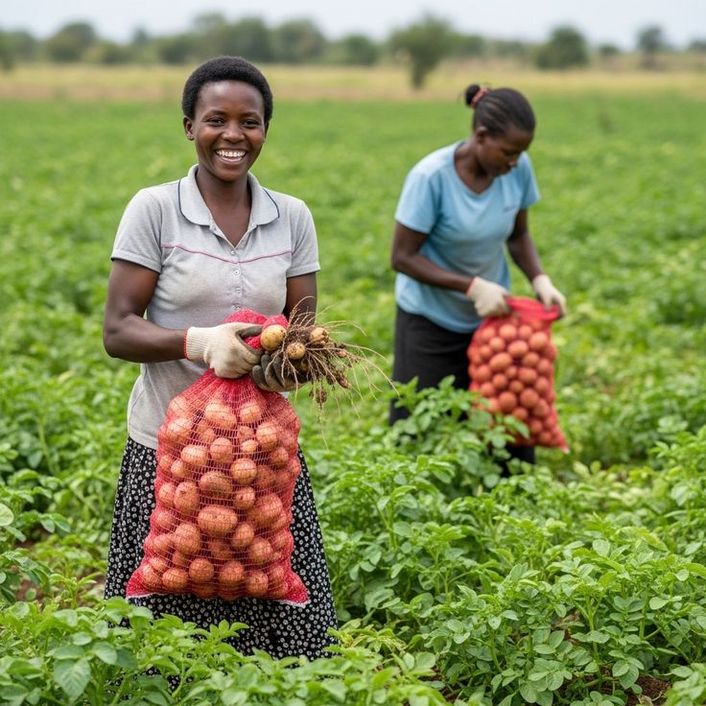
Agriculture remains the fundamental backbone of the African economy, employing over half the continent's workforce. The true commercial upside, however, has pivoted from traditional subsistence farming to value-added agribusiness, logistics, and agritech.
- Primary Opportunities: Commercial food crops (maize, rice, cassava), high-value export produce (cocoa, coffee, horticultural crops, nuts), livestock farming, aquaculture, mechanized land preparation, and cold-chain storage.
- Why It Is Attractive: Africa possesses over 60% of the world's uncultivated arable land, yet imports tens of billions of dollars in processed food annually. Replacing these imports with locally processed goods represents a massive industrial shift.
- Profit Drivers: Processing raw commodities into retail-ready consumer products, such as transforming paddy rice into branded milled rice or raw cocoa into cocoa butter and confectionery, yields substantially higher gross margins than raw commodity trading.
B. Technology and Software
Africa’s rapid mobile penetration and digital migration have created a burgeoning ecosystem for software solutions designed specifically for enterprise, SME, and consumer challenges.
- Primary Opportunities: Enterprise Software-as-a-Service (SaaS), custom software development agencies, cloud infrastructure hosting, cybersecurity consultancy, and localized AI applications.
- Why It Is Attractive: Software models deliver high gross margins due to low marginal distribution costs once the core intellectual property is developed.
- Profit Drivers: B2B software addressing operational inefficiencies—such as digital inventory management for informal retailers, payroll automation, and compliance tools—enjoys high customer retention and recurring subscription revenue.
C. Fintech and Financial Services
Fintech continues to capture a substantial share of venture capital and private equity investment in Africa, driven by large unbanked and underbanked populations.
- Primary Opportunities: Cross-border payment rails, merchant payment processing, digital lending engines, agency banking networks, micro-insurance (Insurtech), and wealth management platforms.
- Why It Is Attractive: Traditional banking infrastructure has historically struggled to reach lower-income and rural demographics due to high branch overheads. Mobile-first financial rails bypass these physical constraints entirely.
- Profit Drivers: Transaction fees, interest spreads on credit scoring models, and interchange fees generated across millions of daily micro-transactions produce predictable cash flows.
D. Real Estate and Construction
Rapid urbanization—with millions of people moving into African cities annually—drives relentless demand for physical infrastructure and shelter.
- Primary Opportunities: Affordable residential housing developments, modern industrial warehousing, commercial office parks, student housing, and local production of construction inputs such as cement, tiles, and roofing sheets.
- Why It Is Attractive: Severe housing deficits exist in almost every major African metropolis, from Lagos and Nairobi to Cairo and Johannesburg.
- Profit Drivers: Real estate provides dual revenue streams: capital appreciation on land assets and recurring rental yields, alongside high-margin opportunities in specialized construction supplies.
E. Energy and Renewable Energy
Persistent national grid deficits mean millions of households and commercial businesses rely on expensive, polluting diesel generators, opening a vast market for clean, decentralized energy alternatives.
- Primary Opportunities: Commercial and Industrial (C&I) solar installations, mini-grids for underserved communities, Pay-As-You-Go (PAYG) solar home systems, utility-scale battery storage, and clean cooking solutions.
- Why It Is Attractive: Power is an urgent, non-discretionary operational input. Businesses are eager to reduce energy costs by switching from diesel generators to solar hybrid solutions.
- Profit Drivers: Long-term Power Purchase Agreements (PPAs) and lease-to-own hardware arrangements provide highly predictable long-term revenues.
F. Manufacturing
Local manufacturing represents a primary engine for sustainable economic development across the continent, supported heavily by import-substitution policies.
- Primary Opportunities: Fast-Moving Consumer Goods (FMCG) packaging, food and beverage processing, textiles and apparel, plastic/paper packaging solutions, and basic building material fabrication.
- Why It Is Attractive: Currency devaluations and high shipping rates make foreign imports increasingly expensive, granting domestic manufacturers a structural cost advantage.
- Profit Drivers: High-volume turnover, combined with protective tariff barriers on finished imports, allows well-run factories to capture substantial market share.
G. Healthcare and Pharmaceuticals
The demand for high-quality, accessible medical care far exceeds supply across most region-specific public health networks.
- Primary Opportunities: Private diagnostic centers, specialized clinics, local pharmaceutical manufacturing, generic medicines, medical equipment distribution, and telemedicine platforms.
- Why It Is Attractive: Expanding middle-class populations increasingly seek reliable private healthcare to avoid underfunded public options.
- Profit Drivers: Diagnostic testing, elective procedures, and essential pharmaceutical distribution feature resilient margins backed by inelastic demand.
H. Logistics and Transportation
Connecting rural production centers to urban consumption hubs—and navigating port-to-hinterland trade corridors—is a fundamental commercial challenge.
- Primary Opportunities: Inter-city freight distribution, cold-chain transport, urban last-mile delivery, fleet management technology, and bonded warehousing.
- Why It Is Attractive: Trade within Africa remains historically under-connected. Efficient logistics providers act as crucial enablers for retail, agriculture, and manufacturing sectors.
- Profit Drivers: Premium pricing for reliable, time-sensitive delivery services, augmented by route-optimization technology that maximizes vehicle uptime.
I. Telecommunications and Digital Infrastructure
Data connectivity is now as critical as physical infrastructure, forming the foundation of modern African commerce.
- Primary Opportunities: Fiber-optic backhaul installation, carrier-neutral data centers, tower infrastructure management (TowerCos), and rural connectivity solutions.
- Why It Is Attractive: Smartphone adoption and video/data consumption continue to accelerate, requiring robust underlying physical hardware.
- Profit Drivers: Long-term infrastructure leasing contracts with telecom operators, internet service providers (ISPs), and enterprise clients.
J. E-Commerce and Retail
Retailing in Africa is transitioning from informal open-air markets to organized digital marketplaces and modern quick-service retail networks.
- Primary Opportunities: B2B retail aggregation, niche vertical e-commerce, social commerce platforms, and neighbourhood discount supermarket chains.
- Why It Is Attractive: Consolidating fragmented retail distribution channels significantly lowers product procurement costs for small vendors while improving availability.
- Profit Drivers: Gross retail margins combined with distribution efficiencies and value-added trade credit offerings to informal retailers.
K. Education and EdTech
A young population coupled with varying public education standards creates high household expenditure on private learning solutions.
- Primary Opportunities: Private K-12 schooling, vocational training institutes, tertiary professional certifications, and digital skill platforms.
- Why It Is Attractive: Families prioritize education spending as a primary tool for economic mobility.
- Profit Drivers: Upfront tuition fees and recurring subscription models with high consumer lifetime value.
L. Tourism and Hospitality
Africa’s rich natural assets, cultural heritage, and growing business hubs drive sustained demand across business and leisure travel segments.
- Primary Opportunities: Boutique business hotels, eco-lodges, short-term rental management, cultural tour operating, and domestic conference venues.
- Why It Is Attractive: Rise in intra-African business travel alongside growing international interest in authentic leisure destinations.
- Profit Drivers: High room rates in key commercial hubs paired with premium experiences in ecotourism circuits.
M. Mining and Natural Resources
The global energy transition has placed African mineral reserves—essential for electric vehicles, electronics, and battery storage—at the center of international trade.
- Primary Opportunities: Exploration and extraction of critical metals, gold mining, industrial mineral processing, and mining equipment services.
- Why It Is Attractive: High global commodity prices combined with rich geological deposits across central and southern Africa.
- Profit Drivers: Large-scale off-take agreements with international manufacturers and industrial buyers.
N. Fashion, Beauty, and Consumer Brands
African culture, cosmetics, and design are experiencing surging demand both locally and across the global African diaspora.
- Primary Opportunities: Formulated skincare products utilizing indigenous ingredients, ready-to-wear apparel, footwear manufacturing, and direct-to-consumer digital beauty brands.
- Why It Is Attractive: Expanding urban youth demographics prioritizing personal grooming, fashion identity, and lifestyle branding.
- Profit Drivers: High product markups relative to raw material costs, boosted by global social commerce platforms.
O. Media, Entertainment, and Creative Industries
African music, film, gaming, and digital content creation are enjoying unprecedented global distribution.
- Primary Opportunities: Film and music production studios, digital distribution platforms, talent management, intellectual property licensing, and local game development.
- Why It Is Attractive: Low marginal cost of global digital distribution via streaming platforms.
- Profit Drivers: Streaming royalties, brand sponsorships, performance rights, and content licensing fees.
P. Waste Management and Recycling
Urban growth generates substantial waste volumes, turning environmental collection into a lucrative resource recovery industry.
- Primary Opportunities: Industrial and municipal waste collection, PET plastic recycling, organic waste-to-fertilizer conversion, and electronic waste recycling.
- Why It Is Attractive: Circular economy initiatives receive strong support from municipal governments, ESG investment funds, and corporate off-takers.
- Profit Drivers: Dual revenue streams—tipping/collection fees from waste producers combined with the sale of processed recycled raw materials.
Best Industries Based on Entrepreneur Profile
Success in African business depends heavily on matching an industry's structural demands with the entrepreneur's access to capital, technical expertise, and operational capability.
Choosing an Industry Based on Capital Level
- Low / Moderate Capital: Technology, digital media, agribusiness operations, and light beauty/FMCG businesses.
- High / Institutional Capital: Real estate, energy and infrastructure, commercial manufacturing, fintech, and mining.
-
Beginners with Limited Capital:
Low-overhead service or digital businesses offer the safest entry point. High-potential choices include software freelancing/agencies, digital content creation, niche e-commerce, beauty/skincare distribution, and agricultural trading/brokerage. - Entrepreneurs with Moderate Capital: Mid-tier capital allows for physical asset accumulation and operational hiring. Prime sectors include commercial food processing, specialized logistics/delivery fleets, private vocational training institutes, and boutique hospitality properties.
- Technology Entrepreneurs: Founders with engineering or product backgrounds should target enterprise SaaS solutions, B2B marketplace platforms, logistics optimization software, and agritech management systems.
- Experienced Business Owners & Corporates: Operational veterans capable of managing complex regulatory and workforce environments thrive in light manufacturing, cold-chain infrastructure, diagnostic healthcare networks, and industrial recycling facilities.
- Institutional & International Investors: High-net-worth investors and funds are best positioned for capital-intensive, high-barrier sectors such as utility-scale renewable energy, carrier-neutral data centers, commercial real estate developments, and critical mineral extraction.
Africa's Regional Opportunities
Economic opportunities across Africa are far from homogenous; each regional trading hub features distinct economic drivers, regulatory environments, and consumer preferences.
West Africa
Focus: Nigeria, Ghana, Côte d’Ivoire, Senegal
- Economic Drivers: Massive consumer market size, vibrant financial hubs, expanding agricultural output, and rich cultural exports.
- Key Sectors: Fintech, retail distribution, commercial agribusiness, media/entertainment, FMCG manufacturing, and port logistics.
East Africa
Focus: Kenya, Tanzania, Rwanda, Uganda
- Economic Drivers: Regional trade integration, mobile money penetration, rapid tech adoption, and tourism circuits.
- Key Sectors: Mobile finance, off-grid renewable energy, agritech, horticulture export, cross-border freight logistics, and specialized eco-tourism.
North Africa
Focus: Egypt, Morocco, Tunisia
- Economic Drivers: Proximity to European markets, well-developed industrial infrastructure, advanced tech talent pools, and mature manufacturing bases.
- Key Sectors: Automotive/aerospace component manufacturing, textile manufacturing, enterprise software outsourcing, renewable energy, and BPO call centers.
Southern Africa
Focus: South Africa, Botswana, Zambia, Zimbabwe
- Economic Drivers: Deep financial markets, vast mineral wealth, established commercial retail networks, and industrial capacity.
- Key Sectors: Critical minerals processing, commercial real estate, corporate financial services, commercial farming, and modern retail distribution.
Strategic Framework: How to Choose and Validate Your Industry
To mitigate entry risk and build a resilient business model, follow this sequential execution process:
- Identify a Validated Market Friction: Pinpoint a specific operational inefficiency, supply deficit, or high transaction cost currently paid by consumers or businesses.
- Conduct Ground-Level Field Research: Avoid relying solely on secondary internet statistics. Visit markets, talk directly to distributors, inspect supply chains, and interview prospective end-users.
- Calculate True Operational Costs: Account for indirect overhead costs unique to many African operating environments—such as backup generator fuel, private security, logistics delay buffers, and import clearing fees.
- Determine Realistic Gross Margins: Ensure product margins are wide enough to absorb unexpected macroeconomic shocks, currency fluctuations, or inflation spikes.
- Analyze Regulatory Constraints: Map out required operating licenses, tax regimes, import/export duties, and compliance standards set by municipal and national authorities.
- Deploy a Minimum Viable Product (MVP): Test customer willingness to pay using small pilot batches, simple service setups, or preliminary landing pages before committing substantial capital.
15 Critical Mistakes to Avoid in African Business
- Chasing Hype over Market Realities: Entering sectors purely because they are trending without verifying true local paying capacity.
- Copy-Pasting Foreign Models: Replicating foreign business models without adapting to local informal trade dynamics, payment realities, or cultural preferences.
- Underestimating Capital and Time Horizons: Assuming cash-flow breakeven will occur rapidly; undercapitalization remains a primary cause of early-stage business failure.
- Ignoring Infrastructure Deficits: Failing to budget for backup power, water storage, private delivery fleets, or other infrastructure requirements.
- Focusing on Revenue Instead of Cash Flow: Tracking paper sales while ignoring delayed customer payments and receivables collection timelines.
- Ignoring Regulatory and Tax Obligations: Neglecting licenses or tax planning, resulting in fines or operational shutdowns.
- Premature Scaling: Spending heavily on marketing or geographic expansion before securing genuine product-market fit.
- Underestimating Informal Market Competition: Overlooking established informal trade networks that operate with lower overhead costs and strong customer trust.
- Single-Supplier Dependence: Relying on one supplier or import channel and becoming vulnerable to supply-chain disruptions.
- Neglecting Talent Retention: Failing to invest in employee training and competitive compensation, leading to high turnover.
- Over-Leveraging Short-Term Debt: Using expensive short-term loans to fund long-term capital investments.
- Inadequate Currency Risk Management: Operating in local currencies while incurring major expenses or debt in foreign currencies without appropriate risk management.
- Failing to Build Local Relationships: Operating without cultivating trusted relationships with communities, industry associations, and trade partners.
- Disregarding Product Quality Control: Sacrificing quality to lower prices, which can destroy brand trust.
- Lacking an Operations-Focused Founder/Manager: Expecting a business to operate on autopilot without hands-on management and daily operational oversight.
Long-Term Economic Trends Shaping African Business
- The African Continental Free Trade Area (AfCFTA): The gradual elimination of intra-African tariffs will unlock cross-border manufacturing, regional logistics, and commercial trade corridors.
- Accelerating Urbanization: By 2050, over 1.2 billion people will live in African cities, concentrating demand for modern housing, organized food retail, utilities, and transport infrastructure.
- Rapid Leapfrogging in Digital Infrastructure: Widespread adoption of 5G, satellite internet, and localized data centers will accelerate digital services, remote work opportunities, and distributed commerce.
- Industrialization via Import Substitution: National policies increasingly favor domestic manufacturing, agro-processing, and local raw-material transformation over unrefined exports.
- Climate Adaptation and Green Energy Transition: Investments in solar energy, climate-resilient agriculture, water management, and sustainable transport are positioned to attract significant global development and private-equity capital.
Frequently Asked Questions (FAQs)
What is the most profitable industry in Africa?
Profitability varies by execution and business model, but agribusiness processing, fintech, and commercial renewable energy consistently deliver high profit margins due to vast market demand and strong structural tailwinds.
What is the fastest-growing industry in Africa?
The technology sector—specifically fintech, B2B software, and digital logistics—represents the fastest-growing sector in terms of venture capital inflow, digital user adoption, and revenue scaling.
What business can I start with little capital in Africa?
Low-capital options include digital agencies, software consulting, social commerce retail, fashion design, media content creation, and agricultural commodity brokerage.
Which African industries attract the most investment?
Fintech, renewable energy, telecommunications infrastructure, real estate, and commercial agribusiness attract significant private equity, venture capital, and development finance investment.
Which industries will grow the most in the next 10 years?
Renewable energy, localized pharmaceuticals, cold-chain logistics, data centers, and technology-enabled agricultural processing are positioned for strong growth.
What are the best industries for young entrepreneurs?
Young founders often succeed in digital media, software development, social commerce retail, green recycling initiatives, and specialized vocational training.
Which African country offers the best business opportunities?
Large economies like Nigeria, Kenya, Egypt, South Africa, Ghana, Morocco, and Côte d'Ivoire offer distinct advantages based on population size, infrastructure maturity, or regional trade positioning.
Is agriculture profitable in Africa?
Yes, particularly in value-added food processing, agritech distribution, aquaculture, and cold-chain logistics, rather than unprocessed primary crop farming alone.
Is real estate still profitable in Africa?
Real estate remains attractive, specifically in affordable residential housing, industrial warehousing, student housing, and commercial land development within fast-growing urban corridors.
What industries are best for foreign investors?
Foreign institutional capital excels in capital-intensive sectors with clear exit pathways, including renewable energy projects, telecom infrastructure, commercial real estate, private healthcare networks, and export mining.
How does currency devaluation affect profitability?
Currency devaluation increases local-currency costs for imported goods. Businesses engaged in domestic manufacturing using local inputs or export-oriented operations can benefit from import substitution or foreign-currency revenue.
How crucial is the informal market in Africa?
The informal market accounts for a significant share of retail trade in many African nations. Successful formal businesses often design solutions that empower, digitize, or supply informal retailers rather than attempting to displace them directly.
What role does government policy play in industry success?
Government tariffs, import restrictions, tax incentives, and infrastructure investments directly influence industry profitability, particularly in manufacturing, energy, real estate, and healthcare.
How difficult is cross-border trade within Africa?
While historically hampered by tariff barriers and border delays, the implementation of AfCFTA and regional payment systems is steadily lowering cross-border trading friction.
What is the failure rate for startups in Africa?
Many early-stage ventures face significant failure risk, typically due to undercapitalization, premature scaling, poor cash-flow management, and lack of product-market fit.
How can small businesses secure capital in Africa?
SMEs commonly leverage reinvested profits, angel networks, trade credit from suppliers, specialized government enterprise grants, and impact investment funds.
Is manufacturing viable despite power outages?
Yes, provided companies factor captive power solutions such as rooftop solar-diesel hybrids into their capital budgets and focus on high-margin products with limited local competition.
Why is logistics considered a high-opportunity sector?
Transporting goods remains expensive across the continent. Businesses that solve warehousing, fleet optimization, or cold storage can capture significant value by reducing spoilage and delivery delays.
Conclusion
The greatest business opportunities in Africa are rarely found in short-term financial trends or superficial copycat business ideas. Instead, sustainable profitability belongs to enterprises that systematically eliminate structural friction—building operational capacity where large populations face persistent challenges, unmet needs, and inefficient distribution networks.
An industry's overall growth potential does not guarantee individual business success. The most lucrative opportunity for any entrepreneur lies at the intersection of a large market demand, deep operational understanding, disciplined capital allocation, and strong execution capabilities.
“In emerging markets, structural inefficiency is not a signal to retreat; it is the raw material from which enduring enterprise is built.”

Comments
Email addresses are never published.