Bitcoin Pizza Day: How Two Pizzas Changed the History of Cryptocurrency Forever
 investopedia
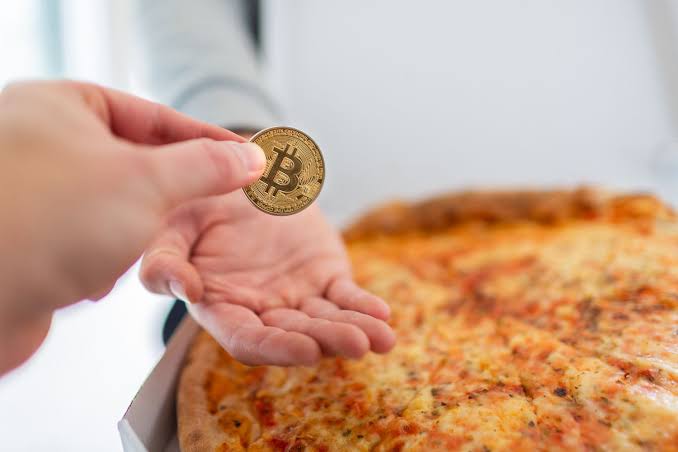
Bitcoin Pizza Day stands as one of the most defining milestones in cryptocurrency history. Celebrated annually on May 22, it commemorates the moment in 2010 when programmer Laszlo Hanyecz exchanged 10,000 Bitcoin (BTC) for two pizzas. At the time, the digital asset held virtually no market value, but this everyday purchase became the first widely recognized commercial Bitcoin transaction.
Today, this anniversary serves as a powerful reminder of the rapid evolution of digital finance. In this article, we explore the history behind the famous pizza purchase, its broader economic significance, and the enduring lessons it offers to modern investors.
What Is Bitcoin Pizza Day?
Bitcoin Pizza Day is an annual industry event celebrated on May 22 to mark the first documented purchase of a physical good using cryptocurrency. When Laszlo Hanyecz transferred 10,000 BTC in exchange for two large pizzas, he made history by effectively bridging the gap between digital code and real-world commerce.
While those pizzas were valued at roughly $41 at the time, the transaction successfully demonstrated Bitcoin's viability as a decentralized medium of exchange, proving it could function as actual money rather than just a niche technological experiment.
The Story Behind the Transaction
In early 2010, the Bitcoin network was still in its infancy, maintained by a small, tight-knit community of cryptographers and tech enthusiasts. The currency lacked an established market price, and miners generated coins on standard personal computers largely out of curiosity.
Laszlo Hanyecz, a software developer and early contributor to the Bitcoin network, wanted to test the network's practical limits. On May 18, 2010, he posted a now-legendary request on the BitcoinTalk forum, offering 10,000 BTC to anyone willing to facilitate the delivery of two pizzas to his home. His motivation was simple: he wanted to see if his digital mining efforts could be traded for physical sustenance.
On May 22, the offer was accepted by another forum user who ordered the pizzas from Papa John's using a traditional credit card. In return, Hanyecz routed the 10,000 BTC to the buyer's wallet. At the time, both parties considered it a fair trade, entirely unaware that this brief exchange would eventually be viewed as a watershed moment in the history of decentralized finance.
Why Bitcoin Pizza Day Matters
Beyond the novelty of the story, Bitcoin Pizza Day represents the exact moment cryptocurrency transitioned from a theoretical concept to a functional payment system. Prior to this event, Bitcoin was entirely confined to digital ledgers with no tangible purchasing power.
This transaction provided the foundational proof of concept that digital scarcity could translate into real-world value. It laid the groundwork for merchant adoption, eventually leading to a global ecosystem where countless businesses now accept cryptocurrency for goods and services.
Furthermore, the event illustrates the exponential pace of technological adoption. What began as a casual forum exchange is now celebrated globally, highlighting how disruptive innovations often start on the fringes before achieving mainstream acceptance.
The Modern Value of the "Pizza Bitcoin"
Much of the mainstream fascination with Bitcoin Pizza Day revolves around the astronomical appreciation of the asset. As Bitcoin has grown into a trillion-dollar asset class, the 10,000 BTC spent on those two pizzas is routinely valued in the hundreds of millions of dollars—and occasionally eclipses $1 billion during peak market cycles.
While it is easy to view this through the lens of missed financial opportunity, industry veterans view it differently. Without early adopters like Hanyecz actively circulating the currency and testing its utility, Bitcoin may have never established the network effects necessary to achieve its current valuation. The historical significance of the transaction far outweighs the speculative value of the coins themselves.
Key Lessons for Investors
This historic transaction offers several timeless principles for anyone interested in finance and technology:
- Adoption takes time: Transformative technologies require patience. In 2010, Bitcoin was dismissed by the mainstream, yet it organically grew into a global financial network.
- Utility drives value: An asset's long-term worth is heavily tied to its practical application. The pizza purchase proved Bitcoin had utility, which became the catalyst for its monetary premium.
- The necessity of long-term thinking: Innovation is deeply unpredictable. While hindsight makes the current price of Bitcoin look obvious, it was impossible to forecast in 2010. Successful investing requires understanding the underlying technology and maintaining a long-term perspective.
Frequently Asked Questions (FAQs)
Why is Bitcoin Pizza Day celebrated on May 22?
May 22 marks the exact date in 2010 when the 10,000 BTC transaction was finalized and the pizzas were successfully delivered, cementing it as the first real-world commercial cryptocurrency exchange.
Who bought the pizzas?
Laszlo Hanyecz, a Florida-based programmer and early Bitcoin developer, initiated the transaction by offering the BTC on an online forum.
How much was the Bitcoin worth in 2010?
Based on early exchange rates, the 10,000 BTC used in the transaction had an approximate fiat value of just $41.
Can you still buy pizza with Bitcoin today?
Yes. A growing number of global merchants, delivery apps, and payment gateways seamlessly accept Bitcoin and other cryptocurrencies for everyday purchases.
Looking Back at Bitcoin Pizza Day
Bitcoin Pizza Day remains a testament to the grassroots origins of digital currency. What began as a simple craving for pizza catalyzed a financial revolution, proving that decentralized networks could facilitate peer-to-peer commerce without traditional intermediaries.
As the cryptocurrency industry continues to mature, May 22 stands not just as a celebration of a famous meal, but as an annual tribute to innovation, utility, and the incredible journey of Bitcoin.
Fun Facts About Bitcoin Pizza Day
- The Counterparty: The person who accepted Laszlo's offer was a 19-year-old student named Jeremy Sturdivant (username "Jercos"). He paid for the pizzas with his fiat credit card and had them delivered to Laszlo in exchange for the 10,000 BTC.
- Jeremy Didn't Hold: The story often focuses on Laszlo's "loss," but Jeremy didn't become a billionaire either. Treating Bitcoin as an experimental currency, he sold the 10,000 BTC a few months later for around $400 to cover travel expenses.
- Laszlo's Real Legacy: Beyond being the "Pizza Guy," Laszlo Hanyecz was a pivotal developer. He is credited with introducing GPU (Graphics Processing Unit) mining to the network, a major technological leap that massively increased Bitcoin's computational security.
- Lightning Strikes Twice: In February 2018, Laszlo recreated history by purchasing two more pizzas. This time, he used the Lightning Network—Bitcoin's "Layer 2" scaling solution—paying just 0.00649 BTC to prove the new technology could handle fast, cheap micro-transactions.
- The Pizza Index: There is a running "Bitcoin Pizza Index" online that tracks the exact real-time fiat value of those two original pizzas based on the fluctuating market price of Bitcoin.

Comments
Email addresses are never published.