Stablecoins in Nigeria: How to Save Money and Beat Naira Inflation
 Metronub
The Fight Against Inflation
For many Nigerians, saving money has become a daily battle against the rising cost of living and the changing value of the naira. You may work hard to earn and save money, but when prices continue to rise, the amount you saved may not buy as much in the future.
This has led some Nigerians to explore digital assets and dollar-denominated stablecoins as alternative ways to hold and move money. Stablecoins are particularly interesting because they are designed to maintain a relatively stable value, usually by being linked to a traditional currency such as the U.S. dollar.
But where does Bitcoin fit into the picture?
Bitcoin and stablecoins are both cryptocurrencies, but they are designed for very different purposes. Bitcoin is generally viewed as a scarce digital asset with significant long-term growth potential, while stablecoins are designed primarily to maintain a stable value and make digital dollar transactions easier.
For Nigerians deciding how to use crypto, understanding this difference is important. The better choice depends on whether your priority is long-term investment, preserving dollar-denominated value, receiving international payments, or making everyday digital transactions.
Bitcoin in Brief: The Digital Asset
Bitcoin is a decentralized digital asset with a maximum supply of 21 million coins. Unlike traditional currencies, no central bank can simply create additional Bitcoin whenever it chooses.
Its limited supply and global demand have made Bitcoin popular as a long-term investment and a potential store of value. However, its price can change significantly over short periods, which makes it considerably more volatile than a dollar-pegged stablecoin.
For someone saving money that may be needed soon, this volatility is an important consideration. Bitcoin may offer greater long-term growth potential, but it can also experience substantial price declines.
If you want to learn how Bitcoin works in greater detail, you can read our complete guide to Bitcoin
What Are Stablecoins?
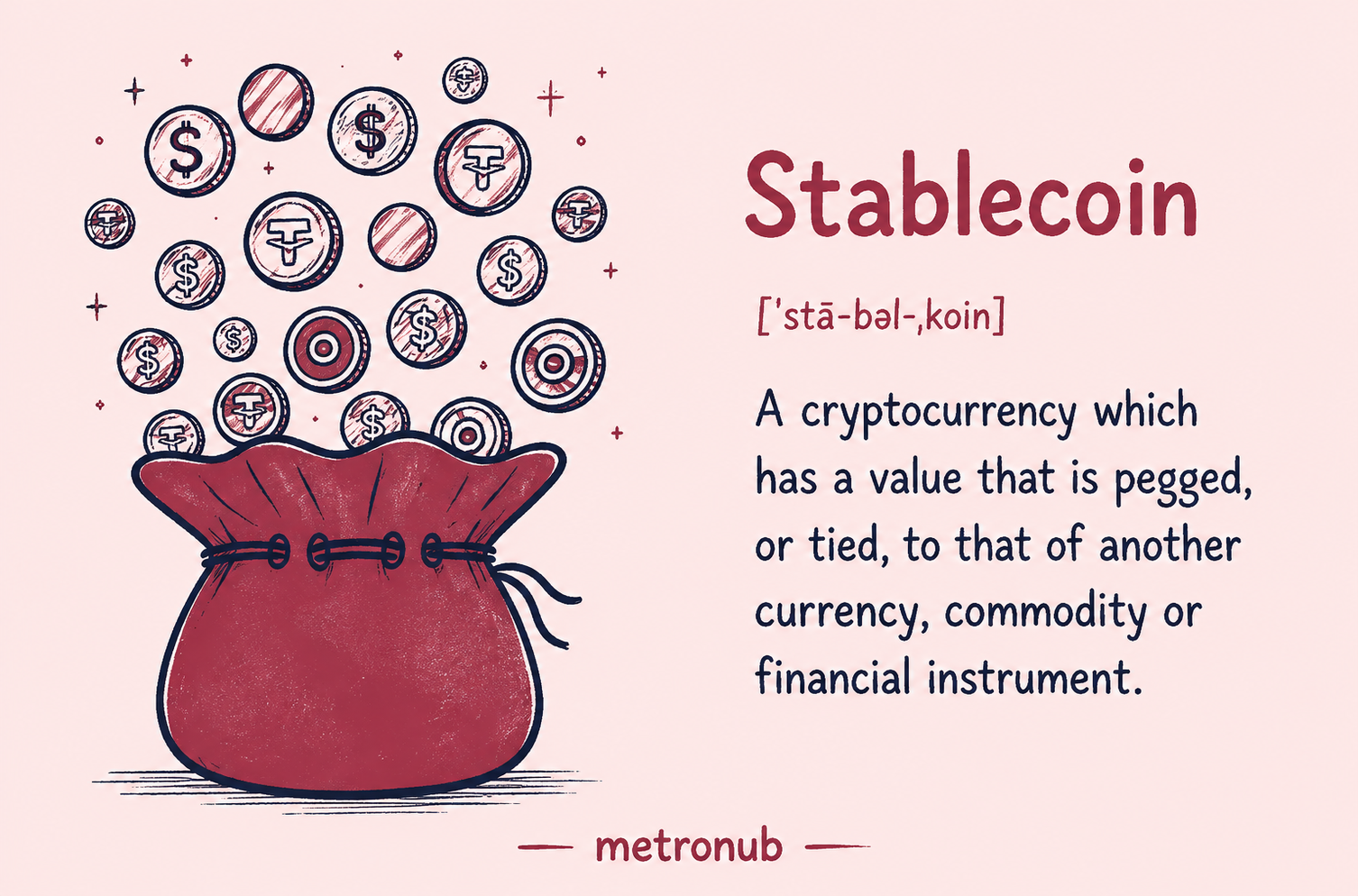
Stablecoins are cryptocurrencies designed to maintain a relatively stable value compared with more volatile digital assets such as Bitcoin.
Many popular stablecoins are linked to the U.S. dollar. Examples include USDT (Tether) and USDC (USD Coin). They are commonly designed to maintain a value close to one U.S. dollar, although their market price can occasionally move slightly above or below that level.
The basic idea is simple: instead of holding a cryptocurrency whose value can rise or fall dramatically, you can hold a token that is intended to represent a relatively stable dollar value.
This makes stablecoins useful for more than speculation. They can be used for payments, international transfers, savings in dollar-denominated value, business transactions, and moving money between cryptocurrency platforms.
Why Are Stablecoins Important to Nigerians?
Stablecoins have become particularly relevant in countries where people are concerned about currency depreciation, access to foreign currency, or the difficulty of making international payments.
Nigeria illustrates this trend clearly. According to Chainalysis's 2025 Global Crypto Adoption Index, Nigeria ranks among the top countries in the world for grassroots crypto adoption, with stablecoins identified as one of the main drivers of that activity. Everyday use cases such as remittances, bill payments, and preserving value against naira volatility account for much of this demand, rather than speculative trading.
For Nigerians, dollar-denominated stablecoins can provide a digital way to hold value that is linked to the U.S. dollar rather than directly to the naira.
However, it is important to understand what this means. Holding a dollar stablecoin does not mean you have opened a U.S. bank account or obtained physical dollars. You are holding a digital token designed to track the value of the dollar.
How Nigerians Can Use Stablecoins
1. Holding Dollar-Denominated Value
One of the main reasons people use stablecoins is to hold an asset that is designed to maintain a value close to the U.S. dollar.
For example, someone who receives $500 worth of USDT may choose to keep that value in USDT rather than immediately converting it into naira. The naira value of those stablecoins can change as the exchange rate between the naira and the dollar changes.
This can make stablecoins attractive to people who want exposure to dollar-denominated value without holding physical cash.
2. Receiving International Payments
Stablecoins can also be useful for freelancers, remote workers, digital creators, software developers, consultants, and businesses that work with international clients.
Instead of relying exclusively on traditional payment channels, a client may send dollar-equivalent value using a stablecoin such as USDT or USDC.
The transaction can take place on a blockchain, allowing the recipient to receive the digital asset without the traditional banking process associated with international transfers.
However, users should still consider network fees, transaction times, exchange rates, platform policies, and applicable regulations before choosing this method.
3. Cross-Border Business Transactions
Stablecoins can also be useful for businesses that interact with international suppliers, contractors, or service providers.
A business may need to send dollar-denominated value to someone in another country. Stablecoins can provide another digital settlement option because the transaction takes place on a blockchain rather than through a traditional bank transfer.
This does not automatically make stablecoins cheaper or better in every situation. Fees and conversion costs depend on the blockchain, platform, transaction size, and the currencies involved.
4. Moving Money Between Crypto Platforms
Stablecoins are widely used within the cryptocurrency ecosystem because they provide a relatively stable unit of value.
For example, instead of converting Bitcoin directly into naira every time they want to reduce their exposure to price movements, a trader may convert part of their holdings into a stablecoin.
This allows them to remain within the digital-asset ecosystem while reducing exposure to Bitcoin's volatility.
USDT vs USDC: What Is the Difference?
USDT and USDC are the two most widely used dollar-pegged stablecoins, but they are issued by different companies and take different approaches to transparency and regulation.
Both are designed to maintain a value close to one U.S. dollar, but that does not mean they are identical or completely risk-free.
| Feature | USDT | USDC |
|---|---|---|
| Issuer | Tether | Circle |
| Reserve reporting | Quarterly attestations | Monthly attestations |
| Attesting firm | BDO Italia | Deloitte |
| Liquidity on Nigerian P2P platforms | Generally deeper and more widely traded | Available, but thinner liquidity |
| Regulatory posture | Historically more scrutiny; based outside the U.S. | Stronger alignment with U.S. and EU regulatory frameworks |
According to publicly available reserve disclosures, USDC publishes monthly attestations audited by Deloitte, while USDT publishes attestations on a quarterly basis through BDO Italia. This does not automatically make one "safer" for everyday use. USDT remains the more liquid and widely traded stablecoin on Nigerian peer-to-peer platforms, which matters for anyone who needs to convert in or out quickly, while USDC tends to appeal more to users who prioritize regulatory transparency over liquidity.
The best choice can depend on factors such as availability, liquidity, the platform being used, the blockchain network, fees, and your personal requirements.
Bitcoin vs Stablecoins: Which Should You Choose?
The answer depends largely on what you are trying to accomplish with your money.
| Feature | Bitcoin | Stablecoins |
|---|---|---|
| Primary purpose | Long-term digital asset and investment | Stable digital representation of currency value |
| Price volatility | High | Generally much lower |
| Growth potential | Potentially high | Limited by the underlying currency |
| International payments | Possible, but price volatility matters | Well suited to dollar-denominated transfers |
| Short-term value stability | Low | Higher, although not guaranteed |
| Main concern | Market volatility | Issuer, peg, platform and regulatory risks |
For Long-Term Investment
If your goal is to potentially build wealth over several years and you are comfortable with significant price fluctuations, Bitcoin may be more appropriate than a stablecoin.
However, Bitcoin should not be treated as guaranteed growth. Its historical performance does not guarantee future returns, and investors can lose a substantial amount of money when prices fall.
For Dollar-Denominated Value
If your primary goal is to hold an asset designed to maintain a value close to the U.S. dollar rather than participate in Bitcoin's price movements, stablecoins may be more suitable.
This can be particularly relevant for people receiving dollar-denominated income or dealing with international transactions.
For International Payments
Stablecoins can be especially useful when the goal is to move dollar-equivalent value digitally across borders.
A freelancer receiving payment from an international client, for example, may find a stablecoin useful depending on the payment options available to both parties.
Are Stablecoins Completely Safe?
No. The word "stable" does not mean "risk-free."
Stablecoins are designed to maintain a stable value, but several risks can still affect users.
1. Stablecoin Depegging
A stablecoin can temporarily trade above or below its intended value. In extreme situations, a stablecoin may experience a significant loss of its peg.
This means users should never assume that a stablecoin is exactly the same thing as holding cash in a bank account.
2. Issuer and Reserve Risk
Stablecoins depend on the organizations and systems supporting them. The way reserves are managed, disclosed, and regulated can affect confidence in a stablecoin.
3. Wallet and Platform Risk
If you keep stablecoins on an exchange or in a digital wallet, security becomes important. Losing access to your wallet, falling victim to a scam, or sending funds to the wrong blockchain address can result in permanent loss.
4. Blockchain and Network Fees
Stablecoins operate on blockchain networks, and different networks can have different transaction fees, speeds, and technical characteristics.
Before sending stablecoins, you should confirm that the receiving wallet supports the specific network you are using. Sending an asset through an unsupported network can lead to complications or loss of funds.
5. Regulatory Risk
Cryptocurrency regulations can change. Governments and financial regulators may introduce new rules affecting exchanges, stablecoin issuers, payments, taxation, or how digital assets can be used.
Nigerian users should therefore consider the current regulatory environment before making major financial decisions involving crypto.
Navigating the Nigerian Crypto Market
Nigeria has had a complicated relationship with cryptocurrency regulation.
In February 2021, the Central Bank of Nigeria directed regulated financial institutions to discontinue banking relationships with cryptocurrency exchanges and related businesses. This period pushed many users toward alternative ways of buying and selling digital assets, including peer-to-peer transactions.
The picture has changed significantly since then. According to the CBN, the bank reversed its position in December 2023 by issuing "Guidelines on Operations of Bank Accounts for Virtual Assets Service Providers (VASPs)," which allow banks to open accounts for crypto businesses that hold a valid license from the Securities and Exchange Commission (SEC). Under these guidelines, banks are required to carry out strict know-your-customer checks, including verifying the Bank Verification Number (BVN) of the directors and owners of any licensed crypto business they work with.
The framework was strengthened further in 2025, when the Investments and Securities Act formally classified digital assets as securities under SEC oversight. This moved crypto in Nigeria from a legal gray area into a formally recognized and regulated sector, although banks themselves are still not permitted to directly hold or trade crypto assets.
For this reason, anyone using stablecoins in Nigeria should avoid relying solely on older information about crypto regulations. Always check the latest rules and requirements before making significant transactions.
What Makes Stablecoins Different From Ordinary Dollars?
It is easy to think of USDT or USDC as simply digital versions of U.S. dollars, but there is an important difference.
When you hold dollars in a traditional bank account, your funds are held within the banking system and are subject to the rules and protections applicable to that institution and jurisdiction.
When you hold stablecoins, you hold blockchain-based tokens. You are responsible for understanding how the wallet, exchange, blockchain network, and stablecoin issuer work.
This gives stablecoins unique advantages, particularly for digital and international transactions, but it also introduces risks that do not exist in exactly the same way with traditional bank deposits.
Bitcoin or Stablecoins: Choosing the Right Tool for Your Money
Bitcoin and stablecoins should not necessarily be viewed as competitors where one must completely replace the other. They solve different problems.
Bitcoin is primarily a volatile digital asset with limited supply and potential long-term investment value. Stablecoins, on the other hand, are designed to provide a relatively stable digital representation of currencies such as the U.S. dollar.
If you are looking for long-term investment potential and can tolerate significant price movements, Bitcoin may be worth researching further. If your priority is moving, receiving, or holding dollar-denominated value digitally, stablecoins may be more relevant.
For Nigerians, the most important thing is not simply choosing between Bitcoin and stablecoins. It is understanding why you are using the asset, what risks you are accepting, and how the asset fits into your overall financial situation.
Crypto can provide useful financial tools, but it should not be treated as a guaranteed way to protect or increase your money. Take time to understand the asset, verify the platform you use, protect your wallet, and stay informed about the rules governing digital assets in Nigeria.

Comments
Email addresses are never published.